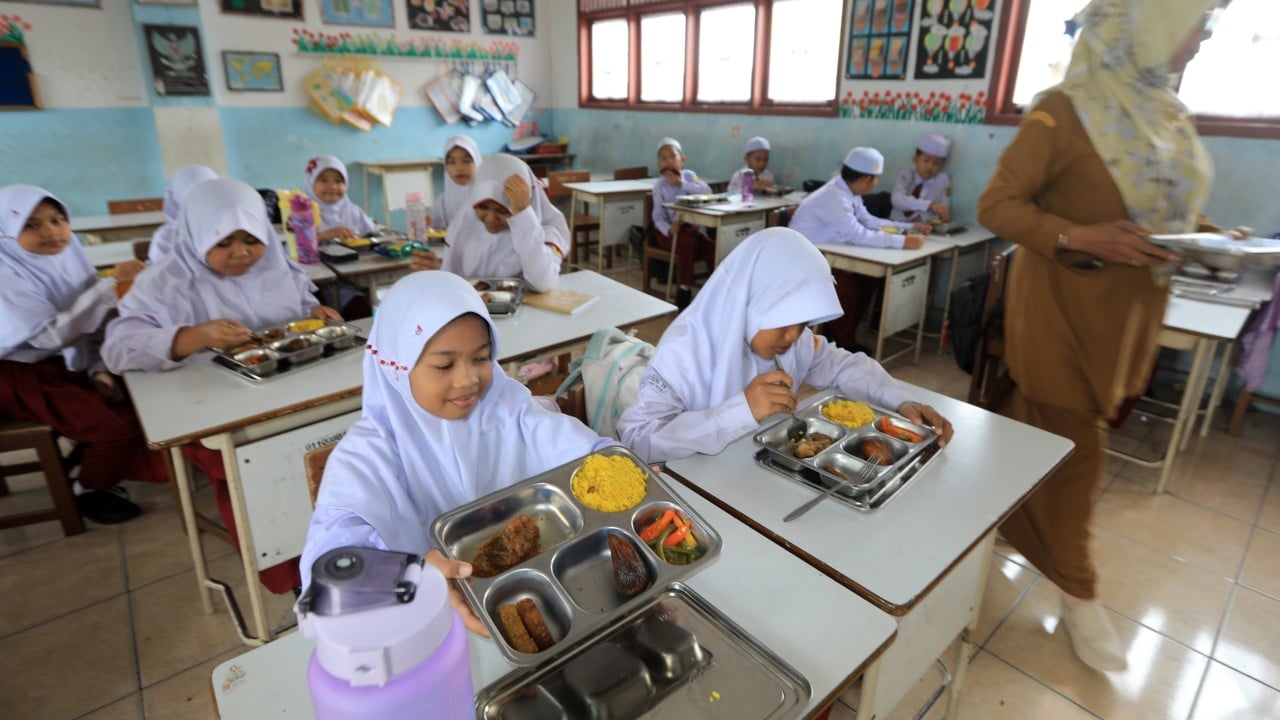
Indonesia is learning a harsh lesson in fiscal reality as its ambitious national free school meals program faces immediate, severe budget cuts, leaving local kitchen operators and suppliers facing financial ruin. The initiative was a cornerstone of Prabowo Subianto’s presidential campaign, designed to feed over 80 million children and pregnant women to combat stunting. Instead, a quiet slashing of the per-meal budget has plunged the entire operation into chaos before it can even fully launch. Kitchens designed to cook for thousands are stuck with idle equipment, mounting debts, and zero clarity on how to feed children for pennies.
The crisis is not just a logistical hiccup. It is a fundamental design failure.
When the program was first pitched, policymakers touted a target of 15,000 rupiah (roughly $0.95 USD) per meal. Nutritionists agreed this was already a tight squeeze to provide high-quality protein, carbohydrates, and micro-nutrients. Yet, as the fiscal realities of funding a $25 billion-a-year program set in, the central government quietly began testing models at 7,500 to 10,000 rupiah per meal.
For the small business owners, local cooperatives, and military-backed community kitchens tasked with setting up these "service units," that 50% cut is a death sentence.
The Broken Economics of the 7500 Rupiah Meal
To understand why these kitchens are in limbo, you have to look at the raw input costs.
A standard nutritious meal in Indonesia requires a portion of rice, a animal-based protein source like chicken, eggs, or fish, a side of vegetables, and occasionally milk.
At 15,000 rupiah, kitchen operators could source locally, pay fair wages to cooks, and cover transport. At 7,500 rupiah, the math breaks completely.
- Rice: 2,000 rupiah
- Protein (one egg or small chicken piece): 3,500 rupiah
- Vegetables and seasoning: 1,500 rupiah
- Packaging and logistics: 1,000 rupiah
This basic breakdown leaves exactly zero rupiah for cooking gas, clean water, staff wages, or electricity, let alone profit for the operator.
To survive, pilots in provinces like West Java and Central Java have had to make drastic compromises. Some have swapped out eggs for cheap tofu. Others have cut portion sizes so thin that the meals no longer meet the nutritional requirements to prevent stunting.
Instead of boosting local economies, the program is squeezing local farmers. Kitchens can no longer afford to buy fresh produce from neighboring smallholders at market rates. They must hunt for industrial-scale wholesalers to save a few pennies per kilo, defeating the promised side-benefit of stimulating rural economies.
The Debt Trap Facing Kitchen Operators
Many local operators took out loans to build or upgrade facilities to meet the government’s strict hygiene and capacity standards. They bought industrial rice cookers, stainless steel prep tables, and delivery vehicles.
They did this on the promise of long-term, stable government contracts.
Now, those contracts are either delayed or rewritten with unviable margins. Banks do not care that a government agency changed its mind about a subsidy; they still expect their monthly interest payments.
This is a classic policy trap.
Governments often announce grand social programs to win elections without mapping out the mid-stream supply chain. When the state treasury realizes it cannot foot the bill, the burden is pushed downward to the lowest tier of the supply chain—the local kitchen operators who lack the political leverage to fight back.
A Supply Chain Built on Sand
The logistics of feeding tens of millions of children daily across an archipelago of 17,000 islands are staggering.
In urban centers like Jakarta, supply chains are relatively short. In remote regions of Maluku or Papua, the cost of transporting basic ingredients can double or triple the price of a meal before a single stove is lit.
[Central Budget Allocations]
       │
       ▼
[Regional Distribution Hubs] ──(High logistics costs in outer islands)──► [Struggling Local Kitchens]
       │
       ▼
[Compromised Nutritional Output]
The administration’s initial plan relied on a decentralized network of "service units," each catering to about 3,000 children. The assumption was that local agricultural surpluses would easily absorb this demand.
That assumption was wrong.
Indonesia is a net importer of several key food commodities, including dairy and wheat. Flooding the domestic market with massive demand for milk and eggs has driven up local prices, creating an inflationary spiral that makes the 7,500 rupiah target even more laughably out of reach. Kitchens are competing against regular commercial buyers for the same limited supply of eggs and poultry, driving up their own operating costs.
Political Will Versus Fiscal Gravity
The administration is desperate to avoid admitting defeat on its signature policy. To save face, officials are scrambling for alternative funding sources.
There are talks of using regional development budgets, diverting funds from state-owned enterprises, or relying on corporate social responsibility (CSR) programs from major conglomerates to plug the gaps.
These are temporary fixes for a structural deficit.
A national program cannot run on charity and ad-hoc local government bailouts. If the central government cannot guarantee a stable, realistic per-meal rate, the program will inevitably devolve into a highly politicized, low-quality feeding scheme that does little to improve child health while leaving a trail of bankrupt small businesses in its wake.
The solution requires a painful dose of honesty. The administration must either scale back the target population to focus strictly on the poorest districts where malnutrition is highest, or they must find the courage to raise the budget back to a level where kitchen operators can actually afford to turn on their stoves.
Trying to do everything for everyone on a starvation budget guarantees that everyone loses.

