The Federal Communications Commission just dropped a regulatory hammer on The Walt Disney Company that has nothing to do with technical interference and everything to do with political bloodsport. On Tuesday afternoon, the FCC’s Media Bureau issued an extraordinary order forcing eight ABC-owned television stations to file for early license renewals—years before their scheduled expiration dates.
This maneuver turns a routine administrative process into a high-stakes interrogation. While the official paperwork cites an ongoing investigation into Disney’s Diversity, Equity, and Inclusion (DEI) policies, the timing is impossible to ignore. The order arrived less than 24 hours after President Donald Trump used social media to demand Jimmy Kimmel be fired for a joke directed at First Lady Melania Trump. By accelerating the renewal cycle, the FCC has essentially placed Disney’s billion-dollar broadcast assets on a chopping block, signaling that the "public interest" standard is now being used as a leash for late-night comedy.
The Widow Joke and the Regulatory Aftermath
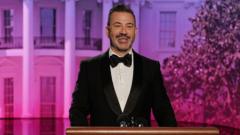
The catalyst for this escalation was a scripted bit on Jimmy Kimmel Live! where the host referred to Melania Trump as having the "glow of an expectant widow." The remark, while typical of Kimmel’s sharp-edged satire, landed in a volatile political climate following a weekend security incident involving an armed suspect at the White House Correspondents' Dinner.
The First Lady quickly labeled the joke "hateful and violent." The President went further, linking the comedy set to real-world threats and calling for Kimmel’s immediate termination. In a previous era, such a feud would have lived and died on social media or in the cable news cycle. Today, it has manifested as a direct threat to the broadcast licenses of local stations in New York, Los Angeles, Chicago, and Philadelphia.
The Carr Doctrine and the Public Interest Trap
FCC Chairman Brendan Carr has spent the last year laying the groundwork for this specific confrontation. Unlike his predecessors, who generally viewed the "public interest" requirement as a matter of educational programming quotas and emergency alert compliance, Carr has redefined it to include the ideological conduct of parent companies.
Carr’s strategy is a masterclass in regulatory "jawboning." By leaning on the Communications Act of 1934, the FCC is asserting that if a broadcaster’s corporate culture—manifested through DEI initiatives or the perceived bias of its entertainers—is "harmful" to the public, their right to use the airwaves is forfeit.
The mechanism being used here is the Hearing Designation Order (HDO). When the FCC moves a renewal to an HDO, it effectively freezes the station’s ability to be sold or modified and triggers a discovery process that can last years. It is a death by a thousand legal briefs. For a behemoth like Disney, the risk isn't just losing a station in Durham, North Carolina; it’s the systematic devaluing of the entire ABC network’s reach.
The Targeted Stations
The order hits the core of ABC’s distribution power. The stations forced into early renewal include:
- WABC-TV (New York)
- KABC-TV (Los Angeles)
- WLS-TV (Chicago)
- WPVI-TV (Philadelphia)
- KGO-TV (San Francisco)
- KTRK-TV (Houston)
- WTVD (Raleigh-Durham)
- KFSN-TV (Fresno)
The DEI Smokescreen
The FCC’s formal justification—unlawful discrimination within Disney’s hiring and promotion practices—provides the legal cover necessary to bypass immediate First Amendment dismissals. By framing the review as an investigation into corporate governance rather than speech, the Commission avoids a direct head-on collision with "free press" protections in the initial stages.
However, the internal logic is flimsy. The FCC has historically stayed out of the employment disputes of private corporations unless they directly impact the station’s ability to serve its local community. By linking Kimmel’s monologue to a broader "public interest" failure, the Commission is attempting to bridge the gap between a comedian’s script and a station’s legal fitness.
A First Amendment Collision Course
Democratic Commissioner Anna Gomez has been the lone voice of dissent within the agency, calling the move "unprecedented and unlawful." Her warning is grounded in decades of legal precedent that prevents the government from using the licensing process to punish broadcasters for content that is not legally obscene or indecent.
Political speech, even the kind that offends the occupants of the White House, sits at the highest tier of protection. If the FCC follows through on attempting to revoke licenses because of a "widow" joke, it will face a judiciary that has traditionally been allergic to government-led censorship of the press.
But for the Trump administration, winning the court case might be secondary to the process itself. The goal is the chilling effect. When a regulator proves it is willing to jeopardize billions in assets over a monologue, the corporate boardrooms tend to get quiet. Last fall, Disney briefly suspended Kimmel under similar pressure. While they aired his show this Monday in a show of defiance, the "sword of Damocles," as Senator Elizabeth Warren described it, is now visibly hanging.
The Business of Retribution
This is no longer a theoretical debate about media ethics. It is a fundamental shift in how the American government interacts with the private media sector. If the FCC can accelerate renewals based on the whims of the executive branch, then every broadcast license in America is effectively a "at-will" contract.
The financial implications for Disney are massive. Broadcast TV is already under siege from streaming and declining ad revenue. Adding a layer of permanent regulatory instability makes these assets toxic to investors and complicates any future spin-off or sale of the ABC network.
Disney has stated it is prepared to fight this through "appropriate legal channels." They have no other choice. If they blink and fire Kimmel or dismantle their corporate structures to appease Carr, they concede that the airwaves are no longer a public trust, but a government-controlled megaphone.
The FCC has moved the goalposts from "serving the community" to "obeying the administration." This isn't just about a joke anymore. It is about who owns the right to speak to the American public and what the price of that speech will be going forward.
Disney must now decide if the cost of defending a late-night host is worth the potential loss of its most historic broadcast pillars.


