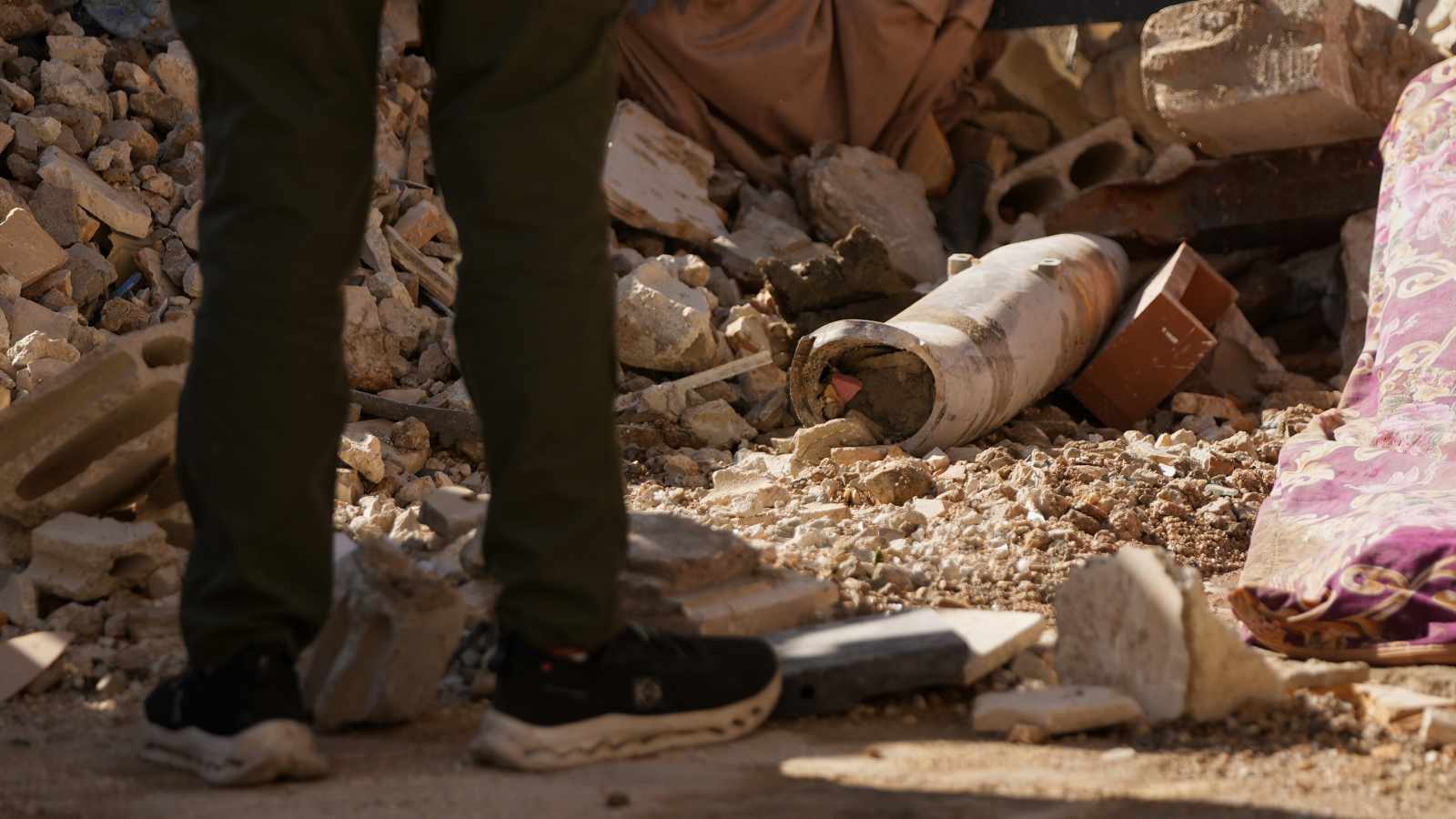
The fragile ceasefire between the United States and Iran has shattered completely, throwing the Middle East back into an open-ended regional war following fresh American airstrikes. Washington ordered the immediate bombardment of Iranian military facilities after blaming Tehran for the downing of a U.S. Army helicopter. This sudden escalation effectively ends the tenuous, Pakistan-mediated truce that had paused the heaviest fighting of the 2026 Iran War. Western intelligence reports suggest the initial diplomatic framework failed because it treated the symptoms of the conflict while ignoring the fundamental breakdown of governance inside Tehran.
The Illusion of a Controlled Conflict
Military planners often fall victim to the myth of the manageable war. When Washington and Israel launched Operation Epic Fury on February 28, the objective seemed straightforward to the architects in the Pentagon. They sought to neutralize Iran's ballistic missile infrastructure, dismantle its nuclear ambitions, and surgically remove its top leadership, including Supreme Leader Ali Khamenei.
Khamenei was killed in those opening hours. Yet, the decapitation of the regime did not lead to an orderly collapse or a submissive transition to moderation.
Instead, it triggered an immediate, uncoordinated regional firestorm. Deprived of a central authority to dictate restraint, regional commander cells and proxy factions began operating autonomously. The ensuing chaos proved that killing a dictator does not kill the network he spent forty years engineering.
Iran responded with a massive barrage of drones and ballistic missiles. They did not just target Israel. They struck U.S. bases, embassy installations, and critical oil facilities across Saudi Arabia, the United Arab Emirates, Kuwait, and Qatar. By the time Pakistan and China scrambled to stitch together a conditional ceasefire in April, the global economy was already buckling under a dual naval blockade. The U.S. was choking Iranian ports, and Iran had successfully choked off the Strait of Hormuz.
The Helicopter Downing and the Failure of Deterrence
The latest breakdown began not with a grand strategic calculation, but with a sudden burst of anti-aircraft fire. The downing of the American helicopter forced the White House to abandon its policy of strategic patience. For weeks, the administration referred to localized skirmishes as mere "love taps" to avoid declaring the April truce dead. That political cover has evaporated.
The fresh American airstrikes targeted drone launch nodes, command centers, and intelligence assets in Tehran and southern coastal hubs like Bandar Abbas. To understand why deterrence failed so thoroughly, one must look at the internal desperation of the Iranian military apparatus. The regime was already facing severe legitimacy crises at home, following the violent suppression of mass civilian protests in January.
For a fractured government ruling over a rebellious population, external conflict is not a policy option to be weighed rationally. It is a survival mechanism.
Middle East Crude Shipments via Strait of Hormuz (2026)
======================================================
Pre-War Baseline:      ~20.5 Million Barrels/Day
During April Truce:    ~2.1 Million Barrels/Day (Trickle)
Current Post-Strike:   ~0.0 Million Barrels/Day (Total Halt)
The economic numbers expose the raw desperation of both sides. By May, internal Pentagon memos estimated that the naval blockade had stripped Tehran of 4.8 billion dollars in vital oil revenue. However, the cost to the American military has already crossed 29 billion dollars, prompting requests for hundreds of billions more in emergency funding. The International Energy Agency's emergency release of 400 million barrels of oil provided only temporary insulation for Western consumers.
Why the Diplomatic Track Was Doomed
Diplomats in Islamabad and Beijing spent weeks attempting to draft a permanent treaty. Their efforts were fundamentally flawed because they assumed they were bargaining with a unified state. The Iranian delegation lacked the authority to guarantee the compliance of the Islamic Revolutionary Guard Corps (IRGC) or the localized militias operating along the Persian Gulf.
When the U.S. demanded a total rollback of Iran's missile program as a prerequisite for lifting sanctions, it was asking the remaining Iranian commanders to disarm themselves in the middle of an active theater. No military force accepts such terms when its back is against the wall.
The Western alliance is also showing deep cracks. While Britain deployed air assets and naval vessels to defend Gulf partners, London openly broke with Washington's broader objectives. British leadership explicitly stated they do not believe in engineering government changes from the air, exposing a significant strategic divide within NATO.
The Strategic Gridlock
The conflict has settled into a brutal, grinding gridlock that offers no clean exit for the United States. A conventional ground invasion of the Iranian heartland remains logistically impossible and politically unfeasible. Air campaigns, no matter how precise, cannot occupy territory or force a hostile population into submission.
Every missile that misses its military target and hits civilian infrastructure, such as the tragic destruction of the girls' school in Minab during the opening wave, serves only to radicalize local populations and solidify resistance.
Washington now faces a choice between two equally perilous paths. It can escalate the air campaign further, targeting Iran's remaining economic lifelines and risking a wider war that drags in major global powers. Alternatively, it can accept the reality of a permanently destabilized region and settle for a dirty, imperfect diplomatic compromise that leaves Tehran's core military capabilities intact.
The illusion of a quick, decisive victory has vanished in the smoke of the latest explosions over Tehran. The current military strategy is running on momentum rather than a clear vision of the end state. Washington has proven it can shatter a truce, but it has yet to prove it can build a lasting peace.