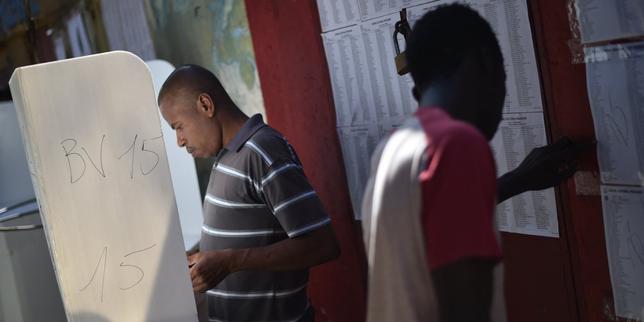
Haiti is preparing for general elections against a backdrop of absolute territorial fragmentation. When authorities float calendar dates for a democratic reset, the announcement routinely ignores the hard geometry of survival on the ground. Armed factions hold strict dominion over wide swaths of Port-au-Prince and critical transit arteries, rendering any traditional ballot a logistical impossibility.
For years, the international press has treated these administrative pronouncements at face value. Bureaucrats in air-conditioned conference rooms issue decrees, and foreign capitals nod politely, pretending that a functioning state apparatus still exists to collect votes. It does not. Behind the diplomatic theater lies a humanitarian catastrophe defined by pervasive displacement, institutional collapse, and a security vacuum that international interventions have failed to plug.
The Illusion of a Provisional Roadmap
Every electoral cycle in Port-au-Prince follows a grimly predictable choreography. A transitional body is cobbled together under heavy foreign pressure, an interim prime minister is installed, and a timeline is drawn up to appease international donors who desperately need an exit narrative. Then reality intervenes.
Consider the mechanics of holding a free and fair contest when eighty-five percent of the capital remains carved up among violent coalitions. How does a citizen register to vote without crossing a sniper's line of fire? How do poll workers distribute ballots to neighborhoods where state authority evaporated years ago?
The Provisional Electoral Council speaks of security prerequisites as if they were minor administrative hurdles rather than existential barriers. These conditions do not exist. To pretend otherwise is to confuse bureaucratic optimism with actual governance.
The Security Deficit and Foreign Miscalculations
The arrival of the Multinational Security Support mission, spearheaded by Kenyan police officers, was supposed to turn the tide. Instead, it exposed the chronic underfunding and sluggish deployment that routinely plague international interventions. Operating with a fraction of its mandated personnel, the force has struggled to secure vital infrastructure, let alone pacify entire urban warzones.
When security operations do occur, they carry a devastating collateral cost. Recent reports from human rights monitors indicate that a staggering percentage of casualties stem from police operations and anti-gang sweeps gone wrong. Citizens are caught in a permanent crossfire between predatory gangs and an overextended, under-resourced state security apparatus. Trust in uniform authority is shattered. When people expect a bullet rather than protection from men carrying badges, asking them to trust those same authorities with an election ballot stretches credulity past its breaking point.
Financial Exhaustion and the Political Economy of Chaos
Elections cost money. Haiti has endured consecutive years of negative economic growth, structural hyperinflation, and a complete evaporation of foreign direct investment. The national treasury cannot self-fund a multi-stage general election without heavy external lifelines. Yet international donors are growing fatigued. Pouring millions of dollars into ballot boxes and biometric registration cards feels like a losing bet when the underlying political class remains fractured, self-serving, and frequently linked to the very criminal syndicates terrorizing the populace.
Internal elite struggles continue to sabotage any unified front. Transitional councils spend more time bickering over executive appointments and ousting prime ministers than securing structural reform. This circular infighting ensures that every time a tentative step forward is taken, political vanity drags the country two steps back.
The Danger of Rushed Democracy
There is a profound difference between holding an election and restoring a democracy. Rushing a catastrophic electoral process in the middle of a civil conflict rarely heals a broken state. Instead, it risks institutionalizing warlordism. When armed groups control territory, they also control the local economy, human movement, and information flow. Left unchecked, these groups can easily co-opt a rushed democratic process, transforming criminal syndicates into legitimate political actors through ballot-box intimidation and voter suppression.
A genuine path forward requires dismantling the financial and logistical networks of the gangs first. It demands cutting off the illicit arms pipelines flowing through porous maritime borders and holding corrupt political patrons accountable through sustained, enforceable international sanctions. Until the monopoly on violence is wrestled back from the gangs, any conversation about polling stations is nothing more than a dangerous distraction from the blood on the streets.
The structural rot cannot be cured by a fresh coat of electoral paint. Every delayed timeline and broken promise exposes the depth of the crisis, reminding the world that democracy cannot be scheduled into existence while neighborhoods burn.