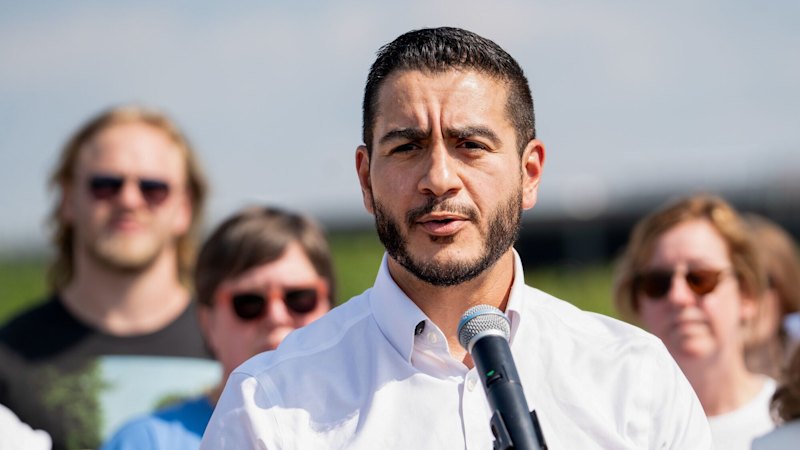
The persistent friction between progressive left-wing platforms and the industrial heartland often boils down to a fundamental misunderstanding of regional politics. When political observers ask whether a left-wing Muslim candidate can secure a victory in the American Midwest, they typically frame the question around identity politics and coastal ideological exports. That framing misses the operational reality on the ground. Figures like Michigan Senate candidate Abdul El-Sayed are testing whether an explicit blend of Islamic faith-based public morality, anti-corporate populism, and democratic socialist economics can overcome institutional skepticism in a vital swing state. The answer does not depend on cultural anxieties alone. It depends on economic survival, structural labor alignments, and whether working-class voters view a candidate as an authentic voice against systemic corruption.
For decades, the dominant political consulting class has peddled a neat, tidy narrative about the Midwest. According to this convention, the region is inherently moderate, deeply cautious, and fundamentally averse to structural change. Pundits warn that any deviation from corporate-friendly centrism guarantees a general election bloodbath. Yet this conventional wisdom ignores the profound erosion of the blue-collar social contract. Traditional manufacturing towns have watched jobs evaporate while corporate profits soar. Workers do not care about ideological purity tags. They care about utility bills, healthcare costs, and the feeling that the political machinery works exclusively for donors.
When a candidate steps forward with a background in public health and an explicit mandate for Medicare for All, the conversation shifts away from abstract theory. It becomes concrete. El-Sayed’s campaign strategy, much like his earlier gubernatorial bid, rests on a simple premise: material conditions dictate political alignment. By anchoring progressive economic policy directly inside personal faith traditions—arguing that true religious accountability requires feeding the hungry and lifting the poor—these candidates attempt to reframe the moral boundaries of public life.
Critics from both the right and the moderate wing of the Democratic Party argue that such platforms are electoral poison in competitive counties. They point to historic losses and assume that suburban moderates will flee from anyone associated with the left flank of the party. But this perspective overlooks the fracturing of traditional voting blocs. Arab American and Muslim communities across southeast Michigan, deeply alienated by foreign policy decisions and domestic neglect from both major parties, represent a mobilized voting block that can no longer be taken for granted or treated as an afterthought.
Consider the hypothetical example of a machinist in a mid-sized industrial town outside Grand Rapids. This voter might hold traditional social views, attend weekly services, and feel deeply skeptical of national party culture wars. At the same time, this same worker faces skyrocketing insulin prices, fears the collapse of local hospital networks, and resents corporate monopolies that suppress wages. When a progressive candidate bypasses cultural posturing and focuses strictly on reigning in corporate power, removing dark money from elections, and guaranteeing healthcare as a human right, the ideological labels begin to fade.
The structural obstacle is not the voter base. The obstacle is the institutional gatekeeping of the political establishment. Party apparatuses, backed by outside spending and corporate political action committees, work aggressively to marginalize insurgent left-wing campaigns. They marshal fear. They amplify anxieties about electability to protect incumbent power structures. This dynamic creates a self-fulfilling prophecy where establishment resources flow exclusively to candidates who promise not to rock the boat, starving insurgent campaigns of the infrastructure needed to compete on equal terms.
To understand why a left-wing candidate with a non-traditional background can threaten this establishment, one must examine the mechanics of grassroots mobilization. Traditional campaigns rely on high-dollar donors, television ad buys, and professionalized consultants who view voters as target markets. Insurgent campaigns built on labor support and volunteer-heavy field operations rely on interpersonal trust. When a candidate spends years building coalitions across religious and racial lines—such as joint canvassing efforts between Jewish and Muslim community groups in Detroit—they construct an alternative political architecture.
This architecture challenges the transactional nature of modern elections. It forces a confrontation over what the party actually stands for. Is it an administrative vehicle for corporate management with a socially tolerant veneer, or is it a mass movement for economic justice? For working-class voters tired of empty rhetoric, that distinction carries immense weight.
The Midwestern electorate is volatile precisely because it is desperate for structural honesty. Candidates who try to split the difference, offering platitudes about unity while defending a broken status quo, often find themselves abandoned by a disillusioned electorate. Conversely, candidates who diagnose systemic failures with brutal clarity—naming corporate greed, campaign finance corruption, and healthcare profiteering—tap into a deep vein of populist anger.
Whether this specific political synthesis can capture a statewide majority remains an open question answered in real time at the ballot box. Pundits will continue to obsess over demographic checklists and identity markers. They will miss the core mechanism driving the shift. Power does not concede anything without a struggle, and the fight for the soul of the industrial Midwest is ultimately a referendum on who the economy serves. The outcome will shape political strategies nationwide for a generation.
Both parties are lying: Progressive Senate candidate Abdul El-Sayed takes on his critics
This video provides an unfiltered look into the campaign strategies and platform debates surrounding progressive candidates in the Midwest.
http://googleusercontent.com/youtube_content/1