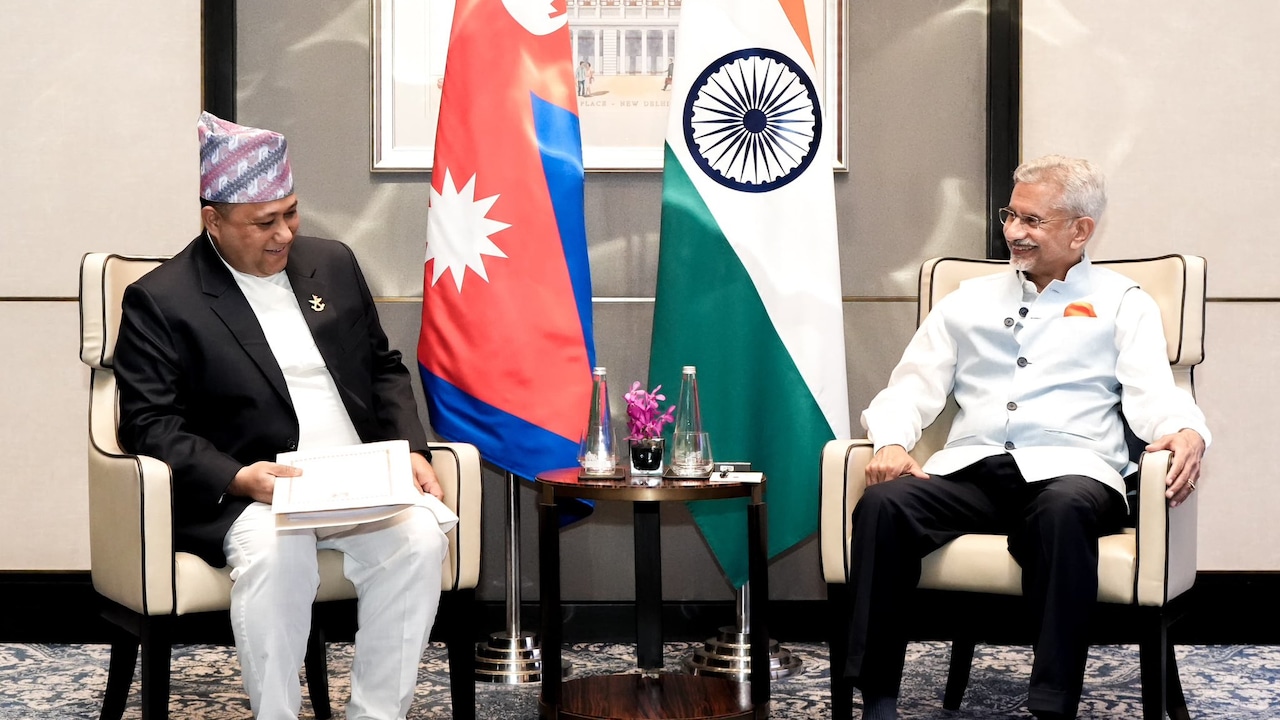
Diplomatic handshakes in New Delhi carry a familiar choreography. The June 2026 meeting between Indian Foreign Minister S. Jaishankar and his Nepali counterpart Shisir Khanal followed the established script. Headlines quickly trumpeted a dual victory: the operationalization of peer-to-peer cross-border retail payments alongside the ceremonial handover of 84 Indian-funded infrastructure projects in Nepal.
To the casual observer, this looks like an unmitigated success story of neighborhood diplomacy. The reality on the ground tells a much more complicated, asymmetric story.
While Indian tourists and patients have scanned QR codes across Kathmandu with ease since early 2024, Nepali citizens entering India have faced an administrative and technical brick wall. The recent announcement promises to fix this imbalance, yet the underlying friction points show that true financial integration between these two interconnected economies requires much more than a ministerial photo opportunity.
The Asymmetry in the Digital Corridor
The initial agreement between Nepal Clearing House Limited (NCHL) and NPCI International Payments Limited (NIPL) was inked back in June 2023. When the system went live for Indian visitors in March 2024, it changed the local hospitality economy in Nepal. Indian travelers no longer needed to carry thick wads of cash or worry about the informal ban on high-denomination Indian currency notes in Nepal. They simply scanned a Fonepay QR code, and money moved instantly from their Indian bank accounts.
For Nepalis traveling south, the experience has been defined by broken deadlines.
A definitive launch date of December 2024 vanished without an official explanation from Nepal Rastra Bank. Behind closed doors, officials acknowledged that a major roadblock was purely political. Bureaucrats on both sides held back the full consumer launch because they wanted to save the reciprocal announcement for a high-level prime ministerial visit. Because those leadership summits were delayed, everyday citizens were forced to keep carrying cash.
The delay exposes an uncomfortable truth about cross-border infrastructure. Diplomacy often prioritizes optics over immediate operational utility.
The Zero Fee Dilemma
Beyond political theater, a fundamental structural rift between the financial systems of the two nations continues to complicate implementation. This rift centers on the cost of moving money.
In India, the Unified Payments Interface (UPI) operates under a government-mandated zero-merchant discount rate (MDR) policy for standard bank-to-bank transfers. Merchants pay nothing to accept these payments, and consumers pay nothing to send them. The Indian government subsidizes the backend infrastructure to drive financial inclusion.
Nepal operates on a commercial market model.
When a visitor scans a QR code in Kathmandu, the local merchant pays a transaction fee ranging from 1.3% to 2%. This fee is split between the issuing bank, the acquiring bank, and the network operator. Merging a transaction-fee economy with a zero-fee economy creates immediate friction:
- Who pays the clearing costs? When a Nepali citizen scans a UPI code at a grocery store in Delhi, the Indian merchant expects to pay zero fees.
- Who absorbs the cross-border processing loss? The Nepali issuing bank cannot afford to process international transactions for free without draining its own capital.
- The hidden remittance markup. The exact fee structure for outbound Nepali retail payments remains hidden from the public, clouded by ongoing central bank negotiations.
The central banks have chosen to absorb these early systemic frictions through diplomatic agreements rather than market-driven pricing. This approach temporarily resolves the issue but leaves the long-term commercial sustainability of the network in question.
The Infrastructure Handover as a Diplomatic Shield
The digital payment announcement did not happen in a vacuum. It was deliberately packaged alongside the physical handover of 84 post-earthquake reconstruction projects, including 72 health facilities and 12 cultural heritage sites. These structures represent the final fulfillment of India’s $1 billion aid pledge following the devastating 2015 earthquake.
This pairing is an intentional geopolitical strategy.
New Delhi uses hard infrastructure deployment to counter China’s growing economic influence in the Himalayan region. By tying digital public infrastructure to concrete healthcare facilities, India seeks to anchor Nepal firmly within its economic orbit.
Power Pledges and Digital Realities
The digital push mirrors the dynamics of the bilateral energy sector. In early 2024, India committed to importing 10,000 megawatts of electricity from Nepal over the next decade. While that energy agreement looks impressive on paper, actual implementation moves slowly due to rigorous regulatory scrutiny of Nepal's hydropower plants, particularly those built with Chinese investment or contracting.
Digital connectivity faces similar hidden hurdles. While New Delhi celebrates the deployment of language translation platforms like the "Voice First" initiative developed with Kathmandu University, the actual financial pipeline remains tightly controlled.
The Burden of Verification
For the millions of migrant workers, students, and small traders crossing the 1,100-mile open border every year, the primary obstacle is not the software interface. It is identity verification.
Nepal has recently allowed its citizens to secure Indian SIM cards using local passports, citizenship certificates, or embassy IDs. This is a step forward under the spirit of the 1950 Peace and Friendship Treaty. However, linking these communication tools to a secure financial ledger remains an administrative nightmare.
The Indian banking system relies heavily on strict Know Your Customer (KYC) rules tied directly to domestic identity profiles. A Nepali laborer working in a small enterprise in Uttar Pradesh cannot easily open an account or link a digital wallet without domestic Indian credentials.
The new peer-to-peer remittance link seeks to bypass this by connecting India's UPI directly with Nepal's National Payments Interface. The success of this system depends on whether the central banks can automate cross-border compliance checks without burying users in paperwork.
Beyond the Bilateral Bubble
The financial integration of India and Nepal is part of a broader regional strategy. In mid-2025, Kathmandu hosted a major consultation workshop on cross-border digital payments among BIMSTEC member states, exploring ways to link real-time payment networks across the Bay of Bengal region.
India has already established digital footholds in Cambodia, Sri Lanka, and Mauritius. Yet the Nepal corridor remains the ultimate test case. No other neighboring country shares such an intense, unregulated flow of human capital and daily commerce with India.
If a Nepali vendor cannot smoothly buy goods in an Indian border market using a mobile phone, the broader regional digital network remains a theoretical exercise. The technology exists, the political declarations have been signed, and the physical buildings have been handed over. The true measure of success rests entirely on whether the backend financial networks can resolve their structural differences and make the system usable for ordinary citizens.