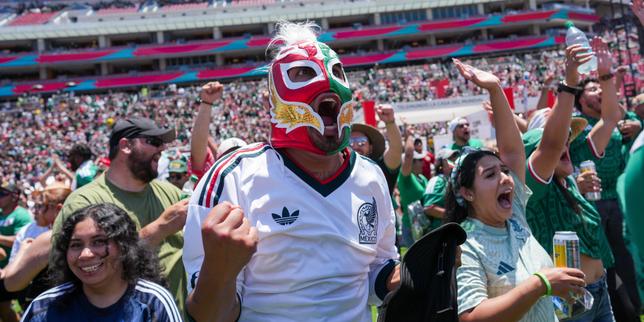
The air inside a packed stadium doesn't feel like regular oxygen. It is heavy. It smells of spilled beer, stale popcorn, and the collective, terrifying anxiety of eighty thousand people who have staked their emotional well-being on a bouncing leather ball. If you have ever stood on a pitch with that weight pressing down on your chest, you know that the hardest part isn't the running. It is the breathing.
For decades, American men's soccer was a curiosity. It was a suburban pastime, a fitness regime for kids who would eventually grow up to care about the NFL or baseball. The national team was a collection of gritty overachievers, honest workers who could occasionally upset a giant through sheer fitness and tactical discipline. They were safe. They were predictable.
Then came a boy from Hershey, Pennsylvania.
Christian Pulisic did not look like a savior. He was slight, quiet, and possessed the pale, intense focus of a kid who spent too many hours playing video games. But when the ball touched his feet, the world sped up. European scouts, notoriously cynical talent spotters who view American players the way art critics view finger painting, stopped looking at their clipboards. They saw something rare: an American with soft feet, a devastating first touch, and an innate understanding of space.
By the time he was a teenager, he wasn't just playing for Borussia Dortmund; he was starting. He was inheriting the legendary number 10 jersey for the United States. He was supposed to be the chosen one who would finally make America care.
But promise is a toxic currency. It buys expectation, and expectation is a brutal landlord.
The Ghosts of Couva
To understand the pressure cooking inside Pulisic, you have to look backward. Go back to a rainy night in October 2017. The setting was Trinidad and Tobago. The United States needed a mere draw against a team with nothing to play for to qualify for the 2018 World Cup. It was supposed to be a formality.
It became a national tragedy.
The Americans lost. The golden generation, or what was left of it, crumbled. As the final whistle blew, the cameras panned the field, searching for answers. They found a nineteen-year-old Pulisic, hands on his knees, staring into the damp turf. He had scored the only American goal that night. He had dragged his teammates as far as his teenage shoulders could manage. It wasn't enough.
Imagine carrying that failure into your twenties. Every interview, every profile, every casual interaction at an airport begins and ends with the same unspoken question: Are you going to let us down again?
When the 2022 World Cup in Qatar arrived, Pulisic wasn't just a player trying to win a soccer match. He was a young man attempting to exorcise a ghost that had haunted an entire nation for five years. The weight of an entire sport's domestic growth, television contracts, and cultural relevance rested squarely on his ability to perform over ninety minutes.
The Loneliness of the Golden Child
There is a specific kind of isolation that comes with being the first to break through a ceiling. In England or Brazil, a young star enters an ecosystem built to support them. They are surrounded by veterans who have won World Cups, coaches who have managed icons, and a media apparatus that, while harsh, understands the nuances of the game.
Pulisic had none of that.
When he moved to Chelsea in 2019 for a staggering sixty-four million dollar transfer fee, he became the most expensive American player in history. That number became a target on his back. In London, he wasn't just Christian from Pennsylvania; he was "The American Boy." Every time he was benched by a manager, a million American soccer fans took it as a personal insult. Every time he suffered a hamstring injury—and his muscles seemed made of spun glass during those London years—the collective groan could be heard from New York to Los Angeles.
He was living in a fishbowl inside a pressure cooker.
Consider the psychological toll of that existence. You are twenty-three years old. Your body is betraying you. Your club manager doesn't trust you. Yet, when you fly across the Atlantic to put on the red, white, and blue jersey, you are expected to be the talisman. You cannot have an off night. If you fail, the sport crawls back into the shadows of the American consciousness.
The Moment of Impact
The true test of pressure isn't how you handle the build-up. It is how you react when the trap snaps shut.
In Qatar, the United States faced Iran in a do-or-die group stage match. The political undertones of the fixture were suffocating, but the sporting reality was simple: win or go home. Another four years of irrelevance waited in the wings.
For thirty-eight minutes, the game was a tense, agonizing chess match. Then, a long, diagonal pass floated toward the right side of the penalty area. Sergiño Dest tracked it, leaping to head the ball back across the face of the goal.
What happened next was not an act of soccer artistry. It was an act of pure, violent will.
Pulisic knew what was coming. He could see the Iranian goalkeeper, Alireza Beiranvand, charging off his line like a freight train. He knew that if he tried to score, he would be obliterated. A lesser player, a more fragile mind, might have hesitated for a fraction of a second to protect themselves.
Pulisic didn't blink. He sprinted full-tilt into the danger zone, throwing his body at the ball, crashing it into the back of the net a millisecond before the goalkeeper crashed into his midsection.
The stadium erupted, but Pulisic didn't celebrate. He lay crumpled on the grass, clutching his pelvic bone, his eyes rolled back in agony. He had scored the goal that would send his country to the knockout rounds, and he had done it at the cost of his own physical safety.
He didn't finish the game. He watched the second half from a hospital bed on a cell phone, draped in medical gowns, tubes running into his arm.
That is the reality of the pressure Pulisic faces. It is not an abstract concept discussed by pundits on television. It is a physical entity. It is a bruise that covers your hip. It is the breath knocked out of your lungs while millions of people scream your name.
The Horizon Shifts
The story of Christian Pulisic is often framed as a quest for greatness, but that misses the point entirely. Greatness is luxury. Pulisic's journey has been about survival.
He survived the collapse in Couva. He survived the meat grinder of the English Premier League. He survived the crushing expectations of a nation that demanded he be LeBron James, Tom Brady, and Derek Jeter all rolled into one, playing a sport that much of the country still didn't fully comprehend.
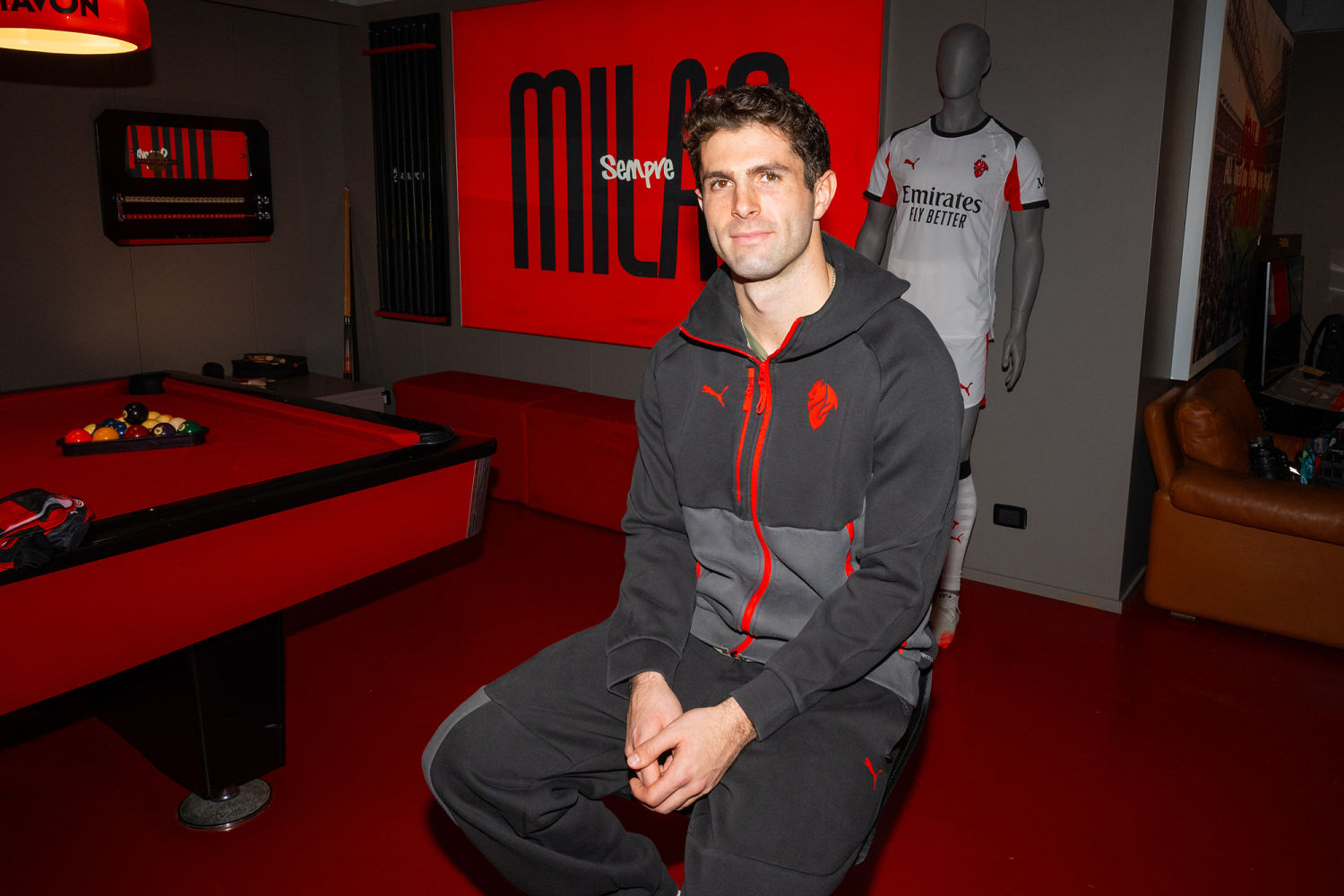
Now, playing his club football in Italy for AC Milan, he looks different. The anxious boy has vanished. In his place is a man who has paid his debts to expectation. He smiles more. He plays with a fluid, relaxed joy that was missing during the grim years of his early twenties.
But the ultimate test still looms on the horizon. The 2026 World Cup will arrive on American soil. The stadiums will be bigger. The crowds will be louder. The pressure will not just be heavy; it will be atmospheric.
Pulisic will no longer be the teenage prodigy or the battered survivor. He will be the leader.
When he walks out of the tunnel onto the grass of MetLife Stadium, he will look up at stands filled with jerseys bearing his name. He will feel that familiar, suffocating air fill his lungs. But this time, he will know exactly what to do with it. He has already proven that he is willing to break for his country.
The kid from Hershey didn't just build a career. He built a foundation for an entire nation to stand on, one agonizing, beautiful yard at a time.