There is a specific kind of quiet that lives in an empty room after the credits roll on a truly devastating television finale. You sit there in the dark, staring at the glowing black rectangle of your television screen, feeling as though you have been physically unmoored from reality. The characters you spent ten hours watching are gone. Their grief has become your grief. Their triumphs feel strangely, impossibly personal.
Most people blame the actors. We praise the director for the tracking shot that made our stomachs drop. We applaud the costume designer who frayed the cuffs of a coat to show a character's internal fraying. But usually, long before a single camera rolled or a writer's room argued over a script outline, someone was sitting alone in a small room with a blinking cursor, wrestling with a blank white page.
They were choosing words. They were burying secrets in subordinate clauses. They were engineering an emotional architecture out of twenty-six letters.
We live in an era obsessed with the translation. Every Sunday night, millions of us tune in to watch ink and paper transform into flesh and blood. We want to see how Hollywood handles the impossible challenge of taking a universe built entirely inside a reader's mind and projecting it onto a towering glass display. Sometimes it goes horribly wrong. The soul is sanded down. The edges are rounded for mass consumption. The inner monologues that kept us awake at three in the morning are flattened into expositional dialogue delivered over stale coffee.
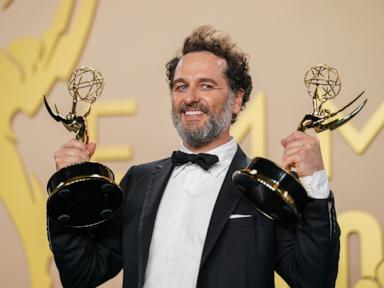
Yet, every so often, the television academy notices something extraordinary. When the Emmy nominations roll out each year, a distinct class of stories rises to the top. They are the ones anchored by written masterpieces. These are not merely adaptations. They are second lives.
Consider what happens when a novel refuses to stay quiet on the shelf.
Picture Elena, a hypothetical reader sitting on an oversized armchair in a cramped apartment, wrapped in a faded quilt. It is raining outside. She turns a page in her copy of Shōgun, feeling the thick, yellowed paper between her thumb and index finger. She is not reading about feudal Japan; she is walking through the mud of Ajiro, tasting the salt of the sea, terrified of the political machinery tightening around Blackthorne. For Elena, that book is a private sanctuary. No Hollywood studio can touch it. No director can recast the daimyo in her mind.
Then, the adaptation drops.
Suddenly, the private sanctuary is public property. Millions are watching Hiroyuki Sanada command the screen with a single, devastating twitch of an eyebrow. The physical production budget rivals a small nation's GDP. The rigging, the historical accuracy of the silk kimonos, the agonizing translation barrier—it all materializes on screen.
Did Elena lose something when her imagination was outdone by reality? Or did the television screen grant her private ghosts a roaring public chorus?
This is the central tension of the modern prestige television boom. We no longer just read books; we anticipate their translation. We look at a brilliant debut novel or an obscure historical biography and immediately
The Ghost On The Page And The Screen
entertainment
Ink is patient. It waits in the dark of a spine until someone cares enough to pry it open.
Most of us remember the exact room we were sitting in when a book finally broke us open. Maybe it was a cracked leather armchair in a drafty corner of a library, or the blue light of a phone screen at three in the morning when the rest of the house was entirely silent. You turn the final page. Your chest feels tight. You look up at the familiar walls of your bedroom, but nothing looks quite the same anymore because the characters have taken up permanent residence behind your ribs.
Then, Hollywood comes knocking.
For decades, the translation from page to screen felt like a betrayal. They would take a world built on nuance, internal monologue, and slow-burn devastation, flatten it into two hours of explosions or sanitized melodrama, and hand it back to us like cold fast food. We grew suspicious of adaptations. We learned to wince when a studio announced they were turning our favorite literary obsession into a television series or an award season contender.
Something shifted recently. The television landscape matured, or perhaps the storytellers finally realized that books do not need to be fixed; they need to be inhabited. When an adaptation earns the heavy nod of an Emmy nomination, it means the creators resisted the urge to sand down the edges. It means they respected the ghost on the page enough to let it haunt the screen.
Consider what happens when a masterpiece makes that terrifying leap.
Take the quiet, devastating precision of Hilary Mantel’s historical worlds or the sprawling, complicated emotional architecture found in modern speculative fiction that scores recognition from the television academy. These stories do not succeed because they have bigger budgets or flashier special effects. They succeed because they weaponize intimacy. They take the unspoken anxieties that authors spend hundreds of pages mapping out and translate them into a twitch of an eye, a hesitation before a doorway, a long silence over a dinner table.
Imagine sitting across from a writer who spent four years wrestling a single manuscript into existence. They lived with these people. They heard their voices over breakfast coffee. When the rights are sold, that writer hands over their children to strangers in Los Angeles. It is a terrifying gamble. Most of the time, the translation gets lost in transit. The soul gets replaced by market research.
Yet, when the alchemy works, it changes the reading public entirely.
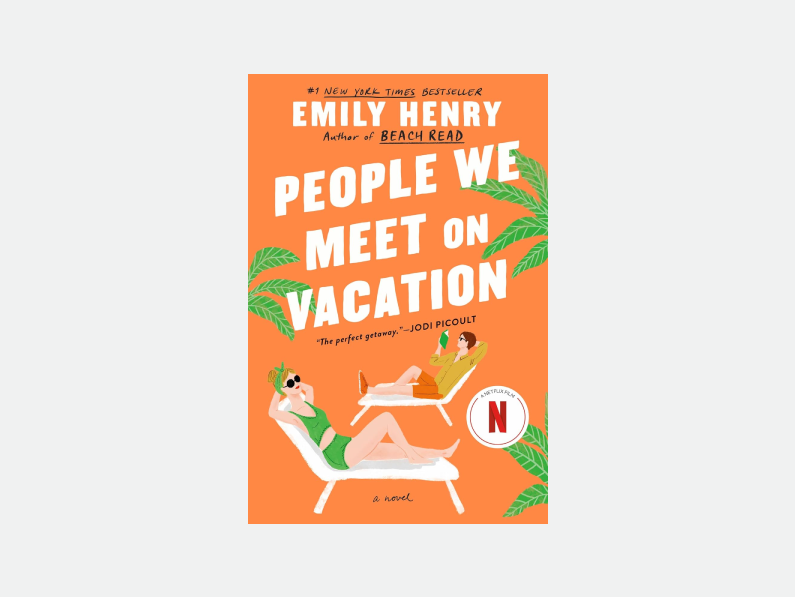
An Emmy nomination for an adapted work is not just a shiny trophy for a network executive's mantelpiece. It is a cultural tremor. It sends millions of viewers sprinting back to bookstores, hunting down paperbacks with new tie-in covers, eager to discover the raw material that sparked the fire on their televisions. It proves that audiences are not starving for simple entertainment. We are hungry for depth. We want to live inside complex minds, even when those minds are messy, broken, or dangerous.
The magic of these specific adaptations lies in their refusal to talk down to the audience. They trust that you can handle ambiguity. They trust that you do not need every emotional beat spelled out by exposition or a swelling orchestral score.
Think about the way a great adaptation handles time. In a novel, time is elastic. You can spend three pages describing the way dust motes dance in an abandoned attic during an afternoon in 1974. On a screen, those three pages become a single, lingering camera shot. If the director lacks patience, the moment dies. But when the Emmy-nominated directors take the helm, they let the camera breathe. They honor the rhythm of the prose. They understand that the real story is never what characters say to one another; it is what they refuse to say.
We are living through a golden era of literary translation, precisely because television finally learned how to listen. The producers, showrunners, and actors stepping up to accept these nominations are often lifelong readers first. They approach the source material with reverence rather than arrogance. They treat the text like a sacred text, deciphering the code of the author's intent and rebuilding it in living color.
If you have only watched the screen versions, you are only seeing half the painting. The canvas extends backward into the bindings of books that have quietly shaped our cultural conscience. And if you have only read the books, refusing to look at the screen for fear of disappointment, you are missing out on a rare cultural phenomenon: artists taking something already brilliant and teaching it how to sing in an entirely new key.
The next time you see that small golden nomination badge attached to a series adapted from the page, do not dismiss it as industry back-scratching. Look closer. It is a marker of a rare victory. It means that the ghosts we fell in love with in the dark quiet of our reading chairs managed to cross the threshold into the light, entirely unbroken.
Close your eyes for a moment. Think of the last story that completely unspooled you. Not the movie, not the show, but the words. The specific cadence of a sentence that made you stop breathing for a second. Now, imagine a hundred strangers in a dark theater or millions of living rooms feeling that exact same tremor at the exact same second, sparked by the same ink brought to life.
That is the bridge we are crossing. The book is the map, the screen is the territory, and we are the travelers lucky enough to get lost in both.