The sound of a tank shell hitting a concrete observation tower is not a clean, cinematic explosion. It is a grinding, metallic shriek followed by the heavy, suffocating smell of pulverized limestone and burnt electrical wiring. For a peacekeeper stationed on the Blue Line in Southern Lebanon, that sound is the definitive end of a long-held illusion. It is the noise of the world deciding that your presence no longer matters.
Imagine a soldier—let’s call him Matteo. He is three thousand miles from home, wearing a beret the color of a summer sky. He stands behind a reinforced glass window, a clipboard in hand, tasked with a job that sounds simple on paper: observe and report. But when the horizon ignites, "observing" feels like a cruel joke. He is watching two neighbors burn each other's houses down while he is legally forbidden from holding a bucket of water.
This is the reality of UNIFIL, the United Nations Interim Force in Lebanon. It is an organization trapped in a linguistic trap. The word "interim" has been part of its name since 1978. In the vocabulary of international diplomacy, forty-eight years is apparently a temporary stay.
The Geography of a Powder Keg
The Blue Line is not a border. It is a "line of withdrawal," a geometric abstraction drawn across olive groves and limestone ridges to mark where Israeli forces pulled back in 2000. It is a scar on the land. On one side, the Galilee; on the other, the rugged hills of Jabal Amel.
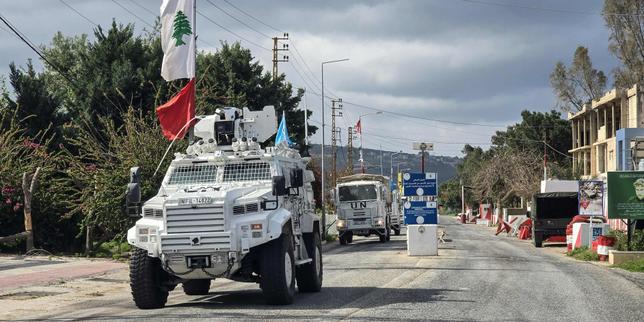
UNIFIL’s white armored vehicles, once symbols of a global consensus, now look like easy targets. Recently, these vehicles and the towers they support have been struck. Not by accident. Not by "stray fire." The hits have been direct. When a Merkava tank aims its sensor suite at a UN camera, it isn't an error of navigation. It is a message. The message is: Move.
But they cannot move. And they cannot fight. They are the world’s most well-armed spectators, caught in a crossfire that has evolved from a skirmish into a scorched-earth campaign.
The Invisible Stakes of Neutrality
To understand why this matters, you have to look past the military hardware. The real tragedy isn't just the physical danger to the ten thousand troops from countries like Italy, Ireland, and Indonesia. The tragedy is the death of the very idea of a "buffer."
When the shells began falling closer to the UN positions, the diplomatic community erupted in the usual chorus of "grave concern." But concern is a cheap currency. On the ground, the peacekeepers are facing a terrifying psychological erosion. They are there to represent Resolution 1701—a document intended to keep Southern Lebanon free of any armed personnel other than the Lebanese army and the UN.
In reality, the woods around them are filled with the infrastructure of a shadow war. Tunnels, rocket caches, and hidden launch sites have turned the "demilitarized zone" into a labyrinth. To the north, Hezbollah operates with the confidence of a landlord. To the south, the Israeli Defense Forces view the UN’s presence as a bureaucratic hurdle to their security objectives.
Consider the position of an Irish sergeant perched in a bunker during an exchange of fire. He sees a rocket launch from a valley 500 meters away. Moments later, he hears the whistle of counter-battery fire. He logs the time. He logs the coordinates. He sends a digital report to a headquarters that will eventually compile it into a briefing for a committee in New York.
Silence.
The report does not stop the next rocket. It does not deflect the incoming shell. It merely archives the destruction. This is the "impotence" mentioned in whispered tones in the corridors of power. It is a specialized form of torture: being required to watch a catastrophe you were sent to prevent.
A History of Broken Glass
We have been here before. The history of Lebanon is a history of interventions that began with flowers and ended with fractured glass. In 1982, in 1996, in 2006. Each time, the mandate is polished and renewed. Each time, the "blue line" is reinforced with more concrete and more sensors.
But sensors cannot detect political will. They cannot measure the desperation of a villager in Nakoura who looks at the UN flag and sees not a shield, but a target. If the peacekeepers are hit, the civilians know they are next. The UN is the canary in the coal mine. When the canary is being targeted, the mine is already collapsing.
The irony is that both combatants claim to want the UN there, yet both treat the mission as a nuisance. For Israel, the UN has failed to disarm the threats on its border. For Lebanon, the UN has failed to stop the violations of its sovereignty. UNIFIL is the child in a bitter divorce, used as a shield by one parent and a scapegoat by the other.
The Human Cost of Standing Still
War is usually about movement. Flanking maneuvers, retreats, advances. Peacekeeping, however, is about the agonizing discipline of standing still.
It takes a specific kind of courage to sit in a white tower while a drone swarms overhead, knowing that your only defense is a piece of blue fabric and the hope that the person pulling the trigger still cares about international law. That hope is fading. When peacekeepers are wounded in their bunks, the "rules of the game" have been discarded.
Matteo, our hypothetical soldier, writes home to tell his family he is safe. He doesn't tell them about the vibration in his chest every time a jet breaks the sound barrier. He doesn't tell them that he feels like a ghost. He is a representative of a "world order" that feels increasingly like a memory.
There is a logical deduction to be made here, and it is a grim one. If the UN is forced to withdraw, the last layer of transparency disappears. Without those eyes on the ground—however limited their power—the war moves into total darkness. There will be no one to document the phosphorus in the groves, no one to verify the destruction of villages, no one to mediate the recovery of the dead.
The Echo of the Last Siren
The debate over whether UNIFIL should stay or go misses the point. The question isn't about the troops. It’s about us. It’s about whether the world still believes in the possibility of a neutral space.
If we accept that peacekeepers are "collateral damage," we are admitting that the concept of a global community is dead. We are saying that might is the only right, and that the blue flag is just a rag.
The sun sets over the Mediterranean, casting long, bloody shadows across the hills of the south. In the distance, the rumble of artillery resumes. Inside the UN outposts, men and women check their gear, turn on their thermal cameras, and wait. They are waiting for a peace that doesn't want to come, serving a mandate that has no teeth, in a land that has seen too much blood to be impressed by a blue beret.
They stay because leaving is an admission of failure that the world isn't ready to sign. They stay because, in the dark logic of war, even a witness is a threat to those who want their actions to go unseen.
The tower stands. For now. But the glass is cracked, and the wind blowing through the shards sounds like a long, low sigh. It is the sound of a mission that has been asked to do the impossible: to keep the peace where there is no peace to keep.
The next shell doesn't need to hit the tower to destroy it. It only needs to convince the people inside that they are invisible. And as the smoke clears from the latest strike, the silence that follows is the loudest thing in Lebanon. It is the silence of a world that has stopped listening to the reports.
Matteo puts down his clipboard. He looks out at the fires. He is still there. He is observing. He is reporting. And the fire, indifferent to his blue hat, simply continues to grow.