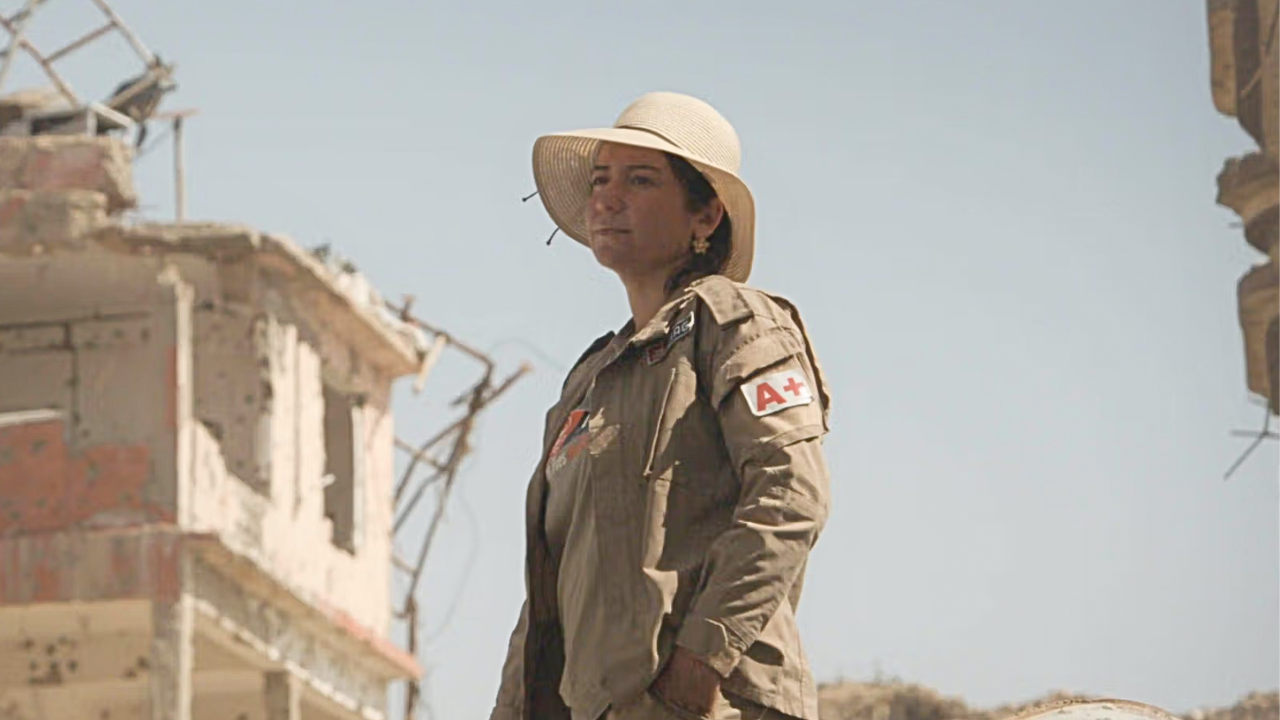
The debris of war does not vanish when the ceasefire is signed. In the Sinjar region of Northern Iraq, the ground remains a lethal mosaic of improvised explosive devices (IEDs) and unexploded ordnance left behind by ISIS. While high-level geopolitical discussions continue in distant capitals, the actual work of making this land habitable falls to a specialized team of Yazidi women. Led by Hana Khider, these deminers are not just clearing physical explosives; they are dismantling the psychological remains of a genocide. This is a gritty, high-stakes race against time where the margin for error is measured in millimeters and lives.
The challenge in Sinjar is fundamentally different from traditional mine clearance. Usually, demining involves locating factory-made anti-personnel mines laid in predictable patterns. In Iraq, the "legacy" contamination consists of sophisticated, handcrafted IEDs designed specifically to kill returning civilians. These devices are hidden in doorframes, under floorboards, and inside kitchen appliances. The technical difficulty is staggering. Don't forget to check out our recent coverage on this related article.
The Engineering of Terror
ISIS did not just leave mines; they engineered traps. These insurgents utilized "crush wire" switches and sensitive pressure plates that trigger with the weight of a child. For Hana Khider and her team, every day begins with a metal detector and a handheld trowel.
The process is agonizingly slow. A deminer might spend four hours on their knees to clear a single square meter of earth. They use a method called "excavation and prodding," where the soil is gently moved aside at a 30-degree angle. If the trowel hits something hard, the team assumes it is a detonator. To read more about the history of this, Associated Press provides an in-depth breakdown.
Why Women Are Leading the Charge
The emergence of an all-female demining team in a deeply conservative region is not a PR stunt. It is a structural necessity. In the aftermath of the 2014 genocide against the Yazidi people, the social fabric of Sinjar was shredded. Many men were killed or remain missing, leaving women as the primary drivers of community reconstruction.
Furthermore, female deminers have unique access. In many households, women are more comfortable allowing female teams to enter private living quarters to search for booby traps. This cultural nuance provides a layer of operational efficiency that male-only teams struggle to match. Khider’s team, managed by the Mines Advisory Group (MAG), represents a shift in how humanitarian aid functions in post-conflict zones. They are local experts with a personal stake in the safety of the dirt they are scouring.
The Technical Gap in Mine Clearance
Despite the bravery of these teams, the global community is failing them on a technological level. Most demining in Iraq is still done with 1990s-era metal detectors. These tools cannot distinguish between a deadly trigger and a discarded soda can or a piece of shrapnel.
This "false alarm rate" is the primary bottleneck in clearing Sinjar. For every actual explosive found, a deminer might dig up 500 pieces of harmless metal. While ground-penetrating radar (GPR) and drone-based thermal imaging exist, they are rarely deployed at the scale needed due to cost and the rugged terrain of the Sinjar Mountains.
The Economics of Demining
Clearing a minefield is an expensive, thankless endeavor. It costs roughly $300 to $1,000 to remove a single mine that likely cost $5 to produce. Funding for Iraq’s demining efforts is often tied to shifting political tides in the West. When the news cycle moves on from ISIS, the grants begin to dry up.
Hana Khider's team works under the shadow of this financial instability. If the funding stops, the deminers go home, but the explosives stay in the ground. This creates a permanent state of displacement for thousands of Yazidi families who are currently languishing in IDP (Internally Displaced Persons) camps because their homes are still "hot" with explosives.
Beyond the Physical Danger
The physical risk is obvious. One slip, one lapse in concentration, and the result is catastrophic. But the psychological toll is often overlooked. Khider has spoken about the weight of responsibility. If her team misses a single wire, a family might die weeks later when they finally move back into their home. That pressure is constant.
The team operates in a landscape of ruins. They work in villages where the walls are pockmarked with bullet holes and the silence is heavy. Clearing a school or a clinic is a victory, but it is a hollow one until the teachers and doctors feel safe enough to return. The presence of mines prevents the return of agriculture, which is the backbone of the local economy. You cannot graze sheep or plant wheat in a field that might explode.
The Failure of Modern Policy
The international community often treats demining as a secondary concern, a "cleanup" task to be handled once the "real" work of stabilization is done. This is a fundamental misunderstanding of post-conflict recovery. Demining is the prerequisite for everything else. You cannot have education, healthcare, or economic growth in a minefield.
The current approach relies too heavily on manual labor and not enough on localized manufacturing of demining equipment. We see billions spent on military hardware, yet the tools used to save lives in Sinjar are often donated cast-offs from European armies. There is a desperate need for a specialized, regional hub for demining technology that can adapt to the specific types of IEDs found in the Middle East.
A Different Kind of Bravery
We often equate bravery with the heat of battle. But the bravery required to crawl across a dusty field in 110-degree heat, knowing that your next breath depends on a piece of wire not being tripped, is of a different order. It is a quiet, persistent courage.
Hana Khider and her team are not just technicians. They are the frontline of a new kind of defense. They are reclaiming their heritage from the ground up. Every IED neutralized is a small piece of the Yazidi future restored.
The Reality of the "Safe" Zone
Even when a field is declared "clear," it is never 100% safe. Standard humanitarian protocols aim for 99.6% clearance. That tiny margin of error is where the tragedy hides. In the industry, we call it "residual risk." It is the honest admission that we can never truly erase the fingerprints of war.
As long as the world views Sinjar as a finished chapter, the funding will continue to dwindle. The reality is that we are only at the beginning of a decades-long process. The IEDs in Iraq are more numerous and more complex than anything seen in previous conflicts.
The work of the Yazidi women in Sinjar serves as a stark reminder that the true cost of war is not just the initial invasion, but the decades of paralysis that follow. If we want to prevent the resurgence of extremism, we must start by making the ground safe for people to stand on. Anything less is just waiting for the next fuse to be lit.
Governments must prioritize sustained, multi-year funding for local demining initiatives rather than sporadic emergency grants. They must also streamline the export of high-tech detection equipment to humanitarian NGOs working in high-threat environments. Without these changes, the women of Sinjar will continue to fight a lopsided battle against an invisible enemy that never sleeps.


