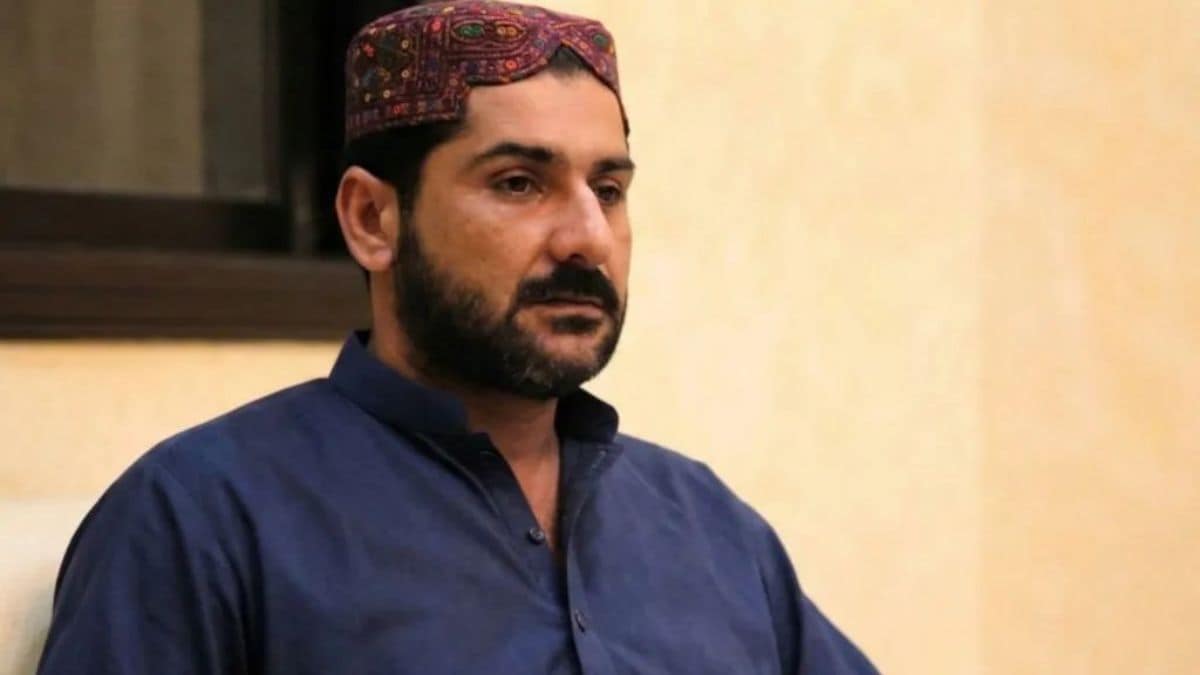
Zubair Baloch was gunned down in Karachi's volatile Lyari district, marking yet another bloody chapter in the ongoing syndicate violence that has plagued Pakistan's southern port city for decades. The brother of notorious criminal Uzair Baloch was targeted in a localized ambush, immediately triggering fears of a renewed turf war among remnants of the banned Peoples Peace Committee and rival factions. Lyari has long functioned as a heavily armed theater for political patronage, drug trafficking, and extortion, where familial ties act as both a shield and a death sentence.
Understanding why Karachi's underworld continues to bleed requires looking far beyond the immediate police blotters and casualty counts. The underworld of Lyari is not a random collection of street thugs. It is a deeply entrenched corporate structure built on protection rackets, land grabbing, and political protection that spans multiple election cycles. When a high-profile figure like Zubair Baloch falls, the shockwaves travel through the entire political and economic ecosystem of Sindh province.
The Geography of Impunity
Lyari is Karachi’s oldest and most densely populated municipality. Its maze of narrow, unpaved alleyways creates a natural labyrinth that defies conventional law enforcement tactics. Armored personnel carriers struggle to navigate the tight corridors, leaving security forces heavily reliant on targeted raids that often ignite hours of urban warfare.
This geography has shaped the operational strategy of local gangs for generations. Control over specific blocks translates directly into control over smuggling routes, drug distribution hubs, and extortion networks directed at local port workers and business owners.
- Strategic Location: Proximity to Karachi's major shipping ports enables transnational smuggling operations.
- Urban Density: Concrete slums provide instant cover and prevent large-scale military or paramilitary maneuvers.
- Economic Isolation: High unemployment rates create a perpetual reserve army of desperate young men ready to take up arms for daily wages.
For decades, political parties of various stripes found it convenient to utilize these neighborhood strongman networks to secure voting blocs and intimidate rivals. This patronage model transformed petty criminals into powerful syndicate bosses with private arsenals that rivaled state security forces. Uzair Baloch rose to prominence within this exact vacuum, inheriting a network of loyalists after the assassination of his father, Faisal Dada, and eventually controlling vast swaths of the city's criminal economy.
The Anatomy of a Syndicate Breakdown
When law enforcement agencies launched major operations in Karachi starting in 2013, the state made a concerted effort to dismantle the city's powerful criminal networks. Uzair Baloch was eventually captured by security forces, and many of his top lieutenants were either killed in encounters or fled the country. Analysts predicted the permanent pacification of Lyari. They were wrong.
Criminal syndicates do not simply vanish when their leadership is decapitated. Instead, they fracture. Power vacuums inevitably attract ambitious mid-level commanders eager to seize control of remaining revenue streams.
"When the top tier of a criminal enterprise is removed by the state, the resulting decentralization often leads to more unpredictable and widespread violence rather than immediate peace."
Zubair Baloch's death highlights this fragmented reality. Without a central authority to arbitrate disputes over protection money and drug territories, local cells operate with reckless autonomy. Every alleyway becomes a potential frontline. Every family connection becomes a target for vengeance.
Economic Engines of the Underworld
To comprehend the persistence of the Lyari gang war, one must follow the money. The conflict is sustained by a sophisticated local economy that extracts capital from legitimate and illegitimate commerce alike.
Extortion remains the primary financial engine. Small shopkeepers, transport operators, and major industrialists operating near the port district pay regular protection fees to avoid having their businesses torched or employees targeted. This protection money is collected with bureaucratic efficiency, often disguised as union dues or security fees.
Drug trafficking provides the massive capital required to purchase heavy weaponry, including rocket-propelled grenades, submachine guns, and night-vision equipment. Lyari serves as a critical transit point for narcotics moving from neighboring countries into maritime shipping containers bound for international markets.
Furthermore, real estate grabbing in expanding urban zones generates immense profits. Gangs use violence and intimidation to forge fraudulent land titles, evicting legal owners and selling disputed plots to developers who look the other way. The proceeds are then laundered through real estate projects across Pakistan and abroad, embedding criminal capital deep within the formal economy.
The Human Cost of State and Syndicate Collusion
The residents of Lyari are caught in an impossible squeeze between brutal criminal syndicates and aggressive state counter-terrorism operations. Generations have grown up surrounded by the deafening sound of automatic gunfire and the constant anxiety of targeted disappearances, extrajudicial killings, and random crossfire.
Civil society organizations have repeatedly highlighted how young men in the neighborhood face suspicion simply because of their residential address. Finding legitimate employment outside the district becomes nearly impossible when a job applicant's identity card bears a Lyari postal code. This systemic marginalization feeds directly back into the cycle of recruitment, ensuring that criminal leaders never run out of foot soldiers.
The state’s reliance on kinetic military solutions, while temporarily reducing visible violence, fails to address the root causes of systemic poverty, lack of educational infrastructure, and pervasive corruption within local institutions. Until the underlying economic engines of the underworld are dismantled through transparent governance, community policing, and genuine economic investment, the streets of Lyari will continue to demand blood sacrifices for the survival of the syndicates. The death of Zubair Baloch is merely a single milestone on a much longer, blood-soaked road that Karachi has yet to find the political will to pave over.