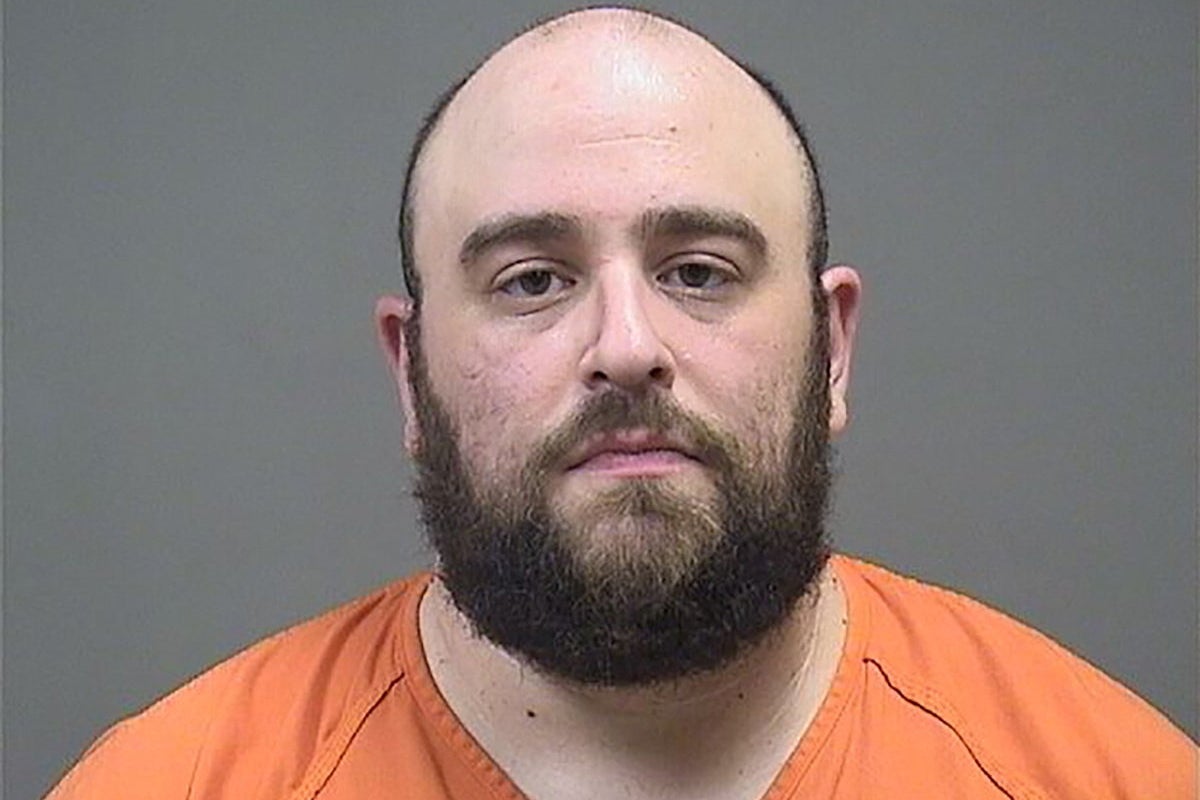
The headlines write themselves because they are cheap. A man with pistols and brass knuckles lunges at a politician during an Ohio county fair, and the media machine instantly grinds into gear, pumping out the exact same predictable script. Red versus blue. Radicalization. The erosion of civil discourse.
It is lazy. It is safe. And it completely misses the actual pathology eating away at public spaces in America.
I have spent years analyzing security breakdowns at open-air public events, watching municipalities bungle risk management while local politicians treat crowd lines like photo-op petting zoos. When a violent incident erupts, the reflexive urge to stuff it into a neat partisan box prevents anyone from diagnosing the real failure. We treat every public freakout as an ideological referendum when most of them are simply the predictable product of institutional neglect, poor spatial design, and an untreated behavioral health crisis crashing headfirst into unshielded crowds.
Stop pretending this is purely about political polarization. The rot runs much deeper.
The Myth of the Targeted Threat Assessment
The lazy consensus in the aftermath of the Ohio incident is that political figures face unprecedented ideological hostility that can be solved with tighter security perimeters and metal detectors at cotton candy stands.
That logic collapses the moment you examine how chaotic public venues actually operate. County fairs are porous by design. They are decentralized, chaotic, multi-acre sprawls meant for sensory overload, not high-security transit hubs. Trying to turn a agricultural exhibition into a fortress destroys the very fabric of the event.
More importantly, the obsession with ideological motivation blinds security professionals to the profile of the actual perpetrator. When you look at the raw data of public lunges, assaults, and erratic disruptions at civic events, a massive percentage of actors do not possess a coherent political manifesto. They possess a cocktail of untreated severe mental illness, acute grievance culture, personal instability, and a desperate desire for localized notoriety.
Take away the politician, and these individuals often find another target to act out their personal grievances. Pinning a brass-knuckle assault entirely on the current political climate is a convenient way for event organizers and law enforcement agencies to dodge accountability for structural incompetence.
Spatial Neglect and the Illusion of Crowd Control
Let us look at the mechanics of the county fair ground zero.
Local law enforcement agencies routinely commit a fundamental tactical error: they deploy VIP protection models designed for controlled auditoriums onto sprawling outdoor fairgrounds where thousands of people mill about unpredictably. They rely on a couple of local deputies or troopers trailing a candidate like ducklings, creating a false sense of security.
When an individual with concealed pistols and brass knuckles can breach the personal buffer zone of a public figure at a crowded event, the failure did not happen at the moment of the lunge. The failure happened hours, days, or months prior in the risk assessment phase.
A threat vector is not neutralized by hoping the crowd polices itself. It is neutralized by eliminating the blind spots that allow an assailant to close the distance unchecked.
If you crowd a politician into a dense corridor of deep-fried food stands and livestock tents without managing sightlines and escape vectors, you have built a trap. Yet, event organizers repeat this choreography every single election cycle because optics dictate strategy over safety. The candidate needs the handshake photo, so common-sense spacing goes out the window.
The Economics of Outrage and Media Complicity
Why do outlets keep leaning into the partisan narrative? Because nuance does not pay the rent.
When an incident like the Ohio fair confrontation happens, editors immediately look for the political angle because it generates instant engagement. It feeds the algorithm. Readers want confirmation that their political opponents are turning the country into a war zone.
By reducing a localized security and behavioral crisis into a macro-political battle, the media strips away the actionable lessons. If the problem is "society becoming too angry," then nobody has to fix anything. You just clutch your pearls, share a hot take on social media, and wait for the next incident to farm more outrage impressions.
Meanwhile, the actual nuts-and-bolts failures of public event management remain completely unaddressed.
What Actually Needs to Change
If we are serious about stopping violence at public events, we have to throw out the political playbook and adopt a cold, clinical approach to venue security and behavioral triage.
First, stop treating open-air public spaces like closed campaign stops. If a politician insists on wading into an unvetted crowd at a county fair, accept the physical reality of that choice. That means acknowledging that traditional executive protection rules cannot be cleanly applied without physically cordoning off the space—which defeats the purpose of going to a fair in the first place.
Second, law enforcement needs to shift resources from reactive political surveillance to proactive environmental monitoring. Watch the perimeters, control the bottlenecks, and train local deputies to spot pre-incident behavioral indicators—such as erratic micro-movements, inappropriate dress for the weather, and obsessive fixation—rather than waiting for someone to flash brass knuckles within arm's reach of a candidate.
Finally, we need to stop pretending that every unstable individual wandering through a public event is a hardened political operative. Most are simply broken people exploiting a soft target for maximum visibility.
Until we stop weaponizing every local disruption for partisan point-scoring, public figures will remain dangerously exposed to risks that have nothing to do with ideology and everything to do with our collective refusal to manage reality.
The next time a headline screams about a political confrontation at a public venue, look past the candidate's name. Look at the inadequate perimeter. Look at the absent mental health infrastructure. Look at the organizers who prioritized a quick handshake over basic human safety.
Stop asking which side is winning the culture war, and start asking why the doors were left wide open.


