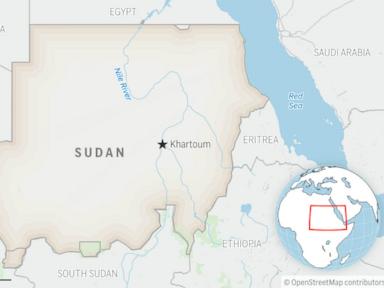
Headline says drones killed three children in Khartoum and dozens of civilians in Kordofan. Sad. Shocking. Familiar.
Then comes the predictable chorus. Ban the drones. Condemn the operators. Demand stricter export controls. Treat the flying hardware like a rogue villain that woke up one morning and chose violence.
Wrong target. Dead wrong.
Drones do not pull their own triggers. Algorithms do not harbor sectarian grudges. Cheap loitering munitions and armed quadcopters are symptoms of a collapsed command structure and a fractured state, not the root cause of mass civilian harm in Sudan. When coverage stops at "Sudan drone attacks," readers get a neat moral villain and zero strategic clarity. You cannot fix a war by staring at the cheapest tool in the arsenal while ignoring the political economy and tactical doctrine driving every strike.
The Lazy Consensus Around Drone Warfare
Most coverage of conflict in Sudan treats unmanned aerial vehicles like magic wands of destruction. A strike hits a market, a residential block, or a transport corridor in Kordofan or Khartoum, and the story frames the drone itself as the decisive actor.
That framing is lazy. It is also analytically sloppy.
In modern irregular and semi-conventional conflicts, commercial-grade quadcopters, modified surveillance aircraft, and low-cost one-way attack drones change cost-exchange ratios, not human nature. A conventional fighter jet or heavy artillery battery requires massive logistics chains, trained crews, spare parts, and radar signatures that invite counter-battery fire. A small unmanned system costs a fraction of that, travels in a pickup truck, launches from an improvised pad, and reaches targets deep inside contested urban or regional terrain.
When reporters and commentators treat drones as the cause of civilian casualties rather than an enabler of low-cost reach, they confuse the scalpel with the surgeon. War crimes and indiscriminate targeting happened in Darfur and across Sudan long before cheap unmanned systems flooded regional arms markets. Artillery shells, aerial barrel bombs, technicals mounted with heavy machine guns, and ground raids have all produced horrific civilian tolls. Changing the delivery platform does not magically invent brutality. It lowers the financial and logistical barrier to projecting force into places like Kordofan, where vast distances and contested supply lines once slowed heavy armor.
Precision does not guarantee restraint. Even when an airframe carries electro-optical sensors or satellite links, targeting doctrine decides where munitions land. If an operator treats any movement near a contested road or neighborhood as a legitimate target—or lacks verified intelligence distinguishing civilians from combatants—better cameras will not save lives. A high-resolution feed in the hands of a reckless or poorly disciplined force simply helps them hit the wrong target with greater confidence.
Why Kordofan and Khartoum Tell Two Parts of One Story
Reading news out of Khartoum alongside reports from Kordofan often makes them look like isolated tragedies. They are not. They are linked pressure points in a multi-front struggle for leverage, supply routes, and urban control.
Khartoum carries symbolic and administrative weight. Strikes there reverberate immediately in diplomatic cables, international media cycles, and political calculations. Even a small number of fatalities—including children—in a high-visibility urban area triggers instant outrage because the setting feels legible to outside observers.
Kordofan is different. Stretching across central and southern Sudan, it acts as a sprawling crossroads linking Darfur, Khartoum, and neighboring corridors. Control over roads, towns, and logistics hubs in Kordofan shapes who can move troops, fuel, and supplies across the country. When dozens of civilians die in Kordofan, the scale is larger, yet international attention often thins out faster because the geography is messier and independent verification on the ground is harder.
Comparing those two realities exposes a harsh double standard in how conflict news is consumed. Visibility dictates empathy. Proximity to cameras dictates urgency. A child killed in Khartoum sparks a headline; dozens of civilians killed across Kordofan risk becoming a passing statistic before the week ends.
What People Actually Get Wrong About Unmanned Strikes
Scan the usual questions people ask after a report like this, and you will see how badly the premise is bent.
- "Are drones more lethal to civilians than traditional weapons?" Wrong question. Lethality depends on warhead size, blast radius, fuse settings, population density, and whether strikes hit crowded civilian spaces. A small drone carrying a mortar round or light explosive can be far less destructive than a 500-pound bomb or heavy rocket barrage—unless it is used repeatedly against unfortified neighborhoods, markets, or shelters. Focusing on "drone" as a category hides whether the real danger is unguided rockets, heavy artillery, or repeated strikes on civilian infrastructure.
- "Can sanctions on drone parts stop these attacks?" Sanctions slow things down. They raise procurement costs. They force smugglers to take longer routes. They rarely stop determined combatants outright when dual-use electronics, commercial motors, batteries, and flight controllers are sold globally on open markets. Treating export controls as a silver bullet lets policymakers look busy while armed factions adapt supply chains in weeks.
- "Why do armed groups keep hitting areas with civilians nearby?" Because modern fighting in Sudan frequently blends frontlines, contested checkpoints, supply depots, and civilian life into the same physical space. When forces operate inside or adjacent to populated areas—or when attackers treat civilian presence as irrelevant to their operational goals—civilians pay the price regardless of whether the munition came from a drone, a mortar, or a rifle.
Lessons From Watching Security Failures Up Close
I have spent years analyzing defense procurement, crisis response, and conflict reporting, and I have watched institutions blow millions chasing shiny hardware fixes for broken human systems. When an organization or government gets spooked by a new technology, the reflex is almost always the same: buy a counter-system, pass a resolution, or issue a sweeping condemnation of the tool.
I have seen security teams spend fortunes on detection gear while ignoring basic command-and-control discipline, intelligence verification, and clear rules of engagement. The hardware looked impressive in briefings. On the ground, undisciplined operators and sloppy processes still caused disasters.
In conflict analysis, serious scholars and practitioners—figures like Mary Kaldor on "new wars" and irregular conflict dynamics, or Peter W. Singer on how unmanned systems reshape command and accountability—have spent years pointing out that technology shifts operational risk without erasing political accountability. When a conflict fragments into competing armed actors, militias, and shifting alliances, chain-of-command accountability fractures right along with the state. Without clear command responsibility and enforceable consequences, any weapon system becomes an instrument of impunity.
The Uncomfortable Trade-Offs of My Own Argument
Saying "focus on command, logistics, and political drivers rather than blaming drones" sounds crisp on paper. It also carries real risks if taken too far.
First, downplaying the role of drones can accidentally soften scrutiny of the actors buying, modifying, and deploying them. If we talk only about abstract "systemic drivers," we can sound like we are excusing specific strikes or specific commanders. We are not. Every unlawful strike is a choice made by human beings operating within a chain of command.
Second, ignoring technical proliferation is its own blind spot. Cheap unmanned systems do allow smaller or less resourced units to strike farther behind lines than they could ten years ago. Pretending the technology changes nothing tactically would be just as dishonest as pretending the drone is a sentient monster.
Third, shifting focus toward Kordofan's strategic corridors and command structures can feel detached from the immediate grief of a family in Khartoum burying three children. Raw human loss is not a chess move on a map. Any serious analysis has to hold both truths at once: the human cost is real and immediate, and the strategic mechanics driving the next strike are cold and calculated.
Asking Better Questions When Civilian Tolls Rise
If you want to understand what is actually happening after attacks in Khartoum and Kordofan, stop asking whether a drone did it and start asking questions that expose real leverage.
- Follow the logistics, not just the airframe. Where did the fuel, munitions, communications links, and launch teams come from? A strike over Kordofan depends on supply lines and staging areas that are far more revealing than the shape of the aircraft.
- Track who gains bargaining power from the strike. Was the attack meant to intimidate rivals, disrupt a supply route, signal reach into an urban center, or test defenses? Violence in fractured wars almost always carries a political or operational message.
- Separate headline shock from sustained attention. Do not let coverage spike for 48 hours over Khartoum and vanish completely from Kordofan. Track patterns over weeks—where strikes cluster, how civilian displacement shifts, and which corridors face repeated pressure.
- Demand accountability along the chain of command. Focus pressure on the political and military leaders who authorize campaigns, fund operations, and shield perpetrators from consequences—not just on the piece of flying hardware that delivered the payload.
Imagine a scenario where international diplomats tomorrow announced a global freeze on every single drone part destined for Sudan, while leaving fuel networks, weapons smuggling corridors, and command structures completely untouched. Within months, fighters would adapt with mortars, artillery, rockets, and ground raids, and civilians in Kordofan and Khartoum would still be dying under different falling metal.
Banning a tool does not cure a war that thrives on impunity and strategic capture. Fix the incentives, break the supply lines, and hold the commanders accountable—or keep writing the same tragic headlines while pretending the flying machine was the mastermind.


