History isn't just trapped in textbooks or dusty archives. Sometimes, it is hidden right beneath our feet, waiting for someone to care enough to look.
Think about the year 1831. Gideon and Harriet Blackburn made a choice that changed everything. They ran. They fled the brutal chains of slavery in Kentucky, risking their lives to find freedom across the border in Canada. They didn't just survive. They built a life, established roots, and created a sanctuary.
Fast forward 154 years later. Their home was finally found.
Most people treat history like a movie they watch from a safe distance. We read dates, memorize names, and move on. But physical evidence of the Underground Railroad changes the equation. It forces us to confront the raw reality of survival. It turns a distant tragedy into a tangible footprint.
Let's look at why this discovery matters so much right now.
Escaping the Chains of Kentucky
Life in Kentucky during the early nineteenth century was a nightmare for enslaved people. The threat of violence hung heavy in the air. Families could be torn apart in a single afternoon.
Gideon and Harriet decided they weren't going to live like that anymore. They plotted their escape. They walked north, guided by courage, the North Star, and the network of ordinary people willing to risk everything to help freedom seekers. Crossing into Upper Canada wasn't the end of the struggle. It was the beginning of a hard-earned rebuilding process.
They settled in Toronto, then known as York. They didn't hide in the shadows. They bought land, built a home, and started a family. They became part of the fabric of the growing city.
Yet, time has a way of erasing stories. Neighborhoods change. Old buildings get torn down. Pavement covers the past.
The 154-Year Search for a Lost Home
How do you find a house that vanished decades ago? You need patience, luck, and relentless archaeological work.
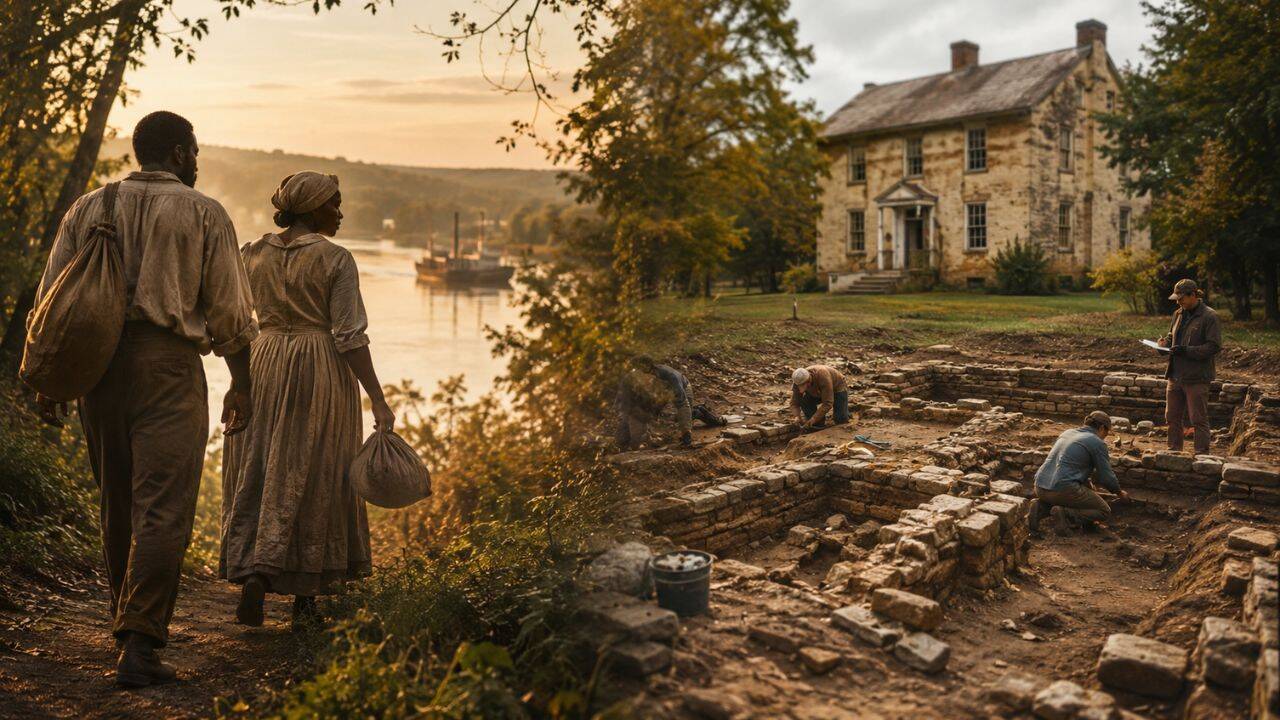
Researchers and historians spent years digging through municipal records, old maps, and deed registries. They wanted to locate the exact plot of land the Blackburns owned. When archaeological excavations finally uncovered the foundation and artifacts from the original site, it felt like a minor miracle.
Broken ceramics, personal items, and structural remnants surfaced from the dirt. These weren't just random objects. They were quiet witnesses to history. They proved the Blackburns were real people who ate meals, worked hard, and worried about the same things we do.
Archaeology gives us a direct line to the past. It strips away the abstraction. When you look at the recovered bricks and foundations, you realize freedom wasn't just a legal status for the Blackburns. It was a physical space they carved out with their own hands.
What Most People Get Wrong About the Underground Railroad
Popular culture paints the Underground Railroad as a sleek, well-oiled machine operating in total secrecy. Movies make it look like a smooth adventure.
The reality was messy, terrifying, and deeply uncertain.
Freedom seekers rarely knew what waited for them at the next stop. They faced bounty hunters, harsh weather, and constant betrayal. Even after crossing into Canada, discrimination and economic hardship didn't magically vanish.
The Blackburns faced local racial tensions and legal battles even after reaching safety. Freedom wasn't a finish line. It was a daily battle to keep what they earned.
If you want to understand the true weight of history, you have to stop looking for easy heroes and tidy endings. Real history is full of ordinary people doing extraordinary things while terrified out of their minds.
Preserving the Past Before It Disappears Too Soon
We lose pieces of history every single day. Old buildings get demolished for new condos. Historic sites get paved over for parking lots.
If we don't actively protect these spaces, the stories fade into myth. The Blackburn home discovery reminds us why preservation matters. It gives descendants a physical place to connect with their ancestors. It gives communities a anchor point for their collective memory.
You can visit historical archives, read local preservation society reports, or support urban archaeology initiatives in your own city. History isn't just something that happened to other people. It happened right where you are standing.
Go out and look closer at the streets you walk every day. You might just find a hidden chapter waiting to be uncovered.