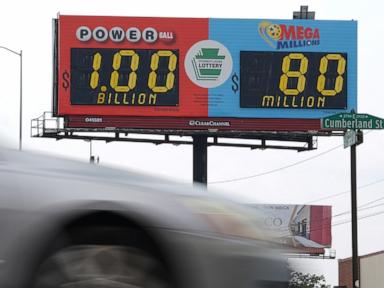
A single ticket purchased at a Hy-Vee Fast & Fresh in Quincy, Illinois, matched all six numbers to claim a staggering $1.04 billion Powerball jackpot. The winning combination—white balls 4, 26, 66, 67, 69, and the red Powerball 9—ended a grueling 44-drawing dry spell that began back in May. Yet behind the headline-grabbing figure of a comma-heavy fortune lies a stark financial reality that lottery operators rarely emphasize. The advertised billion-dollar payout is a mirage constructed on the backs of decades-long economic assumptions, while the actual cash sitting on the table is less than half that amount.
For veterans of financial reporting, observing the public frenzy surrounding these mega-jackpots triggers a familiar fatigue. Millions line up at gas stations and convenience stores, parting with two dollars for odds calculated at roughly 1 in 292.2 million. They chase an abstraction. Understanding the mechanics of this victory requires stripping away the marketing gloss of modern state-sponsored gambling.
The Anatomy of a Billion-Dollar Claim
When the ticket holder steps forward to claim their prize, they will face a fundamental fork in the road. Option one is the annuitized prize of $1.04 billion, doled out in 30 graduated payments over 29 years. Option two is the lump-sum cash option, which stands at a much more grounded $450.5 million.
The discrepancy between the headline number and the cash value confuses the general public. Media outlets trumpet the billion-dollar milestone without explaining the mathematics of the bond market. The advertised jackpot represents the sum of an imaginary annuity portfolio purchased by the multi-state lottery association, structured to grow by five percent annually. It assumes steady economic conditions and consistent interest rates across three decades.
Choosing the lump sum is an immediate surrender of more than half the gross winnings, even before federal and state tax withholding takes a massive bite. For the winner in Quincy, the actual check will hover closer to three hundred million dollars after taxes. That sum is generational wealth by any reasonable standard, but it is a far cry from a billion dollars.
Mathematics of Desperation
Why do these jackpots climb into the stratosphere before hitting? The answer lies in human psychology and probability engineering. In 2015, rule changes altered the pool of numbers to deliberately make winning harder. By increasing the pool of white balls and decreasing the Powerball pool, regulators engineered longer losing streaks.
Longer losing streaks mean rollovers. Rollovers mean media coverage. Media coverage drives ticket sales.
It is a closed-loop system designed to maximize state revenue. State lotteries operate as voluntary taxes on populations with lower median incomes. Economists have repeatedly demonstrated that lottery ticket sales spike disproportionately in economically distressed zip codes. When housing costs soar, wages stagnate, and inflation eats away at purchasing power, the public turns to mathematically impossible investments out of sheer financial exhaustion.
The $1.04 billion win in Illinois marks the eighth-largest prize in Powerball history, fueled by stronger-than-expected ticket sales and an expanding footprint that recently incorporated international players from the United Kingdom. As the player pool grows globally, the velocity of these jackpots will accelerate. The billion-dollar threshold, once an exceedingly rare milestone, is becoming a routine quarterly event.
The Tax Man and the Anonymous Target
The winner in Illinois has a brief window of breathing room, but the clock is ticking. Illinois law permits lottery winners of prizes over $250,000 to keep their names confidential upon request, shielding them from the immediate circus of solicitors, long-lost relatives, and security risks. This anonymity is vital.
History shows that sudden, unshielded wealth of this magnitude frequently destroys lives rather than enriching them. High-profile lottery winners routinely face bankruptcy, legal battles, and profound personal trauma within five years of claiming their prizes. The structural support system provided by state lotteries usually begins and ends with a pamphlet on financial planning and a handshake from a public relations official.
Once the federal government takes its mandatory 24 percent withholding off the top—followed swiftly by the additional marginal tax bracket adjustments next April—the state of Illinois will also claim its nearly five percent flat income tax on the winnings. The state government emerges as the most reliable winner in every drawing, collecting billions annually to pad general revenue funds under the banner of education funding and infrastructure support.
The True Cost of the Ticket
We celebrate the lucky retailer in Quincy that sold the winning ticket—they receive a modest $500,000 bonus from the state lottery board for their trouble—while ignoring the millions of tickets that ended up as litter on highways or crumpled in the bottom of wastebaskets. Every multi-billion-dollar run relies on millions of individual losses.
The system functions because it sells hope wrapped in arithmetic impossibility. The anonymous Illinois resident who bought the ticket at a Hy-Vee gas station beat an invisible wall of numbers that defied reason. They are an outlier among anomalies. For everyone else standing in line for the next drawing, the billion-dollar promise remains an expensive illusion.