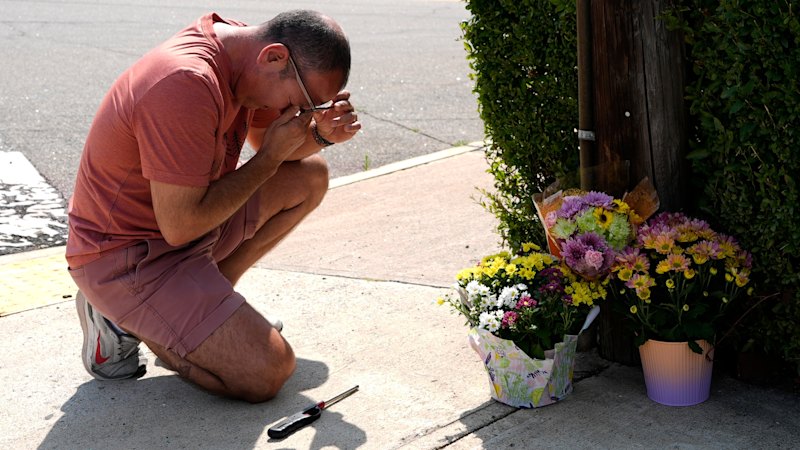
A quiet morning in Biddeford, Maine, just shattered. A 26-year-old Colombian man is dead after a federal immigration officer opened fire during a chaotic traffic stop. Neighbors woke up to the sound of gunshots, looked out their windows, and watched a tragedy play out on the pavement.
Here is the kicker. He wasn't even the guy they were looking for.
Homeland Security Secretary Markwayne Mullin privately confirmed to Maine Senator Angus King that the victim was not the target of the arrest warrant agents were trying to execute. Let that sink in. A young father leaves his house for work, gets boxed in by unmarked SUVs, and ends up dead because he "resembled" someone else or panicked when heavily armed men swarmed his car.
This isn't an isolated mishap. It's a symptom of an aggressive, hyper-politicized enforcement strategy that prioritizes speed and numbers over basic public safety. If you want to understand why immigration enforcement in America is broken, look no further than what just happened on the streets of Biddeford.
The Chaos on Pool Street
The official narrative from Immigration and Customs Enforcement (ICE) dropped quickly. They claim agents were conducting targeted surveillance on a residence tied to a deportation order. A vehicle left. Agents tried to pull it over. According to the agency, the driver attempted to flee and "weaponized" the vehicle, forcing an agent to fire out of fear for public safety.
But the stories from people on the ground paint a completely different picture.
Local resident Daniel Boucher heard the gunshots and ran to his third-floor window. He saw a small white sedan jammed 90 degrees against the curb, an ICE SUV pinning it in. The driver was bleeding heavily from his head and face. Doorbell camera footage from the neighborhood captured at least five rapid gunshots. Security video from a nearby laundromat showed the car slowly rolling into the intersection in circles, its windshield riddled with bullet holes, while agents chased it down.
The most chilling detail? Boucher distinctly heard the dying man shout, "I tried to stop".
Instead of immediate, life-saving clarity, the aftermath was pure indignity. Bystander video captured agents pulling the limp, bleeding body out of the front seat and dropping him face down onto the pavement to handcuff him. He died shortly after. Nearby, his wife fell to her knees in the street while their young daughter watched her father's body go cold.
The Identity Ghost Chase
Advocacy groups like the Maine Immigrants' Rights Coalition quickly established that the victim was a Colombian national who was legally authorized to work in the United States and held a valid Social Security number. He was the sole provider for his family. He had been actively attending his mandatory immigration court dates. He wasn't running a criminal enterprise; he was going to work.
The shifting stories from Washington make the situation worse. Senator King initially told reporters that the man was the target of a deportation order. Hours later, Secretary Mullin had to call him back to correct the record. The target was someone else entirely.
This looks identical to a pattern we are seeing across the country. Just six days prior to this incident, ICE agents in Houston fatally shot Lorenzo Salgado Araujo under nearly identical circumstances. Agents tried to pull over his work van because someone inside merely "resembled" a target. ICE claimed Salgado Araujo weaponized his van; passengers inside flatly denied it.
When agencies rush surveillance and jump to lethal force during routine traffic stops, innocent people die.
The Blind Spot of No Body Cameras
We are living in 2026, yet ICE agents are still pulling triggers during domestic operations without body-worn cameras. Senator King expressed deep concern over this total lack of accountability, and he is right.
Without body cameras, the public is forced to choose between the word of federal agents protecting their careers and the chaotic accounts of traumatized bystanders. State police have already asked local business owners not to release security footage of the Biddeford shooting to the public. Why the secrecy? If an agent's life was truly in danger from a "weaponized" sedan, the footage would vindicate them. Hiding the tape only breeds distrust.
The FBI, the Department of Homeland Security Office of Inspector General, and the Maine Attorney General are all launching investigations. But local communities aren't waiting for a bureaucratic report that will take two years to compile. Protests immediately flared up in Biddeford and outside Senator Susan Collins's office. People are angry because they realize this could happen to any of their neighbors.
What Needs to Change Right Now
To stop these preventable tragedies, federal enforcement protocols require an immediate overhaul. The current playbook isn't working.
First, mandatory body cameras must be non-negotiable for every single field agent. No camera, no field operation. It protects good agents and exposes bad ones.
Second, the threshold for vehicle stops based on "resemblance" needs strict legal limits. High-stakes surveillance shouldn't rely on guesswork that ends in a hail of bullets on a residential street.
Finally, local authorities need to push back against federal overreach in their neighborhoods. When federal operations put local citizens and lawful residents in crosshairs by mistake, it destroys community trust and leaves local police to clean up the wreckage. Keep an eye on the Maine Attorney General's investigation, but don't let the pressure off federal lawmakers to force real policy changes. Vague promises won't bring back a neighbor, a husband, or a father.