The air inside the Zurich boardroom smelled faintly of cold coffee and old money. Outside, the Swiss winter bit hard against the glass, but inside, the temperature was rising.
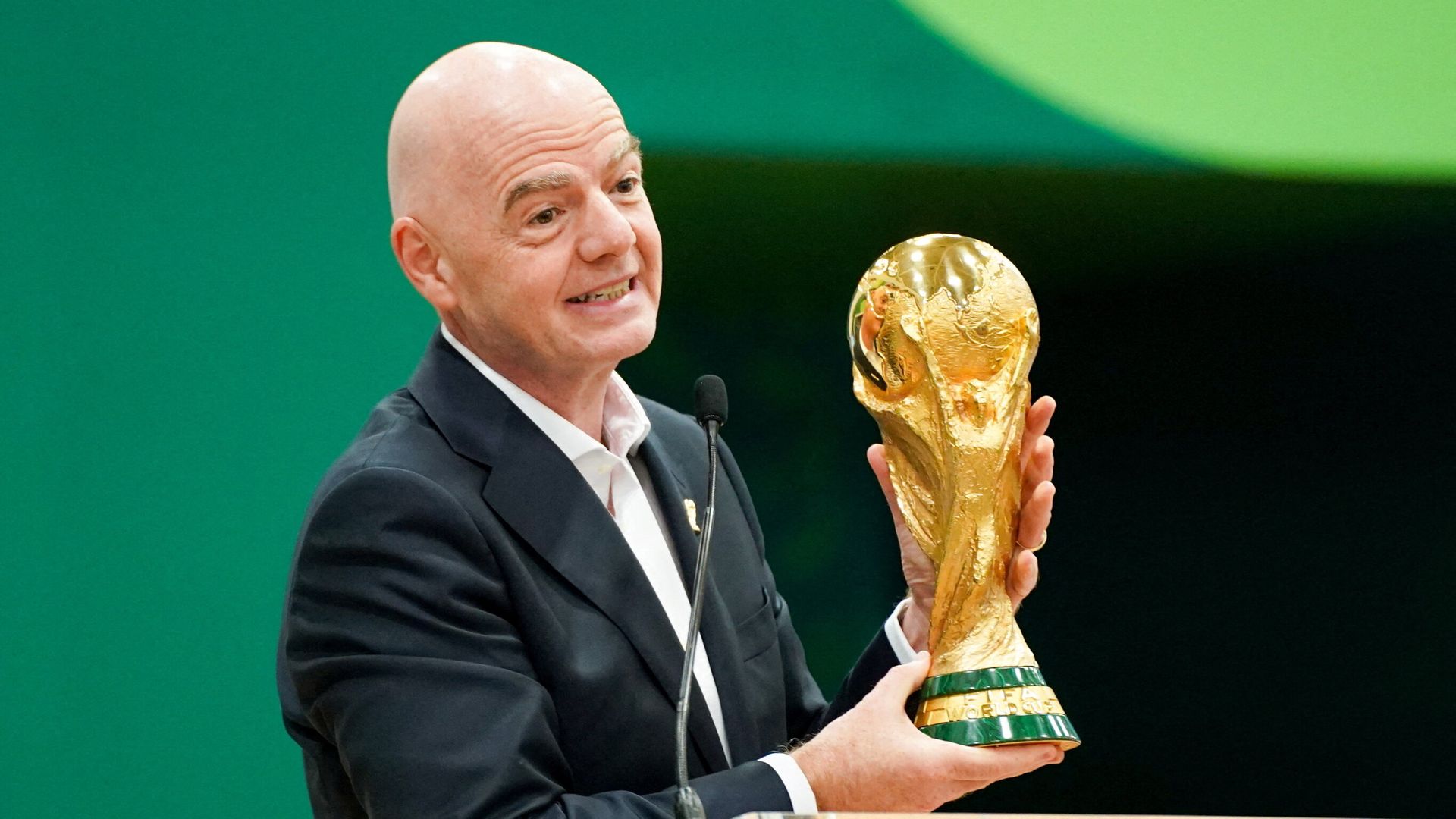
Gianni Infantino leaned forward, resting his forearms on the polished mahogany. To the men and women across the table, his proposal did not sound like an evolution. It sounded like an occupation.
Football, the global religion played on muddy pitches in South American favelas and pristine turf in European mega-stadiums, was once again being measured on a balance sheet. At stake was a massive, restructured Club World Cup, a tournament FIFA desperately wanted to turn into a commercial juggernaut. But to fund the ambition, to sweeten the pot for hesitant broadcasters and private equity backers, a radical idea had been floated. Sell shares. Monetize the very machinery of the tournament. Turn a sporting spectacle into equity.
Across the continent, in Nyon, Switzerland, the reaction at UEFA headquarters was not merely displeasure. It was fury.
To understand why this friction threatens to tear modern soccer apart, you have to remember what the sport actually means to the people who bleed for it. It is not just an industry. It is a shared heritage. When a supporter in Madrid or Manchester pulls on a jersey, they are not buying a share in a venture capital portfolio. They are participating in a tribal ritual passed down through generations.
Infantino sees something entirely different when he looks at the pitch. He sees untapped potential. He sees a market share ripe for aggressive acquisition. Under his leadership, FIFA has pushed relentlessly to expand its footprint, challenging the traditional dominance of domestic leagues and continental confederations like UEFA. The revamped Club World Cup is the crown jewel of this strategy—a bloated, multi-week extravaganza designed to rival the UEFA Champions League.
Money changes everything it touches. And football has been swimming in cash for decades. Yet, this push for private equity involvement feels different. It feels like crossing a sacred threshold.
Consider what happens when external investors demand a return on a sporting tournament. They do not care about the historic rivalry between a local club and its cross-town rival. They do not care about the fatigue racking the legs of players who already compete in sixty matches a year. They care about yield. They care about quarterly growth. They care about expanding into new time zones, milking every last drop of attention from a fan base that is already stretched to its financial breaking point.
UEFA president Aleksander Čeferin and his executive committee recognized this existential threat instantly. For European football administrators, the model has always been straightforward: revenues generated by the game are reinvested back into the game, from grassroots academies to elite competitions. Introducing outside shareholders introduces a parasitic master. Dividends must be paid. Profits must be extracted. The financial health of a venture capitalist takes precedence over the emotional health of a supporter.
The standoff highlights a deeper, more troubling fracture at the highest levels of sports governance. FIFA and UEFA are locked in a turf war, not just for power, but for the very identity of international and club football. FIFA, representing a broader global constituency that often feels marginalized by European dominance, wants to centralize commercial control. UEFA, guarding the richest ecosystem in the sport, is fighting to preserve its hegemony and protect its calendar from what it perceives as reckless over-expansion.
Players are caught in the crossfire.
Imagine walking into an office where your workload doubles every single year, your boss tells you that your physical health is a secondary concern, and every vacation you were promised gets swallowed by a new corporate mandate. That is the reality facing modern footballers. Rodri, Kevin De Bruyne, and dozens of other elite athletes have voiced open rebellion against the relentless fixture congestion. They are breaking down. Muscles snap. Joints give out. The human body has a hard limit, a biological ceiling that cannot be negotiated away in a boardroom.
Yet, the expansion machine rolls on. More games. More tournaments. More spin-off ventures. More shares to sell.
The proposal to sell a stake in the Club World Cup's commercial rights vehicle is not an isolated administrative adjustment. It is a symptom of a systemic sickness. It treats the global passion of billions as a commodity to be sliced, packaged, and sold to the highest bidder on Wall Street or in the financial districts of the Gulf states.
When a sport becomes too big to fail, it often becomes too bloated to love.
The fans feel it in the rising cost of television subscriptions. They feel it in ticket prices that price out the working-class communities that built these clubs from the ground up. They feel it in the hollowed-out atmosphere of stadiums transformed into corporate theme parks for tourists holding smartphones instead of scarves.
Infantino’s vision offers a frictionless, hyper-commercialized future where football is consumed 365 days a year across every screen on earth. But friction is precisely what makes the game worth watching. The struggle, the history, the geographic loyalty, the local heartbreak—these are the elements that give the sport its soul. Eradicate them in the name of shareholder value, and you are left with an empty husk. You have a product, but you no longer have a game.
The fury in Nyon is real, but whether it can halt the juggernaut of modern sports capitalism remains entirely uncertain. The financial incentives driving this expansion are astronomical. Private equity firms are circling global sport like sharks smelling blood in the water, eager to deploy trillions of dollars into assets that prove immune to traditional economic downturns. People will always watch football. And because they will always watch, investors believe they can always extract rent.
As the negotiations drag on behind closed doors, the silence from the stands grows heavier.
The match on the pitch will still kick off on time. The referee will blow his whistle. The ball will roll. For ninety minutes, the magic can still trick us into believing nothing has changed. But on the margins, in the shadow of the executive suites and the valuation models, the ground is shifting beneath our feet.
The game is being sold piece by piece. And the only question left is how much of it will be left for the people who actually care.