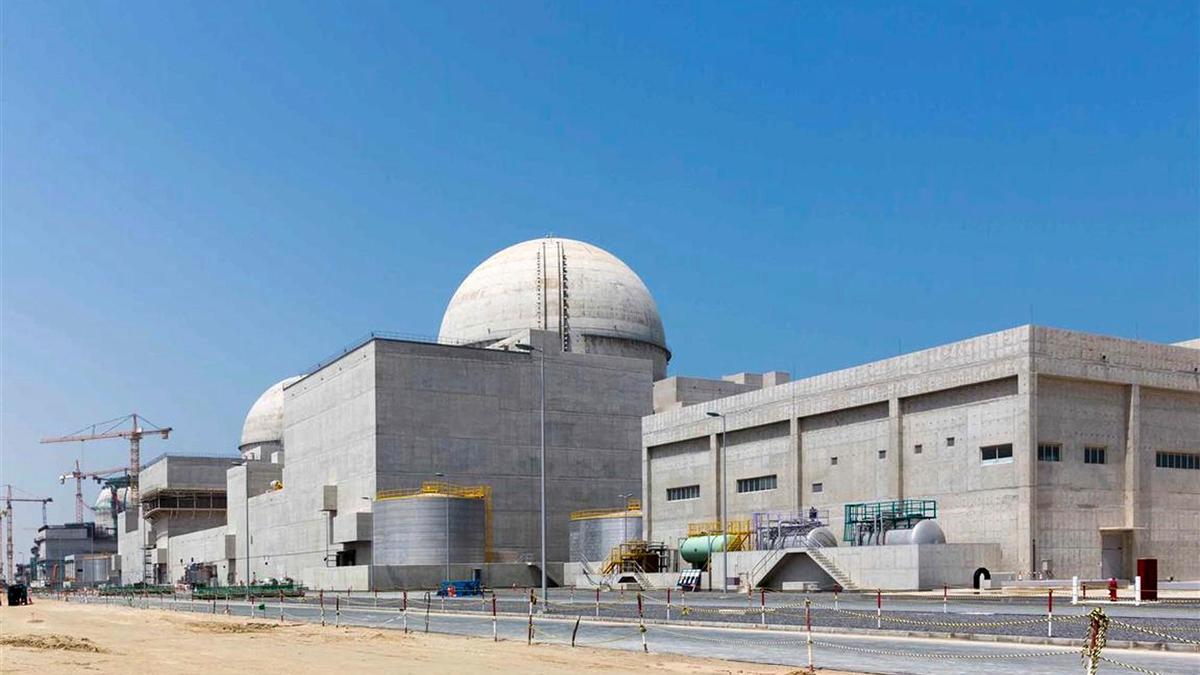
A single drone strike on the periphery of Abu Dhabi’s Barakah Nuclear Power Plant has exposed a structural vulnerability that billions of dollars in air defense systems failed to prevent. On Sunday morning, an uncrewed aerial vehicle bypassed regional defense networks to strike an external electrical generator in the Al Dhafra region, igniting a localized fire outside the facility's inner perimeter. The Emirati Federal Authority for Nuclear Regulation was quick to reassure global markets that all four reactors remain undamaged, radiological safety is uncompromised, and no injuries occurred. However, the International Atomic Energy Agency’s immediate disclosure that Unit 3 had to switch to emergency diesel generators reveals a much deeper, systemic vulnerability. The strike demonstrates that modern air defense is structurally unsuited to protect critical infrastructure from asymmetric, low-altitude saturation tactics.
For years, the multi-billion-dollar Barakah facility, constructed with South Korean expertise, was marketed as an impenetrable fortress of clean energy in the Arabian Peninsula. This incident shatters that illusion. The problem is not the containment domes themselves, which are engineered to withstand the direct impact of a commercial airliner. The vulnerability lies in the fragile, distributed web of civilian infrastructure that keeps those domes functioning.
The Illusion of the Hardened Perimeter
Nuclear safety analysis has historically suffered from a form of bunker mentality. Engineers spend decades perfecting the concrete and steel reinforcement of the reactor core while treating auxiliary systems as secondary concerns. This is a critical error in modern asymmetric warfare.
A nuclear power plant does not need to suffer a direct hit to its containment structure to face a catastrophic failure. It requires a continuous, massive supply of electricity just to cool its shutdown systems and prevent a meltdown. When a drone strikes an external generator or a switching station, it strikes the central nervous system of the facility. The International Atomic Energy Agency confirmed that Unit 3 was forced to rely on emergency diesel generators after the strike. While these backup systems worked exactly as intended, running a nuclear reactor on emergency diesel power is a high-wire act that no operator wants to sustain during an active conflict.
Air defense networks across the Gulf are designed to counter high-altitude ballistic missiles and fast-moving fighter jets. Patriot missile batteries and Terminal High Altitude Area Defense systems look for targets high in the sky. Cheap, low-flying drones made of carbon fiber and plastic fly directly under these defensive radar horizons. They blend into the ground clutter, using valleys and coastal topography to mask their approach until they are directly over their target.
To illustrate this structural mismatch, consider a hypothetical scenario where an integrated air defense network attempts to intercept twenty low-cost loitering munitions simultaneously. The defense system fires interceptor missiles costing millions of dollars each. Even if the system achieves a ninety percent interception rate, the remaining ten percent of the drones will get through. In conventional warfare, a ten percent failure rate is an acceptable risk. In nuclear security, a single failure can lead to an international crisis.
The Fractured Geopolitics of the Gulf
The timing of the Barakah strike underscores the extreme fragility of the current regional security architecture. Following the direct military exchanges between Washington, Israel, and Tehran earlier this year, the Pakistani-mediated ceasefire of April 8 offered a brief window of stability. That truce was already fraying after talks in Islamabad stalled, leaving the region in a volatile gray zone where deniable proxy operations have replaced open conventional warfare.
No group has claimed responsibility for the strike on Barakah. The ambiguity is entirely intentional. By utilizing uncrewed systems launched from hundreds of miles away, the perpetrators achieve strategic deniability while sending an unmistakable economic message to the United Arab Emirates and its international partners. The UAE has positioned itself as the premier logistics, financial, and safe-haven hub of the Middle East, a reputation that relies entirely on the perception of absolute domestic stability.
By targeting the Crown Jewel of the UAE’s domestic energy strategy—a facility designed to provide twenty-five percent of the country’s electricity—the attackers are demonstrating that the economic cost of alignment with Washington will be extracted directly from local infrastructure. The strike targets investor confidence rather than concrete. The message is clear: no amount of wealth can guarantee physical immunity when regional diplomatic frameworks collapse.
Rethinking Infrastructure Defense
The failure to intercept the drone before it reached the Al Dhafra region exposes a fundamental flaw in how modern states protect their critical assets. Relying exclusively on national military air defense networks to safeguard localized civilian infrastructure is a strategy designed for the twentieth century, not the twenty-first.
Protecting a nuclear facility from drone incursions requires a completely different technical approach.
| Defense Tier | Technology Type | Operational Function |
|---|---|---|
| Active Electronic | Directional RF Jamming | Disrupts command links and spoofing GPS signals before the asset enters visual range. |
| Kinetic Hardening | Automated Close-In Weapon Systems (CIWS) | Employs rapid-fire cannons or localized net-traps to destroy low-altitude threats at short range. |
| Passive Physical | Steel Mesh Reinforcement | Heavy netting and physical canopies constructed over external transformers to detonate incoming payloads prematurely. |
The current regulatory frameworks governing nuclear facilities make the rapid deployment of these defense tiers incredibly difficult. Civilian regulators are deeply hesitant to permit automated, rapid-fire kinetic weapons or high-powered electronic jamming systems near sensitive nuclear instrumentation due to the risk of accidental interference or collateral damage. This regulatory paralysis leaves a critical security gap between national military responsibility and localized plant security.
Furthermore, the commercial nuclear industry remains bound to a rigid, multi-year procurement cycle that cannot keep pace with the iterative development of drone technology. A software patch or a slight hardware modification implemented by a militant group in a desert workshop can completely bypass a multi-million-dollar electronic warfare system that took five years to clear regulatory approval.
The True Cost of Nuclear Volatility
As the smoke clears from the Al Dhafra desert, the broader implications for international energy markets are beginning to emerge. The issue is no longer just about the price of a barrel of crude oil or the stability of the maritime corridors through the Strait of Hormuz. The vulnerability of the Barakah plant introduces a permanent security premium to the entire concept of nuclear infrastructure development in contested regions.
Countries across the Global South have looked to the UAE’s nuclear program as a blueprint for rapid economic modernization and decarbonization. Nuclear energy offers baseline power that solar and wind cannot match. Yet, if these multi-billion-dollar investments require permanent, wartime military protection just to keep their external transformers from being incinerated by cheap consumer-grade technology, the financial calculation changes entirely. Insurance premiums for these mega-projects will skyrocket, and international consortia will think twice before committing capital to regions where a regional ceasefire can be undone by a single low-altitude drone payload.
The Barakah incident confirms that the distinction between front-line military targets and deep-theater civilian infrastructure has evaporated. The safety of a nuclear reactor is now directly tethered to the stability of regional diplomatic agreements. When diplomacy fails, the containment walls are only as secure as the external generators that keep the cooling pumps running.