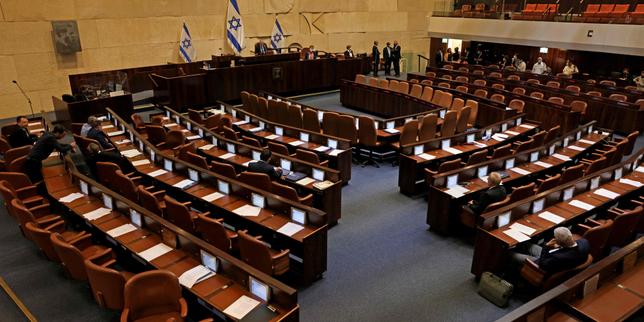
Democracy in Israel has long operated under an intense internal paradox, functioning as a vibrant parliamentary system while grappling with deep ethnic divisions. At the center of this friction lies the Central Elections Committee, a body composed of active Knesset lawmakers who possess the power to vote on whether political factions and individual candidates can participate in national elections.
When the committee voted to disqualify major Arab political lists and specific Arab and leftist lawmakers, it ignited an immediate constitutional storm. Critics argued that the move amounted to an attempt to disenfranchise roughly twenty percent of the country's citizenry. The petitions aiming to bar these factions relied heavily on interpretations of Article 7A of Israel's Basic Law, which prevents candidates or parties from running if they deny the existence of Israel as a Jewish and democratic state, incite racism, or express support for armed struggle against the nation.
Yet, viewing this through a purely partisan lens misses the structural reality of Israeli jurisprudence. The Central Elections Committee is fundamentally a political arena masquerading as an administrative tribunal. Parties sitting on the panel routinely vote along factional lines, weaponizing legal clauses for immediate electoral advantage. Right-wing and nationalist factions frequently bring disqualification motions against Arab slates, calculating that the process itself energizes their base, regardless of the ultimate judicial outcome.
History shows a predictable choreography between the election committee and the Supreme Court. Whenever the committee votes to ban Arab parties or candidates, the decision routinely lands on the docket of Israel's High Court of Justice. The Supreme Court applies a far stricter evidentiary threshold for disqualification, consistently ruling that the constitutional bar requires a critical mass of unequivocal evidence rather than selective political rhetoric.
True to precedent, the Supreme Court swiftly intervened to overturn the bans, clearing the major Arab lists and candidates to return to the electoral battlefield. This dynamic reveals a recurring friction point in Israeli governance. The legislative branch attempts to narrow the boundaries of political legitimacy, while the judicial branch acts as a constitutional brake, preserving the baseline framework of minority political representation.
The recurring attempts to sideline Arab representation carry profound consequences for social cohesion. When millions of voters see their chosen representatives repeatedly dragged through disqualification proceedings, trust in state institutions erodes further. The debate is not merely about who sits in the Knesset chamber; it concerns whether the state can reconcile its Jewish identity with full, unhindered civic equality for its non-Jewish population.
As long as the rules governing candidate eligibility remain broad enough to be weaponized by parliamentary majorities, the disqualification ritual will return ahead of every national vote. The system survives through judicial intervention, but the recurring political weaponization of the ballot leaves deep scars across the electorate.
Israeli Election Committee Disqualifies United Arab List and Joint List from Knesset Race
This video provides primary coverage and news broadcast footage detailing the Central Elections Committee's controversial vote to bar Arab political factions from the Knesset race.