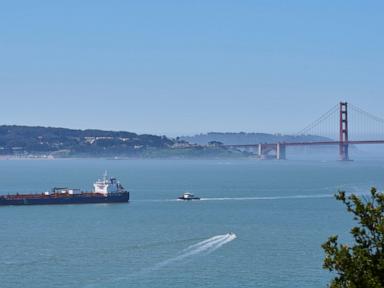
Commercial shipping channels and critical marine mammal habitats collide directly within the San Francisco Bay estuary. Large container vessels transiting the regional traffic separation schemes present a persistent threat of lethal ship strikes to migrating baleen whales, specifically gray whales (Eschrichtius robustus) and humpback whales (Megaptera novaeangliae). While traditional conservation strategies rely on visual observers or opportunistic sightings, these methods fail during nocturnal periods, heavy fog, or high sea states. Resolving this ecological conflict requires transitioning to real-time, automated passive acoustic monitoring (PAM) networks.
The implementation of an automated whale detection network within this highly urbanized marine environment cannot rely on simple amplitude-based detection. Success requires a sophisticated orchestration of hardware deployments, algorithmic signal processing, and low-latency data telemetry to transform acoustic telemetry into actionable maritime transit modifications.
The Tri-Pillar Architecture of Automated Acoustic Monitoring
Operating an automated detection framework in an anthropogenically dominated waterway requires three distinct, interconnected operational layers. If any single component experiences a bottleneck, the utility of the entire system drops to zero.
+-----------------------------------------------------------------------+
|                       1. ACOUSTIC HARDWARE LAYER                      |
|  [Subsea Hydrophone Array] ---> [Digital Signal Processing Assembly]  |
+-----------------------------------------------------------------------+
                                    |
                                    v
+-----------------------------------------------------------------------+
|                    2. ALGORITHMIC INTELLIGENCE LAYER                  |
|  [Time-Frequency Conversion] ---> [Machine Learning Classification]    |
+-----------------------------------------------------------------------+
                                    |
                                    v
+-----------------------------------------------------------------------+
|                    3. MARITIME INTERACTION LAYER                      |
|  [Dynamic Volumetric Buffering] ---> [AIS Slow-Down Mandates]         |
+-----------------------------------------------------------------------+
1. Acoustic Hardware Layer
The foundational tier consists of bottom-mounted, omnidirectional digital hydrophones anchored near shipping lanes. These sensors must feature an acoustic bandwidth spanning at least 10 Hz to 200 kHz to capture the low-frequency vocalizations of baleen whales while maintaining the capacity for high-frequency sampling (Ryan et al., 2021).
The primary hardware challenge in an estuary like San Francisco Bay is shallow-water propagation. Unlike deep-ocean channels where sound travels vast distances via the Sound Fixing and Ranging (SOFAR) channel, shallow waters induce severe transmission loss due to repeated boundary reflections off the seafloor and water surface (Ryan et al., 2021). To counteract this, hydrophones must be arranged in a sparse array, strategically placed near bottleneck zones such as the Golden Gate strait.
2. Algorithmic Intelligence Layer
Raw audio streaming from the hydrophones is processed using a "classify-before-detect" pipeline. Traditional energy-detection algorithms, which trigger notifications when ambient noise spikes past a fixed decibel threshold, are useless in urbanized bays; they yield near-constant false positives from commercial container machinery, local ferry traffic, and eco-abrasion (Zhou et al., 2024).
The modern algorithmic approach converts continuous acoustic data into time-frequency representations (spectrograms). Machine learning models, such as gradient-boosted decision trees (e.g., XGBoost) or convolutional neural networks (CNNs), evaluate shape statistical features and tonal variations over time (Zhou et al., 2024). For example, the model must distinguish the fundamental frequency of a blue whale B call (14.5 Hz) or the transient, pulse-like properties of gray whale M3 calls (20–200 Hz) from the steady, low-frequency cavitation noise generated by large cargo ship propellers centered around 63 Hz (Guazzo et al., 2017; Ryan et al., 2021).
3. Maritime Interaction Layer
When a whale call matches a specific species template with high statistical confidence, the platform generates a time-stamped, georeferenced detection event. This data is transmitted via cellular or satellite telemetry to a shore-side server.
The end product is not just a scientific data point, but an operational directive. The system outputs automated alerts to the Automated Identification System (AIS) network, notifying vessel captains to reduce transit speeds to 10 knots or less within a defined geographic zone (Haver et al., 2021). Reducing vessel velocity from 15 knots to 10 knots significantly decreases both the probability of a strike occurring and the hydrodynamic forces inflicted upon the animal in the event of an impact.
Signal-to-Noise Dynamics in Urbanized Estuaries
The primary technical bottleneck facing the San Francisco Bay expansion is the acoustic cost function of commercial shipping. Large vessels are chronic contributors to low-frequency underwater soundscapes (Haver et al., 2021). The acoustic masking effect can be mathematically modeled by evaluating the signal-to-noise ratio ($SNR$) at the receiver:
$$SNR = SL - TL - NL$$
Where:
- $SL$ represents the Source Level of the marine mammal's vocalization.
- $TL$ represents Transmission Loss as the signal propagates through the water column.
- $NL$ represents Ambient Noise Level, dominated by vessel activity.
In high-traffic areas, $NL$ rises dramatically within the 60 Hz to 100 Hz bands (Ryan et al., 2021). When $NL$ increases, the $SNR$ falls below the detection threshold of standard automated algorithms. This creates a severe operational blind spot: precisely when shipping traffic is heaviest—and the risk of a strike is highest—the system's detection range shrinks to its absolute minimum.
To overcome this masking effect, the system utilizes adaptive noise cancellation filters. By continuously characterizing the static shipping noise signature from known AIS vessel tracks, the algorithmic layer mathematically subtracts the propeller cavitation profile from the incoming audio feed, isolating the underlying transient biological signals (Haver et al., 2021).
Quantifying System Constraints and Boundary Conditions
No automated network is a flawless conservation mechanism. Managing an estuary requires acknowledging the distinct operational limitations inherent to passive acoustic architectures.
- Vocalization Dependency: Passive acoustic monitoring is entirely dependent on animals actively vocalizing. Migrating gray whales exhibit highly variable calling rates, averaging roughly 5.7 calls per individual per day (Guazzo et al., 2017). If a whale transits the shipping channel silently, it remains completely invisible to the hydrophone array.
- Localization Inaccuracies: A single hydrophone can confirm the presence of a vocalizing animal within its detection radius but cannot pinpoint its exact spatial coordinates. Achieving precise geometric localization requires a time-difference-of-arrival (TDOA) calculation across a synchronized array of at least three or four distinct hydrophone nodes (Guazzo et al., 2017).
- Data Latency vs. Battery Longevity: Continuous high-frequency data telemetry demands substantial power. Systems relying on autonomous, battery-powered buoys must balance edge-computing processing constraints against communication intervals. Real-time alerts (latency under 5 minutes) require substantial battery reserves or direct integration with subsea cabled observatories, limiting flexible deployment configurations (Ryan et al., 2021).
A Strategic Framework for Maritime Integration
To maximize the efficacy of the newly deployed San Francisco Bay network, regional maritime authorities must transition from passive observation to an active, risk-based management framework (Macrander et al., 2021). The following multi-tiered protocol should govern regional shipping operations based on incoming telemetry data:
- Baseline Operations (No Detections): Vessels maintain standard transit speeds within designated shipping lanes. Hydrophone nodes continuously update ambient noise benchmarks to calibrate baseline $NL$ values.
- Level 1 Alert (Single Acoustic Detection): Upon a verified species call within the past 2 hours, a dynamic volumetric buffer zone (typically a 5-mile radius around the hosting node) is activated. All commercial vessels exceeding 300 gross tons entering this zone receive an automated AIS advisory to reduce speeds to 10 knots.
- Level 2 Alert (Persistent Localization Tracks): If TDOA calculations establish a directional path intersecting the traffic separation schemes, the speed reduction becomes mandatory, enforced by local port authorities and the Coast Guard.
The future viability of this network depends on sensor fusion. Relying on acoustics alone leaves silent animals vulnerable. The next logical expansion requires pairing the hydrophone array with shore-mounted, automated infrared camera networks installed on infrastructure like the Golden Gate Bridge, which can detect the thermal signatures of whale blows during both day and night (Guazzo et al., 2017). Integrating subsea acoustic telemetry with surface thermal imaging creates a dual-layer validation framework, minimizing false negatives and establishing a highly resilient safety net for marine life transiting one of the world's busiest ports.
References
Feng, S., Ma, S., Zhu, X., & Yan, M. (2024). Artificial Intelligence-Based Underwater Acoustic Target Recognition: A Survey. Remote Sensing, 16(17), 3333. https://doi.org/10.3390/rs16173333
Cited by: 51
Guazzo, R. A., Helble, Tyler A., D’Spain, G. L., Weller, D. W., Wiggins, S. M., & Hildebrand, J. A. (2017). Migratory behavior of eastern North Pacific gray whales tracked using a hydrophone array. PLOS ONE, 12(10), e0185585. https://doi.org/10.1371/journal.pone.0185585
Cited by: 59
Haver, S. M., Adams, J. D., Hatch, L. T., Van Parijs, S. M., Dziak, R. P., Haxel, J., Heppell, S. A., McKenna, M. F., Mellinger, D. K., & Gedamke, J. (2021). Large Vessel Activity and Low-Frequency Underwater Sound Benchmarks in United States Waters. Frontiers in Marine Science, 8. https://doi.org/10.3389/fmars.2021.669528
Cited by: 28
Macrander, A. M., Brzuzy, L., Raghukumar, K., Preziosi, D., & Jones, C. (2021). Convergence of emerging technologies: Development of a risk‐based paradigm for marine mammal monitoring for offshore wind energy operations. Integrated Environmental Assessment and Management, 18(4), 939-949. https://doi.org/10.1002/ieam.4532
Cited by: 17
Ryan, J. P., Joseph, J. E., Margolina, T., Hatch, L. T., Azzara, A., Reyes, A., Southall, B. L., DeVogelaere, A., Peavey Reeves, L. E., Zhang, Y., Cline, D. E., Jones, B., McGill, P., Baumann-Pickering, S., & Stimpert, A. K. (2021). Reduction of Low-Frequency Vessel Noise in Monterey Bay National Marine Sanctuary During the COVID-19 Pandemic. Frontiers in Marine Science, 8. https://doi.org/10.3389/fmars.2021.656566
Cited by: 51
Zhou, Z., Qu, Y., Zhu, B., & Zhang, B. (2024). Detection of Typical Transient Signals in Water by XGBoost Classifier Based on Shape Statistical Features: Application to the Call of Southern Right Whale. Journal of Marine Science and Engineering, 12(9), 1596. https://doi.org/10.3390/jmse12091596
Cited by: 3