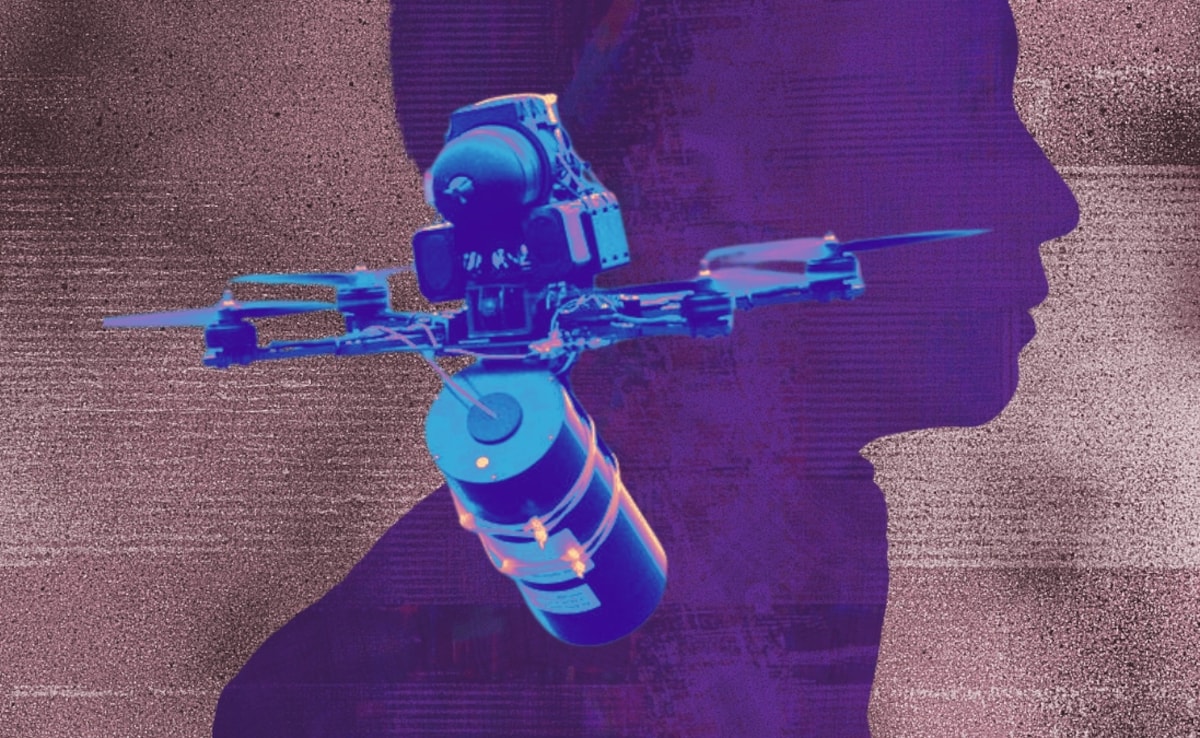
Modern attrition-based warfare has exposed a critical failure in the cost-benefit ratio of traditional guided munitions. When a million-dollar interceptor is required to neutralize a ten-thousand-dollar loitering munition, the defender faces inevitable economic exhaustion. The emergence of AI-guided cruise missiles from the Romanian defense sector addresses this specific bottleneck by decoupling precision from the high-capital hardware of traditional aerospace manufacturing. By shifting the burden of accuracy from expensive physical sensors to edge-computing algorithms, these systems represent a transition from "exquisite hardware" to "disposable software-defined ordnance."
The viability of this transition rests on three technical pillars: the commoditization of micro-jet engines, the democratization of high-resolution optical sensors, and the implementation of terminal-phase computer vision that operates independent of Global Navigation Satellite Systems (GNSS).
The Architecture of Navigational Autonomy
Traditional cruise missiles rely heavily on inertial navigation systems (INS) corrected by GPS or GLONASS updates. In contested electromagnetic environments, these signals are the first points of failure. The Romanian strategic approach utilizes a dual-path navigational framework to bypass this vulnerability.
1. Visual Odometry and Terrain Correlation
Rather than depending on external satellites, the system uses downward-facing cameras to compare real-time visual data against pre-loaded satellite imagery or digital elevation models (DEM). This process, known as Digital Scene Matching Area Correlation (DSMAC), was previously reserved for high-end strategic assets like the Tomahawk. The innovation here lies in the application of neural networks to perform these correlations on low-power, commercial-off-the-shelf (COTS) processors. This reduces the unit cost by an order of magnitude while maintaining a circular error probable (CEP) of less than five meters.
2. Terminal Phase Target Recognition
The most significant risk in autonomous munitions is the "last mile" of the flight path. Static targets are easily addressed via coordinates, but moving or camouflaged assets require active identification. The Romanian system utilizes a convolutional neural network (CNN) trained on synthetic and real-world datasets of armored vehicles, command nodes, and logistics hubs. By executing target recognition at the "edge"—directly on the missile's processor—the system eliminates the need for a continuous data link with a human operator. This creates a weapon that is functionally immune to electronic warfare jamming because there is no signal to sever.
The Economics of Attrition and Mass
The defense industry has long suffered from the "Complexity Spiral," where every incremental improvement in performance leads to exponential increases in cost and development time. The Romanian model breaks this spiral by adopting an assembly logic closer to the consumer electronics industry than the aerospace sector.
The Cost Function of Software-Defined Ordnance
The total cost $C$ of a traditional missile system is dominated by the physical seeker head ($S$) and the propulsion system ($P$). In the Romanian framework, $S$ is replaced by a combination of a low-cost CMOS camera ($c$) and an AI model ($A$).
$$C_{traditional} = S_{high-end} + P + Airframe$$
$$C_{AI-Guided} = (c + A) + P + Airframe$$
Since the marginal cost of duplicating software ($A$) is effectively zero, the manufacturer only scales the cost of the hardware. This allows for the production of "swarm-capable" volumes. If a state can produce 1,000 AI-guided missiles for the price of 10 traditional variants, they gain a strategic advantage through saturation. No air defense system, regardless of its sophistication, possesses a 100% interception rate when faced with simultaneous, multi-vector arrivals.
Supply Chain Resilience
A primary bottleneck in NATO-standard missile production is the reliance on specialized microelectronics and high-grade rocket motors. The Romanian startup ecosystem leverages a local manufacturing base that utilizes 3D-printed components for engine housing and airframe structures. This reduces the lead time for production from months to weeks. Furthermore, using COTS AI accelerators—the same chips found in high-end smartphones—avoids the bureaucratic and slow-moving procurement cycles of military-grade silicon.
Strategic Limitations and Failure Modes
While the technical advantages are clear, autonomous munitions introduce specific operational risks that must be quantified.
- Target Discrimination Errors: AI models are prone to "hallucinations" or misidentification when faced with novel environments. A burned-out school bus might be identified as an armored personnel carrier if the training data is not sufficiently diverse. The lack of a "man-in-the-loop" means there is no mechanism to abort a strike once the terminal phase begins.
- Adverse Weather Performance: Optical-based navigation systems suffer significant degradation in fog, heavy rain, or smoke screens. Unlike radar-guided missiles, which can penetrate most atmospheric interference, AI-guided systems relying on visual spectrum cameras are restricted by environmental visibility.
- Hardware Durability: Utilizing COTS components introduces a lower mean time between failures (MTBF) under high-G maneuvers or extreme temperature fluctuations. The trade-off for lower cost is a narrower operational envelope compared to purpose-built military hardware.
The Romanian Defense Hub as a Prototyping Lab
Romania’s position as a burgeoning tech hub in Eastern Europe provides the necessary intersection of software engineering talent and proximity to active conflict zones, which serves as a rapid feedback loop for iterative design. The startup’s ability to test and refine algorithms based on real-world electronic warfare data from the Black Sea region gives them a developmental edge over Western defense giants operating in simulated environments.
The focus is not on creating the "best" missile, but the "most efficient" one. Success in this sector is defined by the "interception cost disparity." If the missile costs $50,000 and requires a $2,000,000 Patriot missile to shoot it down, the Romanian startup has won the economic engagement regardless of whether the missile hits its target. This is the fundamental shift from tactical destruction to strategic exhaustion.
Implementation of Integrated Swarm Logic
The next iteration of this technology involves inter-missile communication. While the current generation operates as an autonomous individual, the architectural framework exists for group coordination.
- Role Allocation: Within a group of ten missiles, two can be designated as "sensors" flying at higher altitudes to provide top-down data, while the remaining eight act as "effectors" flying at low altitudes to avoid radar detection.
- Dynamic Re-targeting: If a lead missile identifies that a primary target has already been destroyed, it can transmit a "target-null" signal to the rest of the group, prompting them to switch to secondary objectives in real-time.
This level of coordination requires minimal bandwidth because the missiles are not transmitting raw video feeds, but rather high-level metadata (e.g., "Target Alpha neutralized, proceed to Beta").
The emergence of AI-guided cruise missiles in Romania signals the end of the era where precision was a luxury of superpowers. By leveraging the convergence of edge computing and additive manufacturing, smaller nations and non-state actors can now project power with a level of accuracy previously requiring a multi-billion dollar aerospace infrastructure. The strategic play for defense ministries is no longer the acquisition of a few high-cost assets, but the integration of large-scale, low-cost autonomous networks that can overwhelm traditional defenses through sheer economic and numerical asymmetry.
Procurement strategies must shift toward "Venture Defense"—investing in rapid iteration cycles and software-first hardware. The objective is to build a modular ecosystem where the airframe remains a cheap, replaceable shell, while the cognitive capabilities are updated via over-the-air software patches to counter evolving threats. This is the only path to maintaining parity in a conflict environment where the cost of the sensor has finally dropped below the cost of the kinetic energy it directs.