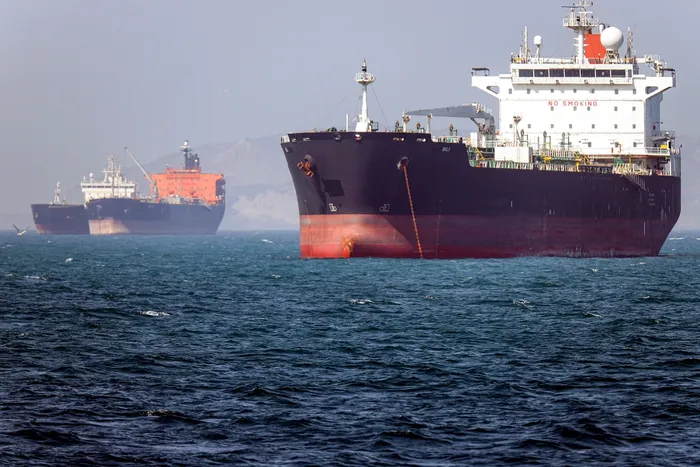
The movement of a Qatari Liquefied Natural Gas (LNG) carrier toward the Strait of Hormuz is not merely a logistical event; it is a live stress test of the global energy supply chain under conditions of asymmetric geopolitical friction. While media narratives focus on the binary "war or peace" dichotomy, the reality is a calculated state of perpetual friction designed to maximize political leverage while minimizing direct kinetic engagement. The inability of the United States and Iran to reach a diplomatic resolution is not a failure of communication, but a rational alignment of two conflicting grand strategies where the status quo of "managed instability" provides more utility to both actors than a definitive settlement.
The Geopolitical Cost Function of the Strait of Hormuz
The Strait of Hormuz functions as the world's most sensitive economic carotid artery. Approximately 21 million barrels of oil per day—representing roughly 20% of global liquid petroleum consumption—and over 25% of global LNG trade transit this 21-mile-wide waterway at its narrowest point. The strategic significance of a Qatari tanker in these waters lies in the specific "Cost Function" of a potential blockage.
Unlike oil, which can be buffered through Strategic Petroleum Reserves (SPR) or redirected via pipelines (such as the Habshan–Fujairah pipeline in the UAE), LNG has a more rigid supply chain. Qatar’s reliance on the Strait is absolute. For the global market, a disruption here does not just raise prices; it breaks the industrial heating and power generation cycles of major Asian and European economies that lack immediate fuel-switching capabilities.
The Three Pillars of Iranian Deterrence
Iran’s strategy is built on a "Layered Deterrence" framework. They recognize that they cannot win a conventional blue-water naval engagement against the US Fifth Fleet. Instead, they utilize three specific variables to maintain regional influence:
- Proximate Threat Geography: The ability to deploy land-based anti-ship cruise missiles (ASCMs), fast attack craft (FAC), and bottom-moored mines within minutes of a command decision.
- Calibrated Escalation: Executing "gray zone" operations—such as the temporary seizure of tankers or drone harassment—that fall below the threshold of triggering a full-scale US military response under the War Powers Resolution.
- Proxy Synchronization: Leveraging regional affiliates to create a multi-front dilemma for US CENTCOM, ensuring that any pressure applied in the Persian Gulf results in a counter-pressure in the Levant or the Red Sea.
The Bottleneck of US Diplomatic Logic
The US policy toward Iran currently operates under a "Maximum Pressure 2.0" framework that lacks a clear off-ramp. This creates a logical bottleneck. For sanctions to work as a tool of statecraft, the target must believe that a change in behavior will actually result in the removal of those sanctions.
The current domestic political environment in Washington makes the lifting of sanctions practically impossible, regardless of Iranian concessions. When the target (Tehran) views the penalty as permanent, the incentive for compliance vanishes. At that point, the target’s rational move is to increase the cost of those sanctions for the enforcer. Iran achieves this by injecting volatility into the energy markets, effectively taxing the global economy for the US-led sanctions regime.
Strategic Calculations of the Qatari Energy Transit
Qatar occupies a precarious position as a mediator that is also the party with the most to lose. The transit of a Qatari tanker during periods of heightened US-Iran tension serves as a "Canary in the Coal Mine" for global markets.
The Insurance Risk Premium
The primary economic impact of these tensions is not found in the spot price of Brent crude, but in the maritime insurance markets. When a tanker enters the Strait of Hormuz during a period of "War Risk" designation by the Joint War Committee (JWC), the Additional Premium (AP) can spike by 100% to 500% within a 24-hour window.
This creates a hidden tax on every unit of energy. For a standard VLCC (Very Large Crude Carrier), a spike in insurance premiums can add $200,000 to $400,000 to the cost of a single voyage. These costs are rarely absorbed by the shipping companies; they are passed down the value chain, manifesting as inflationary pressure in importing nations.
The Qatar-Iran Shared Interest
A nuance often missed by external analysts is the shared ownership of the North Field/South Pars gas condensate field. Qatar and Iran sit on the world’s largest natural gas deposit. This shared geological asset necessitates a level of technical and tactical cooperation that contradicts the "hostility" narrative. Iran is unlikely to permanently shutter the Strait because it would effectively blockade its own primary source of future economic hope. Instead, the threat remains a "fleet-in-being" strategy—the power of the threat is greater than the execution of the act.
The Failure of the "Security Architecture" Model
Western strategy has long attempted to build a "Middle East NATO" to contain Iran. This model is fundamentally flawed because it ignores the divergent economic interests of the GCC (Gulf Cooperation Council) states.
While Saudi Arabia and the UAE seek to diversify their economies (Vision 2030), they cannot afford a high-intensity conflict that would destroy the infrastructure required for that transition. Consequently, we see a "De-risking" trend. Regional powers are increasingly engaging in direct bilateral diplomacy with Tehran, bypassing Washington. This creates a fragmented security environment where the US provides the hardware (ships and planes) but lacks the regional political consensus to use them effectively for anything other than escort missions.
The Mechanics of Maritime Interdiction
If a kinetic escalation were to occur, it would likely follow a non-linear path. The "Tanker War" of the 1980s provides the blueprint, but modern technology has shifted the advantage toward the asymmetric actor.
- Swarm Dynamics: Iran’s use of dozens of small, high-speed boats equipped with short-range missiles can overwhelm the Aegis Combat Systems of US destroyers, which are designed to intercept high-altitude, long-range threats.
- Subsurface Uncertainty: The deployment of midget submarines (Ghadir-class) in the shallow, noisy waters of the Strait makes acoustic detection extremely difficult for traditional sonar arrays.
- Electronic Warfare: The spoofing of AIS (Automatic Identification System) signals allows actors to misdirect commercial traffic into Iranian territorial waters, providing a legal pretext for "intervention" or "investigation."
Assessing the Displacement of Risk
The US attempt to pivot to the Indo-Pacific is hampered by the persistent requirement to de-risk the Strait of Hormuz. Every carrier strike group (CSG) stationed in the North Arabian Sea is one less asset available to counter Chinese maritime expansion in the South China Sea.
Iran understands this global overextension. By maintaining a baseline level of threat in the Strait, Tehran forces the US into a "Sunk Cost" fallacy. Washington continues to pour resources into a region it wishes to leave, while receiving no diplomatic concessions in return.
The Energy Transition Paradox
As the world attempts to transition toward renewable energy, the strategic importance of the Strait of Hormuz is actually increasing in the short-to-medium term. Natural gas (LNG) is the primary bridge fuel for this transition. As European nations decouple from Russian pipeline gas, their dependence on Qatari LNG transiting the Strait becomes a critical vulnerability.
The "Energy Transition" has effectively traded a terrestrial dependency (Russia) for a maritime one (the Persian Gulf). This shift grants Iran more leverage over European foreign policy than it possessed a decade ago. Tehran is no longer just a regional challenge; it is a direct variable in the energy security of the Eurozone.
Strategic Recommendation for Market Participants
The absence of a formal treaty between the US and Iran indicates that the "No War, No Peace" state is the intended destination, not a transitionary phase. For energy traders and geopolitical analysts, the following variables must be monitored to anticipate the next shift in the equilibrium:
First, monitor the "Dark Fleet" utilization rates. Iran’s ability to export oil despite sanctions relies on a network of aging tankers with deactivated transponders. If the US begins a physical seizure of these vessels, expect an immediate, reciprocal seizure of a Western-aligned vessel in the Strait.
Second, track the "spread" between Gulf-delivered LNG and US Gulf Coast LNG (Henry Hub). A widening spread that exceeds the cost of freight indicates that the market is pricing in a "Hormuz Risk Premium."
Third, observe the movement of Chinese diplomatic envoys to Tehran. China is the primary purchaser of Iranian "discounted" crude. Any disruption in the Strait harms Beijing more than Washington. If China ceases to act as a diplomatic buffer, the probability of a kinetic Iranian move increases, as it would signal that Tehran has nothing left to lose regarding its most important economic partner.
The Qatari tanker currently sailing toward the Strait is not a symbol of an impending war. it is a piece of industrial infrastructure navigating a complex, high-stakes game of economic signaling. The stalemate is not a sign of diplomatic incompetence; it is a sophisticated, albeit dangerous, equilibrium that serves the immediate internal political needs of both Washington and Tehran at the expense of global market stability.