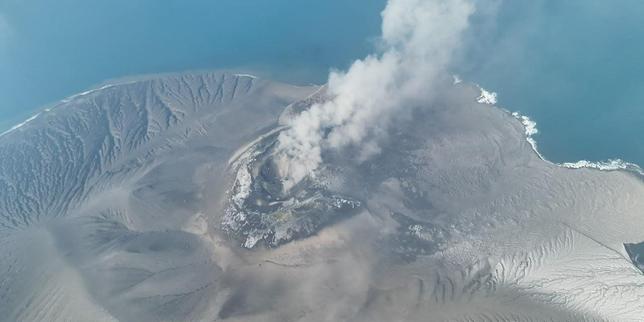
When the sky over western Java turned an opaque, sulfurous yellow, the ground logistics of Southeast Asia’s largest aviation network ground to an abrupt halt. Six airports, anchored by Jakarta’s sprawling Soekarno-Hatta International hub, suspended operations entirely after Mount Anak Krakatau unleashed a violent sequence of explosive eruptions.
Over five hundred flights stalled on tarmac networks, stranding tens of thousands of passengers and exposing the terrifying vulnerability of modern flight corridors to ancient geological forces. The crisis did not materialize from a vacuum. Volcanic ash, composed of jagged, pulverized rock and glass particles, presents an existential threat to jet turbine internals. When ingested into a high-bypass turbofan operating at over one thousand degrees Celsius, this silicate material melts, coats turbine blades, and rapidly solidifies. The result is catastrophic engine flameout. Civil aviation authorities across the Indonesian archipelago faced an immediate binary choice: ground the fleet or risk an airborne catastrophe. If you enjoyed this post, you should read: this related article.
The Anatomy of an Aviation Paralysis
The eruption began late on a Friday, sending booming shockwaves across the Sunda Strait that residents reported hearing hundreds of kilometers away. By Sunday morning, paper tests conducted by transport ministry officials detected positive traces of volcanic particulate matter settling directly over the runways of Soekarno-Hatta.
AirNav Indonesia, alongside the Directorate General of Civil Aviation, moved swiftly to shutter airspace. The closures extended far beyond Jakarta's primary gateway, sweeping up Husein Sastranegara Airport in Bandung, Radin Inten II in Lampung, and secondary regional facilities. For another look on this event, refer to the recent update from NPR.
For the modern traveler, an airport closure is viewed as a temporary scheduling inconvenience, solvable by rebooking an app or grabbing a lounge voucher. But an ash-cloud disruption introduces systemic cascading failures that linger long after the smoke clears. Aircraft rotations break down. Crews time out thousands of miles from home. Fleet availability plummets. Even when the air clears, the logistical backlog takes days to unwind.
Ministerial briefings emphasized safety as the non-negotiable baseline, yet the economic toll on regional carriers like Singapore Airlines, Scoot, and domestic operators compounded by the hour. International routes connecting Jakarta to Singapore, Doha, Sydney, and Kuala Lumpur evaporated from departure boards.
Living on the Ring of Fire
Indonesia occupies the most volatile seismic real estate on Earth. Straddled across the Pacific Ring of Fire, the nation manages nearly 130 active volcanoes, a daily reminder that human infrastructure remains entirely provisional against planetary tectonics.
Yet, Anak Krakatau occupies a uniquely dark place in the national psyche. Born from the submerged caldera of the legendary 1883 Krakatoa cataclysm, "Child of Krakatoa" has spent decades rebuilding itself from the sea floor. In 2018, a massive sector collapse of the volcano triggered a silent tsunami that struck coastal communities without warning, killing hundreds.
When the earth began to tremor this weekend, local populations in Banten and Lampung experienced an immediate, visceral flash of historical trauma. Disaster mitigation agency BNPB worked frantically to quell panic, issuing simultaneous assurances that current geological indicators showed no risk of a repeat 2018 tsunami collapse.
Instead, the immediate battle was atmospheric. While airlines canceled schedules, everyday life beneath the plume fractured. Schools shuttered their doors as children and outdoor laborers suffered acute eye and respiratory irritation from heavy ashfall. Fishermen moored their boats, abandoning the Sunda Strait waters as visibility dropped and surface hazards multiplied.
The Limits of Modern Mitigation
Faced with a sprawling blanket of grit covering densely populated provinces, authorities turned to technological intervention. BNPB announced plans for weather modification operations, relying on cloud-seeding techniques to force artificial rainfall designed to scour the atmosphere and wash the toxic dust from the air.
Cloud-seeding during a volcanic crisis is a delicate gamble. Heavy downpours can accelerate the removal of airborne ash, saving lungs and machinery, but water mixed with thick volcanic ash transforms into a heavy, cement-like slurry on the ground. This secondary hazard threatens building roofs, collapses agricultural yields, and chokes drainage systems.
As engineering teams scramble to inspect grounded aircraft for microscopic glass pitting, the fragility of global transit networks stands exposed once more. A single uninhabited volcanic cone in a marine strait can freeze the economic heartbeat of Southeast Asia within a matter of hours. The planes remain tied to the tarmac, waiting for the wind to shift, while millions watch the horizon and remember that the earth ultimately dictates the terms of modern mobility.