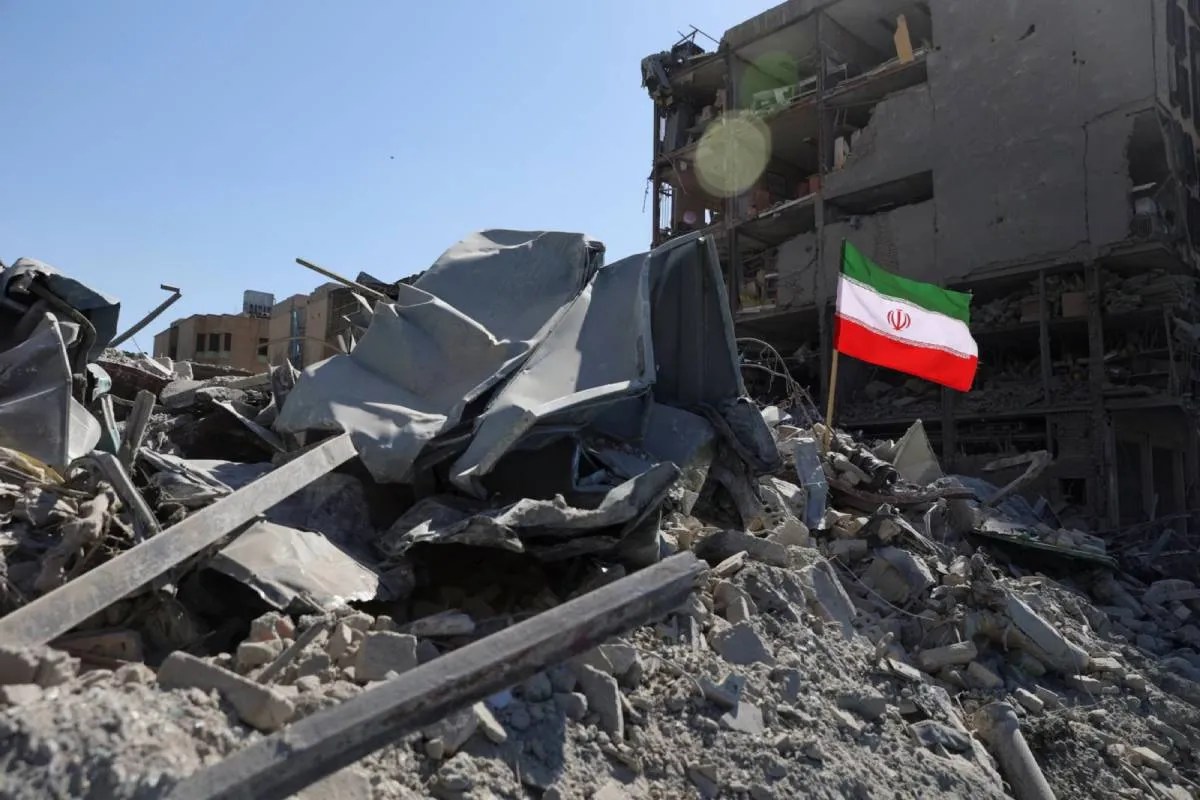
The ultimatum was as blunt as a sledgehammer. Donald Trump had given Tehran until 8:00 PM Eastern on Tuesday to surrender its position or watch its civilization "die tonight." B-52 bombers were already airborne, tracking toward targets across the Iranian plateau, when the word finally came from Islamabad. A two-week conditional ceasefire, mediated by Pakistan, had pulled the world back from the edge of a conflict that promised total regional destruction.
By Wednesday morning, the narrative split into two incompatible realities. In Washington, Trump declared a "total and complete victory," claiming the Islamic Republic had "had enough" and was ready to negotiate a 10-point peace plan. In Tehran, the streets of Revolution Square were filled with government-sanctioned celebrations. The Supreme National Security Council characterized the pause not as a concession, but as a "crushing defeat" for the United States, asserting that the "criminal America" had been forced to accept Iranian terms.
This is the anatomy of a modern standoff where neither side can afford a full-scale war, yet neither can afford to look like they blinked. The reality of this ceasefire is far grittier than the celebratory social media posts suggest. It is a tactical breather for two exhausted adversaries who have spent forty days testing the limits of global patience and the resilience of the global economy.
The Strait of Hormuz is the Only Metric That Matters
While political leaders trade barbs over who "bowed" to whom, the true barometer of this conflict remains the world's most vital maritime chokepoint. The ceasefire is contingent on the "complete, immediate, and safe opening" of the Strait of Hormuz. For weeks, the closure of this passage sent oil prices to record highs, threatening to derail the global recovery and sparking a panic that reached from Tokyo to London.
The Iranian Foreign Ministry’s statement on the reopening contained a crucial, and perhaps ominous, caveat. They noted that passage would be coordinated with Iran’s Armed Forces. This is a significant geopolitical shift. By embedding their military into the "safe passage" protocols, Tehran is attempting to codify a permanent regulatory role over the waterway.
If this arrangement holds, Iran will have successfully moved the goalposts. They aren't just reopening a gate; they are claiming the right to act as the gatekeeper. This "victory" in the eyes of the IRGC leadership isn't about defeating the U.S. Navy in a head-to-head fight—it's about demonstrating that they can hold the global economy for ransom whenever the pressure from Washington becomes unbearable.
The Islamabad Gambit and the 10 Point Plan
Pakistan’s role as the intermediary is not a matter of sudden diplomatic altruism. Prime Minister Shehbaz Sharif stepped in because the spillover from a U.S.-Iran war would have been catastrophic for a nuclear-armed Islamabad already grappling with its own internal instabilities. The negotiations slated for Friday in the Pakistani capital will focus on a 10-point proposal that remains a minefield of contradictions.
Tehran claims the U.S. has already agreed "in principle" to demands that would be politically suicidal for any American president. These include:
- Formal recognition of Iran’s uranium enrichment rights.
- The immediate lifting of all primary and secondary sanctions.
- The payment of damages for war losses.
- The withdrawal of U.S. combat forces from the region.
The White House has been quick to dispute these claims, calling them "distortions" of the framework. Trump’s strategy appears to be a repeat of his North Korea playbook: high-stakes threats followed by a sudden, flamboyant pivot to personal diplomacy. He is betting that the threat of "civilizational destruction" has sufficiently softened the Iranian leadership to accept a deal that looks like a win for him but provides just enough face-saving concessions for them.
The Israeli Variable and the Lebanon Exception
The most dangerous crack in this temporary peace is the "Lebanon Exception." While Trump and Tehran have agreed to stop direct fire, Israeli Prime Minister Benjamin Netanyahu’s office was clear: this ceasefire does not include Lebanon. Even as the B-52s turned back, Israeli strikes against Hezbollah targets continued unabated.
This creates a paradox that could shatter the ceasefire within hours. Iran views Hezbollah as its forward-deployed insurance policy. If the IDF continues to degrade Hezbollah’s capabilities while the U.S. and Iran are talking in Islamabad, the "revolutionary minds" in Tehran will face immense pressure to respond.
Vice President JD Vance has already labeled the truce as "fragile," an understatement given that U.S. military infrastructure on Kharg Island and several Iranian bridges were hit just hours before the deadline. The scars of the forty-day conflict are still fresh, and the personnel on the ground—from U.S. sailors in the Persian Gulf to IRGC missile crews—remain at a high state of alert.
Reconstruction or Rearmament
Trump’s suggestion that "big money will be made" during Iran’s reconstruction is a classic appeal to economic pragmatism. He is framing the future as a choice between total ruin and a lucrative "Golden Age" of trade. However, the hardliners in Tehran see the world through the lens of resistance, not real estate.
For the Iranian regime, the two-week window is an opportunity to replenish depleted missile stocks and reassess the vulnerabilities that the U.S. air campaign exposed. For the U.S., it is a chance to move more assets into the theater without the immediate pressure of an active shooting war.
The danger of this two-week pause is the incentive it creates for a "preemptive" move. If either side believes the other is simply using the time to prepare for a more devastating strike, the ceasefire will evaporate before the first diplomat arrives in Islamabad.
The world is currently breathing a sigh of relief, but it is a shallow breath. The underlying issues—Iran’s nuclear program, its regional proxies, and the U.S. sanctions regime—haven't been resolved; they've just been put on a fourteen-day timer. The "victory" being celebrated in both capitals is a hollow one, a placeholder for a much more difficult conversation that most are not yet ready to have.
The next fourteen days will determine if this was the beginning of a genuine pivot or merely the eye of a very violent storm. If the Islamabad talks fail to produce more than rhetoric, the B-52s will find themselves back on the same flight paths they were walking on Tuesday night, and the "civilizational" threat will return to the top of the feed.