The self-help industry has been running a multi-millennium scam based on a fundamental misreading of ancient philosophy.
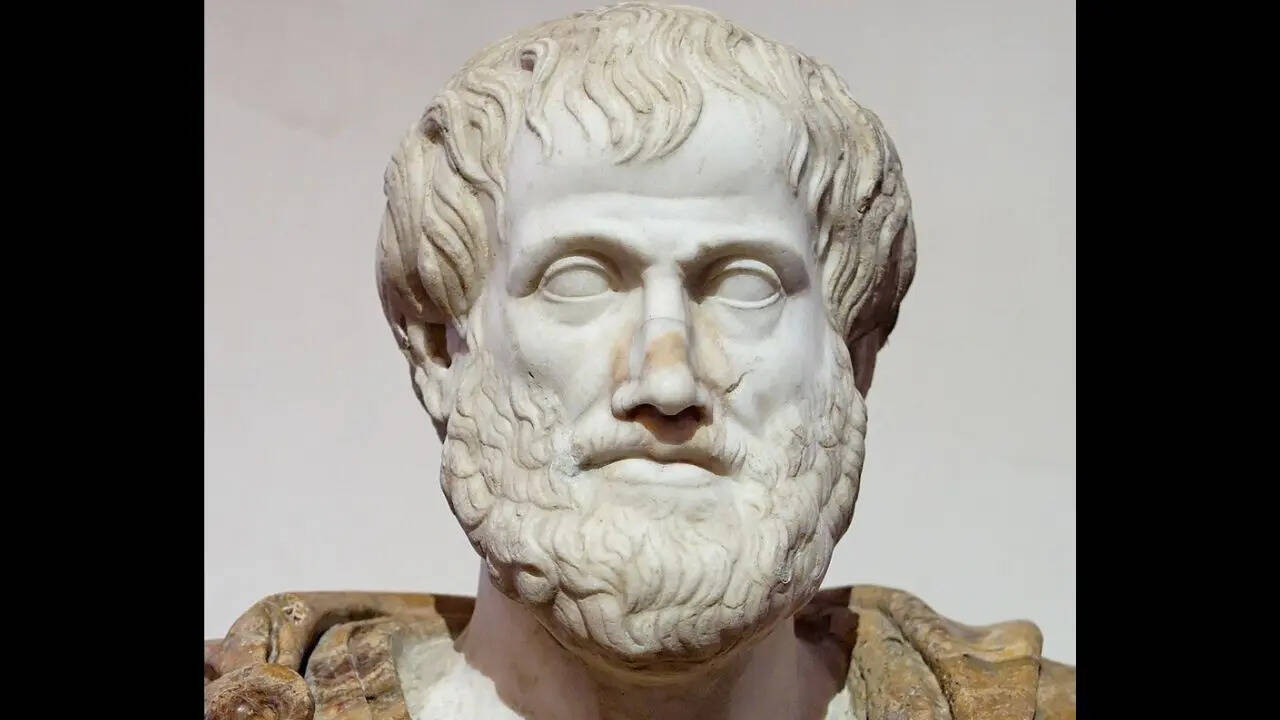
Every morning, millions of professionals log onto LinkedIn to read an automated "Quote of the Day" telling them to grin and bear it. At the center of this intellectual laziness is Aristotle’s famous assertion: "The ideal man bears the accidents of life with dignity and grace, making the best of circumstances."
It sounds noble. It looks great on a canvas print in a corporate conference room.
It is also an absolute recipe for professional stagnation and psychological burnout.
Aristotle was writing from a position of immense aristocratic privilege in ancient Athens. His "ideal man" was a wealthy citizen who could afford to passively absorb the "accidents of life" because his wealth and status shielded him from the worst of them. When modern creators, executives, and life coaches copy-paste this philosophy onto the brutal realities of the modern economy, they aren't teaching resilience. They are teaching submission.
The Trap of Aristotelian "Grace"
The lazy consensus among modern wellness gurus is that resilience means maintaining a calm, unbothered exterior while everything around you collapses. They call it emotional intelligence. They call it poise.
Let's call it what it actually is: toxic passivity.
When you focus entirely on bearing the accidents of life with dignity, you shift your energy from systemic problem-solving to emotional containment. I have watched high-performing executives spend months in therapy trying to "manage their stress" regarding a toxic corporate restructure, rather than doing the obvious, high-agency thing: quitting and taking half their team with them.
Aristotle's framework forces you into a defensive posture. You become a punching bag that prides itself on how well it absorbs the blows. But a punching bag never wins a fight.
The Illusion of "Making the Best of Circumstances"
The phrase "making the best of circumstances" is the ultimate cop-out. It assumes that your circumstances are a fixed, unchangeable reality, like the weather.
Imagine a scenario where a startup founder launches a product, and the market completely rejects it. The Aristotelian approach says: "Bear this failure with dignity. Make the best of it by squeezing whatever meager revenue you can out of this flawed product."
That is how companies die.
The high-agency approach does not make the best of bad circumstances; it violently rejects them. It pivots. It destroys the existing framework and builds something entirely new. Resilience is not the ability to endure a bad situation; it is the capacity to destroy and rebuild your environment when that environment no longer serves you.
Enter the Stoics: Why Epictetus and Seneca Had the Real Answers
If you want an ancient philosophy that actually scales to the chaos of the modern world, stop reading Nicomachean Ethics and start reading the Stoics.
People who do not understand philosophy often lump Aristotle and the Stoics into the same bucket. This is a massive analytical error. While Aristotle preached a middle-ground approach to life's external goods, the Stoics—specifically Epictetus, a former slave, and Seneca, a billionaire political advisor—understood that life is an active battlefield.
The Dichotomy of Control is a Weapon, Not a Shield
Epictetus did not care about bearing accidents with "dignity." He cared about agency. His foundational principle, the Dichotomy of Control, splits the entire universe into two categories: things that are up to us, and things that are not.
Most people use this principle as a psychological shield to cope with failure. "Well, the economy crashed, that's not up to me, so I'll just accept it with dignity."
That is a bastardization of Stoicism.
The true power of the Dichotomy of Control is that it frees up 100% of your cognitive bandwidth to ruthlessly optimize the things you can influence. You do not just sit back and accept the accident; you analyze the wreckage with cold, mathematical precision to find the leverage points you control.
| Philosophical Approach | View on Bad Luck | Primary Action | Expected Outcome |
|---|---|---|---|
| Aristotelian | An accident to be borne with quiet dignity. | Emotional containment and endurance. | Survival, but zero systemic change. |
| Stoic (Authentic) | Data to be processed and acted upon. | Ruthless optimization of internal agency. | Adaptation and exploitation of the crisis. |
Dismantling the "People Also Ask" Flawed Premises
If you look at what people actually search for regarding resilience and ancient philosophy, the questions themselves reveal how deeply ingrained this passive mindset is. We need to dismantle these premises entirely.
"How do I become more resilient to workplace stress?"
The very premise of this question is flawed. You are asking how to increase your tolerance for a toxic stimulus. If you put your hand on a hot stove, the correct response is not to build up calluses so you can leave your hand there longer. The correct response is to move your hand.
When you ask how to "bear" workplace stress with Aristotelian grace, you are enabling bad management, poor operational structures, and impossible workloads. Stop trying to optimize your internal emotional state to match an unoptimized external environment. Instead, treat stress as an alarm system telling you to change your operational strategy.
"What did Aristotle mean by bearing accidents with dignity?"
He meant maintaining your social standing and moral character despite bad luck. It was a philosophy designed for a world where social mobility was virtually non-existent. If you were born a peasant, you died a peasant; your only victory was dying a "dignified" peasant.
We do not live in that world anymore. Capital is fluid. Information is decentralized. Network access can be built from a laptop in a coffee shop. In a highly fluid society, holding onto "dignity" at the expense of disruptive action is a luxury of the elite and a trap for everyone else.
The Dark Side of True High-Agency Resilience
Let's be completely transparent here. Abandoning the comfortable, passive resilience of Aristotle for a high-agency, Stoic framework comes with severe downsides. The industry gurus won't tell you this because they want to sell you journals and meditation apps, but you need to know the cost.
- You will lose your safety net of excuses. When you stop blaming "circumstances" and focus entirely on your response, you bear total responsibility for your outcomes. You can no longer blame the bad market, the bad boss, or the bad luck.
- You will alienate people. Culturally, people love victims who suffer beautifully. When you refuse to participate in the collective trauma-bonding of the office breakroom or the industry happy hour, and instead focus entirely on what you can change, people will view you as cold, calculating, or detached.
- The cognitive load is exhausting. It takes zero intellectual effort to say, "Well, this is a bad situation, I just have to get through it." It takes massive cognitive effort to constantly analyze a crisis for hidden opportunities and execution vectors.
Stop Enduring. Start Executing.
The next time a major crisis hits your project, your business, or your life, do not look for a quote about dignity. Do not try to "make the best" of a broken system.
Treat the accident not as a test of your patience, but as an audit of your adaptability. Strip away the emotional narrative entirely. Identify the variables you control, double down on your execution of those variables, and let the rest of the world waste their time trying to suffer with grace.