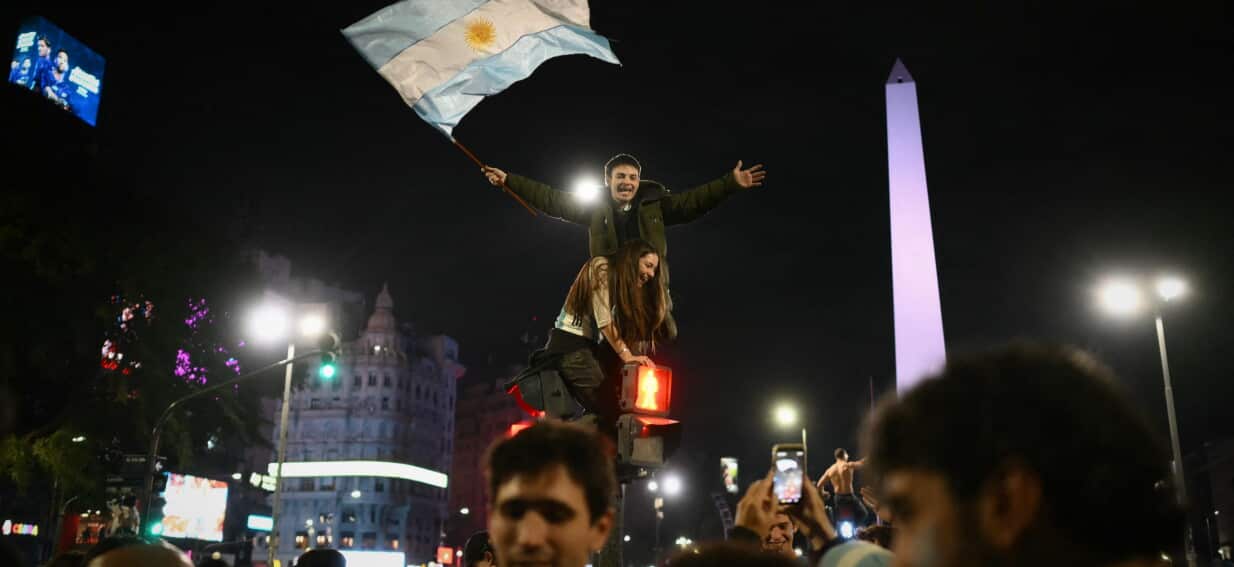
If you walk into a home in Buenos Aires right now, don't be surprised if you find a scraps of paper bearing the names of Spanish players sitting right next to the frozen peas.
With Argentina just ninety minutes away from back-to-back World Cup titles, fans aren't leaving anything to chance. After a heart-stopping 2-1 semi-final win over England, the Albiceleste are set to face Spain in the 2026 final. But while Lionel Messi and company draw up the tactical plans on the pitch, millions of Argentines are busy executing their own critical game plans at home.
They call them cábalas. These aren't your run-of-the-mill superstitions like avoiding cracks on the sidewalk. In Argentina, football rituals are treated with the seriousness of scientific laws. They are a collective social contract, a desperate attempt to exert control over a game that drives an entire nation to the edge of sanity.
If you want to understand how a country survives the agonizing pressure of a World Cup final, you have to understand the logic behind the magic.
The Cold Logic of the Football Freezer
One of the most popular rituals keeping Argentine freezers stuffed this winter involves literally "freezing" the enemy.
During the semi-final run, fans flooded social media with images of England's Harry Kane and Jude Bellingham locked in blocks of ice. It wasn't just a meme. Thirteen-year-old Ines Mutri was one of thousands who physically wrote Kane’s name on a piece of paper and stuffed it into the freezer compartments.
[The Argentine "Freezer" Strategy]
Step 1: Write the star opponent's name on a slip of paper.
Step 2: Place it in the back of the freezer.
Step 3: Keep it there until the final whistle blows.
Did it work? Kane didn't find the back of the net, and Argentina marched on. With Spain waiting in the final, expect Spanish stars like Lamine Yamal and Nico Williams to receive the exact same sub-zero treatment.
But there's a delicate balance here. Some older fans warn against using the freezer trick too aggressively. The belief is that wishing direct harm or bad luck on someone can trigger bad karma, potentially boomeranging back to hurt Argentina instead.
Instead, the preferred method is defense through defensive magic.
The Grammar of Deflection: Anulo Mufa and Kiricocho
In Argentina, the worst sin you can commit is premature celebration. Saying "we are going to win" or "we've got this in the bag" is a fast track to social exile.
To combat this, the country relies on two linguistic shields:
1. Anulo Mufa
If someone accidentally expresses optimism, you must immediately declare "Anulo mufa!" (I cancel the jinx). It is spoken aloud with absolute conviction, ideally while touching wood to absorb the bad energy. You will see this phrase plastered across social media comments, spoken in television broadcasts, and muttered under the breath in cafes all over Buenos Aires.
2. Kiricocho
When Spain gets a corner or steps up for a penalty, listen closely. You will hear fans screaming "Kiricocho!" at their screens.
This legendary hex dates back to the 1980s and Estudiantes de La Plata, coached by the notoriously superstitious Carlos Bilardo. Kiricocho was a supporter whose presence at training allegedly coincided with player injuries. Rather than banishing him, Bilardo deployed Kiricocho to greet visiting teams. Estudiantes won the league, only losing the single game where Kiricocho wasn't there to welcome the opponents. Today, shouting his name is the ultimate defensive curse.
The Unwashed Jersey and the Strict Law of Repetition
If a ritual works once, it becomes law. The fundamental rule of the cábala is simple: do not change a single variable from the last victory.
This creates some highly uncomfortable situations for the final:
- The Unwashed Kit: If you wore a specific Messi jersey during the dramatic 2-1 win over England, you are legally obligated to wear it for the final. No, you cannot wash it. The sweat, the stadium dust, and the tension of the semi-final are part of the charm.
- The Exact Seat: Watching with the same group of friends is not enough. You must sit in the exact same spot on the sofa. If you went to the bathroom during a specific minute in the semi-final, you might find yourself forced to stand in the hallway at that exact time during the final.
- The Broadcast: Even if another channel offers better picture quality, you do not change the channel. You stick with the commentators who brought you the win.
These rules apply from the very top of the team down to the youngest fan. Coach Lionel Scaloni famously enters the pitch with his right foot first while making the sign of the cross. Midfielders Rodrigo De Paul and Leandro Paredes will walk to the center circle before kickoff to eat chewy candies—a sweet tribute to De Paul's late grandfather that has transformed into an unbreakable pre-match ritual.
How to Handle Matchday Pressure Like an Argentine
If you are supporting Argentina in the final, or simply want to understand the psychological strain of the event, you can adopt a few of these practices yourself.
First, secure your viewing spot early. Do not negotiate on who you watch the game with; find the group that helped secure the semi-final victory and stick with them.
Second, watch your mouth. Keep any declarations of victory far away from your lips. If a friend says "Spain doesn't stand a chance," knock on wood and repeat the phrase immediately: Anulo mufa.
Finally, accept the nerves. In Argentina, football is not entertainment. It is a shared emotional weight. If you feel your stomach turning on Sunday, just remember: millions of people in Buenos Aires are feeling the exact same thing, staring at their TV screens, wearing unwashed shirts, with a piece of paper sitting in the freezer.