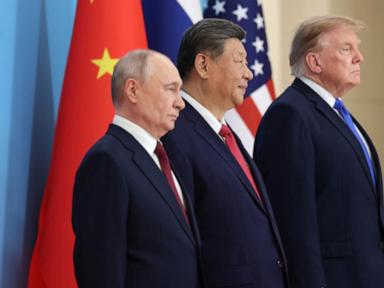
Joint communiqués signed by rival superpowers rarely fail because of what they state; they succeed precisely because of what they delete. When China, Russia, and the United States issue a joint declaration on peace while omitting active theaters of war in Ukraine and Iran, the omission is not a diplomatic oversight—it is the foundational mechanism that makes the signature possible. Standard geopolitical commentary treats such exclusions as hypocrisy or diplomatic failure. In operational statecraft, this is known as constructive ambiguity applied through scope gating: isolating low-friction consensus domains from zero-sum territorial or regime-survival conflicts so that diplomatic channels remain open without forcing any party to concede core strategic objectives.
The Structural Logic of Diplomatic Scope Gating
Multilateral declarations among nuclear-armed peers operate under strict consensus rules. Any single veto collapses the entire text. When three powers with divergent security architectures—Washington, Beijing, and Moscow—negotiate a joint statement, the drafting process functions as a subtractive filter rather than an additive synthesis. If you found value in this post, you might want to look at: this related article.
To understand why active conflicts vanish from final texts, one must map the Incentive Compatibility Matrix of the three signatories:
- The United States requires language that preserves alliance credibility, deters nuclear proliferation, and avoids legitimizing territorial conquest by force. Including Ukraine without condemning Russian aggression is politically untenable in Washington; including Iran without addressing regional proxy networks violates core U.S. containment doctrine.
- Russia requires language that avoids acknowledging sovereign violations in Eastern Europe and resists Western framing of security architecture. Any text mentioning Ukraine must either validate Moscow's security grievances or face an immediate Russian veto.
- China acts as the structural balancer, prioritizing systemic stability, non-interference principles, and economic continuity. Beijing resists language that isolates Moscow—its primary strategic counterweight to Washington—while simultaneously avoiding formal endorsement of Russian military campaigns or Iranian regional escalation that could trigger secondary sanctions against Chinese financial institutions.
When these three utility functions intersect, the overlapping set contains zero viable language regarding active kinetic wars where one signatory is a direct belligerent (Russia in Ukraine) or where signatories back opposing regional coalitions (the U.S. and Iran, with Russia and China maintaining asymmetric ties to Tehran). Stripping Ukraine and Iran from the text is the mathematical prerequisite for achieving a non-empty intersection. For another angle on this event, refer to the recent coverage from The Washington Post.
The Four Mechanisms of Trilateral Consensus
Rather than viewing a broad peace declaration as a binding security treaty, practitioners analyze it as a signaling instrument designed to manage escalation ladders. The exclusion of active conflicts relies on four distinct diplomatic mechanisms.
1. Decoupling Systemic Risk from Regional Theater Conflicts
Great powers separate existential, systemic risks—such as strategic nuclear stability, accidental military collisions, and global economic contagion—from regional proxy wars. By anchoring a declaration in high-level principles like sovereignty, non-aggression, or nuclear risk reduction, signatories establish a floor beneath their bilateral and trilateral relationships. This decoupling prevents a localized escalation in Eastern Europe or the Middle East from automatically triggering direct great-power confrontation.
2. Asymmetric Reputational Arbitrage
Each signatory extracts distinct domestic and international messaging value from the exact same ambiguous text:
- Beijing projects itself as a responsible global mediator capable of convening Washington and Moscow around a shared normative framework, reinforcing its Global Security Initiative without incurring hard security guarantees.
- Moscow uses the joint signature to demonstrate that Western efforts to isolate Russia diplomatically have failed, signaling to domestic audiences and non-aligned states that it remains an indispensable co-architect of global order.
- Washington frames the declaration as a tool to lock Moscow and Beijing into public commitments regarding international law and restraint, creating a rhetorical benchmark against which future escalations can be measured.
3. The Lowest-Common-Denominator Equilibrium
In game theory, when players face high costs for negotiation breakdown (such as the collapse of strategic arms control or communication hotlines) and prohibitive costs for concession on core interests, the equilibrium shifts toward abstract normative alignment. Phrases endorsing "peaceful resolution of disputes" or "respect for the UN Charter" survive drafting precisely because each capital defines those terms differently. Washington interprets the UN Charter as defending Ukraine's 1991 borders; Moscow interprets the same Charter as protecting the self-determination of Russian-speaking populations and opposing NATO expansion; Beijing interprets it as strict non-interference in internal affairs.
4. Preserving Bargaining Leverage for Separate Tracks
diplomats avoid contaminating specialized negotiation tracks with unrelated disputes. Issues involving Ukraine are routed through bilateral channels, European security forums, or targeted ceasefire negotiations. Issues involving Iran—spanning nuclear enrichment thresholds, ballistic missile transfers, and maritime security—require distinct technical verification regimes. Folding these active files into a trilateral great-power communiqué would grant each signatory cross-issue veto leverage, allowing Russia to demand concessions in Ukraine in exchange for cooperation on Iranian nuclear limits, or allowing China to link Middle Eastern stability to Indo-Pacific security dynamics.
Distinguishing Known Structural Realities from Analytical Hypotheses
Rigorous assessment requires separating observable diplomatic mechanics from speculative intent.
Established Facts:
- Consensus-based multilateral documents among rivals systematically omit contested theaters when no prior bilateral agreement exists on those specific conflicts.
- China, Russia, and the United States hold fundamentally incompatible positions on the legal status of Ukrainian territory and the legitimacy of sanctions and containment policies targeting Iran.
- High-level declarations lacking verification mechanisms, enforcement timelines, or geographic specificity impose zero binding operational constraints on military deployments or arms transfers.
Analytical Hypotheses:
- Hypothesis A (Escalation Management): The three powers intentionally used a generalized peace framework to re-establish crisis communication norms during a period of acute multi-theater friction.
- Hypothesis B (Coalition Wedging): Beijing and Moscow coordinated the framing to test cohesion between Washington and its European and Middle Eastern allies, who view the omission of Ukraine and Iran as a dilution of U.S. security commitments.
- Hypothesis C (Domestic Signaling): The timing reflects internal political calendars, where demonstrating diplomatic engagement reduces domestic pressure regarding uncontrolled military spending or protracted foreign entanglements.
The Cost Function of Strategic Omission
While scope gating enables diplomatic signatures, it carries measurable second-order costs that degrade alliance cohesion and deterrence credibility over time.
The primary cost is allied assurance erosion. Frontline states—specifically Ukraine, Eastern European NATO members, and U.S. partners in the Middle East—scrutinize joint statements for signs of great-power accommodation over their heads. When Washington signs a peace declaration with Moscow and Beijing that omits active wars threatening those allies' survival, it triggers fears of a "spheres of influence" bargain. Even when U.S. officials reiterate bilateral support privately, the public omission forces Washington to expend additional diplomatic and material capital to reassure partners that their security is not being traded away for trilateral stability.
The second cost is normative dilution. Repeatedly affirming abstract principles of peace while ignoring active invasions and regional proxy wars widens the gap between declaratory policy and kinetic reality. Non-aligned middle powers in the Global South observe that major powers selectively apply international law depending on strategic convenience, accelerating the fragmentation of global governance into competing regional blocs.
The third cost is false signaling to belligerents. Adversaries operating in omitted theaters may interpret the silence as tacit acceptance or diplomatic fatigue. If Tehran or Moscow perceives that Washington prioritizes trilateral crisis management with Beijing and Moscow over enforcing red lines in regional theaters, they may test deterrence thresholds through incremental escalation, calculating that the U.S. will avoid actions that jeopardize broader great-power stabilization tracks.
Operational Limitations of Declaratory Diplomacy
A joint declaration is a diagnostic indicator of diplomatic temperature, not a curative instrument for kinetic conflict. Relying on such texts to alter battlefield trajectories fails because declaratory frameworks lack three essential components of durable conflict resolution:
- Verification Architecture: Without third-party monitoring, satellite data sharing, or on-site inspection protocols, commitments to restraint remain unverifiable.
- Cost-Imposition Mechanisms: Effective agreements specify automatic penalties—such as snapback sanctions, asset freezes, or military posture adjustments—triggered by non-compliance. General peace declarations contain no enforcement triggers.
- Belligerent Buy-In: Neither Kyiv nor Tehran sits as a co-equal drafter in a trilateral U.S.-China-Russia communiqué. Agreements negotiated above the heads of direct regional actors routinely collapse when those actors refuse to freeze hostilities on unfavorable terms.
Strategic Execution for Policy and Risk Analysts
Decision-makers, institutional investors, and security analysts evaluating trilateral declarations must ignore the headline rhetoric and execute a three-step audit to measure actual geopolitical impact:
- Track Operational Indicators, Not Communiqué Language: Measure shifts in dual-use export controls, secondary financial sanctions enforcement, military-to-military hotline activations, and diplomatic staffing levels over the 90 days following the declaration. If kinetic supply chains and sanction regimes remain unchanged, price the declaration at zero operational impact.
- Monitor Allied Reassurance Deliverables: Watch for immediate follow-on arms packages, bilateral security guarantees, or high-level visits from U.S. officials to Kyiv, Warsaw, and Middle Eastern capitals. These compensatory actions reveal the true diplomatic price Washington paid to sign an omitted-scope text.
- Isolate Specific Working Groups: Identify whether the declaration spawns technical sub-committees on measurable domains such as artificial intelligence safety in nuclear command, maritime incident prevention, or debt restructuring. Geopolitical stabilization occurs exclusively inside narrow, technical working groups—never inside broad, unverified peace declarations.