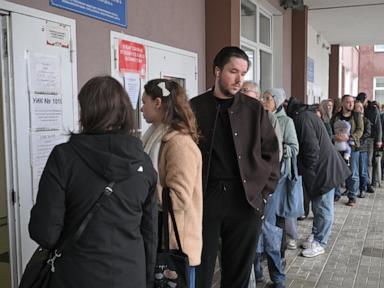
Autocratic institutional survival under conditions of systemic crisis requires continuous procedural validation. When a state transitions into a prolonged war economy, the mechanisms of political renewal shift from mechanisms of competitive choice to instruments of domestic alignment and elite signaling. The mechanics of the first wartime parliamentary election in Russia illustrate how a ruling apparatus weaponizes structured electoral participation to codify dominance, neutralize systemic friction, and project invulnerability to external adversaries.
Evaluating this dynamic requires moving past superficial descriptions of authoritarian consolidation and examining the structural variables that dictate the outcome. Three distinct vectors define this architecture: the management of the political funnel, the integration of controlled opposition, and the utilization of procedural turnout as a mandate for resource mobilization.
The Management of the Political Funnel
The structural integrity of any managed electoral system depends on pre-election filtration rather than outright day-of falsification. By systematically eliminating genuine ideological opposition well before ballots are cast, the administration minimizes the variance of electoral outcomes. The disqualification or administrative exclusion of anti-war political entities ensures that the ballot structure presents a closed loop of choices.
This pre-emptive filtration alters the cost function for dissenting citizens. When an organized, legal platform for anti-war sentiment is entirely absent, participation requires individuals to adopt high-cost, high-risk behaviors, such as spoiling ballots with explicit messaging or participating in localized protests. By raising the transaction costs of dissent, the regime forces potential opposition into fragmentation. The state machinery then utilizes electronic voting infrastructures and extended three-day voting windows to maintain administrative oversight over participation rates, particularly among state-dependent populations.
The Mechanics of Systemic Opposition
A single-party monopoly creates structural vulnerabilities by concentrating total responsibility for economic and military outcomes on one political entity. To diffuse this risk, the ruling apparatus relies on the preservation of a managed or systemic opposition. Parties occupying secondary positions within the legislature provide a controlled outlet for localized economic grievances while remaining strictly aligned with the executive on national security and foreign policy.
This arrangement establishes a bifurcated political discourse. The dominant party claims ownership over patriotic unity and military resolve, while secondary factions absorb the complaints of voters dissatisfied with domestic socioeconomic conditions. Because these secondary actors operate within strict behavioral boundaries, their presence preserves the optical facade of pluralism without threatening the centralized command structure. The legislative output remains entirely predictable, ensuring that policy adjustments require no negotiation with independent power centers.
The Mandate for Mobilization
Elections conducted during active military conflict serve a dual operational purpose. Domestically, high reported turnout and decisive legislative majorities function as a quantitative proxy for public compliance. The administration uses these figures to signal to internal elites that the political cost of breaking ranks remains prohibitively high. This reinforces loyalty among the administrative class, tying their individual political survival to the continuity of the regime.
Externally, the electoral exercise provides a formal rebuttal to international pressure. By staging a comprehensive domestic vote, the leadership attempts to invalidate foreign narratives of domestic instability. The official narrative frames the resulting supermajority as an uncompromised mandate to sustain military operations, dismissing international condemnation as external interference.
Strategic Implications for Long-Term Stability
While procedural dominance insulates the leadership from immediate electoral challenges, it exacerbates systemic vulnerabilities over the long term. By choking off feedback loops and eliminating genuine political competition, the regime reduces its ability to accurately gauge societal fatigue. As external pressures, economic constraints, and domestic security incidents accumulate, the absence of an authentic mechanism for political course-correction leaves the state vulnerable to sudden systemic shocks. The reliance on managed stability trades adaptability for short-term control, setting the stage for rigid friction when environmental variables shift rapidly.