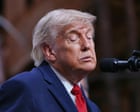
The phone vibrates on a nightstand in the pre-dawn stillness. It is 2026, and the glow of a screen illuminates a dark bedroom. A thumb scrolls. A post appears. On the other side of that screen, the most powerful man in the world is awake, reacting to a note passed to him by a wealthy acquaintance from a golf club.
The note outlines a rogue’s gallery: Adolf Hitler, Joseph Stalin, Mao Zedong, Genghis Khan, Attila the Hun. It notes that while these figures historically commanded terrifying, brutal authority, they lacked something fundamental. They lacked global integration. They lacked the digital grid, modern banking systems, and international supply chains. In short, their reach was localized. But a modern American president? His reach is absolute.
The man scrolling on the phone reads the comparison. He does not recoil. He does not issue a statement of profound historical condemnation.
Instead, he types four words: “Sounds good to me!”
To understand why this moment matters, we have to look past the immediate outrage of the daily news cycle. The true story is not found in the superficial shock of a headline. It is found in the deep, psychological mechanics of how modern power views itself.
The Mirage of the Golf Course Historian
The document that sparked this late-night post did not originate from an academic institution or a vetted intelligence brief. It came from Dave King, a Scottish-born businessman and former soccer club chair, whom Donald Trump met during an event honoring a legendary golfer. King, framed in the social media post as a presidential historian, offered an assessment that treated absolute power as a metric of pure efficiency rather than moral tragedy.
For the reader staring at their phone in the morning light, trying to balance a family budget or navigating the quiet anxieties of a fractured political culture, this exchange feels entirely disconnected from reality. It feels like a dispatch from a different planet.
But consider the environment where these ideas germinate. Picture manicured green lawns stretching out under an elite sun, isolated from the friction of ordinary life. In this space, historical tragedies are easily flattened into abstract concepts. The agonizing human cost of 20th-century autocracy—the millions of lives extinguished under Stalin’s forced famines, the industrialized horror of Hitler’s regime, the catastrophic upheavals of Mao’s cultural engineering—is stripped away. What remains is a sterile, bloodless data point: influence.
When history is reduced to a leaderboard of raw strength, the moral guardrails of civilization begin to warp.
The Architecture of Total Reach
There is an underlying truth hidden inside the businessman’s note, and it is a truth that should make us uncomfortable. The autocrats of the past were bound by the physical limitations of their eras. A decree issued in mid-century Moscow or Berlin took time to travel, moving through chains of bureaucracy, relying on physical infrastructure and regional enforcement.
Today, power moves at the speed of a keystroke.
When a modern executive leader decides to implement sweeping economic measures, the shockwaves are instantaneous. Imagine a small-business owner in Ohio. For them, a sudden shift in international trade policy isn’t a theoretical debate on a cable news network. It is a direct hit to their warehouse inventory. It is a sudden, quiet calculation at the kitchen table about whether they can afford to keep their third employee on payroll next month.
The modern world has built a highly responsive, deeply interconnected machine. We have spent decades creating seamless global financial markets and instant communication networks. The terrifying irony is that this very efficiency makes the exercise of centralized power far more potent than anything the dictators of the 20th century could have engineered. The machinery built to unite us can be operated by a single hand to leverage immense pressure across the globe in seconds.
The Exhaustion of the Spectacle
This isn’t a sudden shift in behavior; it is the continuation of a long-established pattern. In their book on the inner workings of the current administration, journalists Maggie Haberman and Jonathan Swan revealed that this specific comparison to historical autocrats wasn't a spontaneous late-night thought. The president had been carrying the document around since a March interview, showcasing it to reporters as a badge of honor.
During those conversations, a deep fatigue slipped through the bravado. "Essentially I won every single time," he reportedly told the journalists, venting frustration over his ongoing legal battles and media portrayal. "And I'm tired of winning and winning and winning and just getting bad press."
Listen closely to those words. It is the language of a political performance artist who has become trapped inside his own theater. When the constant pursuit of dominance yields only criticism, the standard boundaries of political discourse lose their value. The performance requires higher stakes, edgier provocations, and more extreme comparisons to maintain its shock value.
For the citizen watching this unfold, the resulting emotion isn't always anger. Often, it is a profound, numbing exhaustion. The constant noise of the spectacle creates a heavy psychological fatigue, making it difficult to discern where the performance ends and real danger begins.
The Weight on Ordinary Shoulders
We often treat these political dramas as elite sport, a game played by billionaires and politicians in gilded rooms decorated with gold trim. But the stakes of this rhetoric are entirely human.
When a society becomes comfortable with its leaders viewing history’s darkest figures as benchmarks for power, the definition of what is acceptable begins to rot. The danger is not that a modern democracy transforms into a mid-century dictatorship overnight. The danger is much quieter. It is the gradual erosion of empathy. It is the steady normalization of the idea that strength is the only currency that matters, and that vulnerability is a form of disgrace.
The real problem lies in how this worldview trickles down into our daily lives. It alters how neighbors speak to one another across a backyard fence. It changes how a community responds to the vulnerable in their midst. When the highest office in the land validates the idea that global dominance is something to be envied—regardless of the names attached to it—it gives permission to the rest of society to discard kindness in favor of raw leverage.
The thumb stops scrolling. The phone is placed face-down on the nightstand. The room returns to darkness, but the quiet peace of the morning has been altered. We are left with the unsettling realization that the institutions designed to protect human dignity are only as strong as the collective memory of the people who inhabit them. If we forget the human cost of absolute power, we risk becoming passive observers in a world where greatness is measured solely by the size of the shadow it casts.