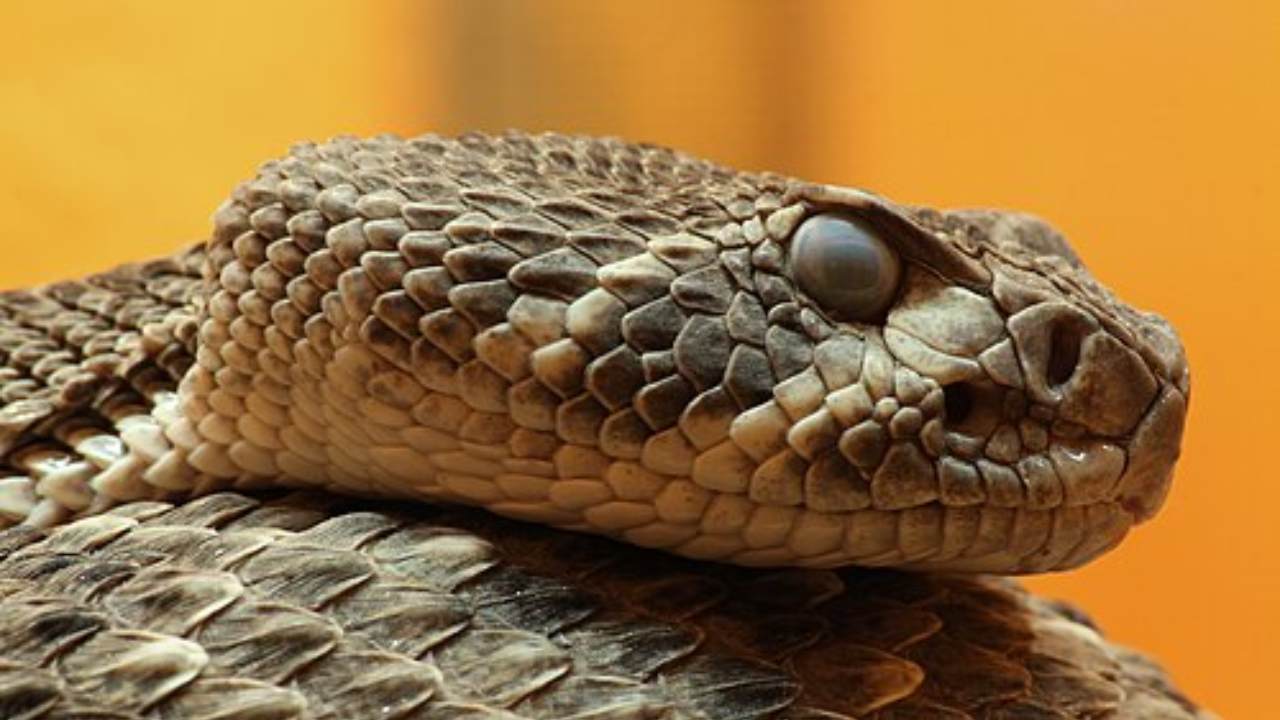
A Florida father and son stepping outside their home only to cross paths with an eastern diamondback rattlesnake is no longer a freak anomaly whispered about in local lore. It is the new baseline of coexistence in the Sunshine State. When a six-foot Crotalus adamanteus coils on a manicured suburban driveway, the instinct is to panic, blame encroaching development, or demand immediate removal. But looking at the encounter through a lens of raw ecology reveals a far more complex reality. The snakes did not invade our neighborhoods. We built our subdivisions over their ancient migration corridors, and now we are surprised when the original residents check their mail.
Understanding the mechanics behind these close encounters requires stripping away Hollywood myths. The eastern diamondback is the heaviest venomous snake in the Americas, a creature engineered by millions of years of evolution to hunt small mammals in palmetto flats and pine flatwoods. They are sedentary ambush predators. They spend up to eighty percent of their lives coiled beneath cover, waiting for a rat or rabbit to wander past. When one appears by a front porch, it is usually because human infrastructure has fragmented its hunting grounds, leaving patches of green space connected by suburban streets that double as thermal highways on cool mornings.
The Anatomy of an Urban Encroachment
Suburban sprawl in counties like Pasco, Hillsborough, and Lee has transformed vast tracts of native habitat into master-planned communities. As bulldozers clear the high ground, displaced wildlife faces a stark choice: starve, scatter, or adapt. The eastern diamondback has proven remarkably adaptable in terms of shelter, though its populations bear the long-term scars of habitat loss.
Drainage ditches, crawlspaces beneath decks, overgrown retention ponds, and dense shrubbery mimicking native scrub provide perfect substitutes for natural gopher tortoise burrows and palmetto thickets. Furthermore, human habitations attract an abundance of synanthropic rodents—rats and mice drawn to pet food bowls, unsecured garbage, and suburban bird feeders. Where the rodents go, the apex predators follow.
It is a slow-motion collision between a ancient ectotherm and modern real estate expansion. The father and son who found that snake in their driveway were merely actors in a demographic drama playing out across the entire Florida peninsula. Every acre of pine flatwood paved over pushes more wildlife into closer proximity with backyard swing sets and garage doors.
Deconstructing the Venomous Neighbor Myth
For decades, sensationalized media reports have painted venomous snakes as malicious interlopers actively hunting humans. The biological reality is profoundly different. Pit vipers possess sophisticated infrared-sensing pits capable of detecting minute temperature changes, making them acutely aware of large mammals. To an eastern diamondback, a human is not prey; a human is an unpredictable, lethal threat to be avoided at all costs.
When a rattlesnake rattles, it is expending precious metabolic energy to warn you of its presence. It wants you to walk away. The vast majority of bite incidents occur not when a snake stalks a person, but when an oblivious homeowner steps on, pins, or attempts to kill the animal. The snake found by the Florida father and son was likely moving between habitat fragments under the cover of twilight or morning mist, relying on its disruptive coloration for defense rather than aggression.
Recognizing this behavior transforms how we should respond. Pest control operations that advocate for indiscriminate culling miss the ecological point entirely. Removing one snake from a property leaves an empty ecological niche. Within weeks, another snake from an adjacent fragmented parcel will move in to exploit the local rodent population. True mitigation is structural and behavioral, not reactionary.
Mitigating Risk in the Wildland Urban Interface
Living alongside venomous fauna demands a shift in landscape management and personal vigilance. Homeowners in high-risk zones must abandon the traditional lush, jungle-like tropical landscaping that hugs exterior walls.
- Clear low-lying brush, dense palmettos, and ivy within three feet of foundations to eliminate ambush cover.
- Secure outdoor pet food and eliminate standing water or unsecured trash that attracts rodents.
- Install heavy-gauge hardware cloth beneath deck skirting and seal crawlspace vents to prevent snakes from taking up permanent residence beneath living areas.
- Utilize flashlights when walking dogs or taking out the trash after dark during the warm spring and summer active seasons.
These measures do not guarantee a snake-free property, but they drastically reduce the probability of a high-stress surprise on the front patio.
The Broader Ecological Toll
While human safety rightfully commands immediate attention, the displacement of eastern diamondbacks carries severe ecological consequences. As apex predators, they regulate rodent populations that would otherwise decimate native seed dispersal and spread disease. Removing them disrupts the trophic cascade, leading to unchecked pest populations that require heavier chemical interventions.
Conservationists have tracked a steady decline in core eastern diamondback populations due to habitat fragmentation, vehicular mortality on expanding roadways, and the lingering threat of intentional killing by fearful residents. The state's rapid growth rate ensures that human-snake interactions will only increase in frequency over the coming decades.
The encounter on that Florida driveway was not a freak occurrence. It was a symptom of a landscape out of balance, a fleeting glimpse of the wild world pushing back against the relentless tide of concrete. Until we learn to build with ecological foresight rather than sheer expansionist momentum, the rattlesnake will remain our uninvited, yet entirely predictable, neighbor.