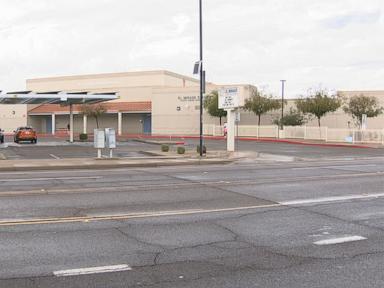
When four adults are struck by lightning simultaneously outside an elementary school, the incident is not a statistical freak; it is the predictable output of a specific meteorological and behavioral collision. Standard news coverage treats mass-casualty lightning events at schools as random tragedies, focusing on emergency response times and victim counts while ignoring the structural vulnerabilities that place adults in open dismissal zones during active convective storms. To prevent multi-victim strikes in educational environments, administrators and emergency planners must replace reactive dismissal habits with deterministic lightning safety protocols grounded in atmospheric physics and human crowd dynamics.
The Physics of a Multi-Victim Ground Strike
A single lightning bolt rarely strikes four people directly. When multiple individuals standing in proximity outside a school suffer simultaneous electrical trauma, the primary culprit is step voltage, also known as ground current.
When a cloud-to-ground lightning channel terminates on the earth, an electrical charge—often carrying peak currents of 30,000 amperes or more—diffuses radially outward across the surface soil. Because the earth possesses finite electrical resistance, this outward surge creates a steep voltage gradient across the ground. Any person standing within the zone of dissipation with their feet separated bridges two points of differing electrical potential. Current enters through the foot closer to the strike point, travels up one leg, passes through the lower torso and pelvic region, and exits through the other foot.
The physiological and operational consequences of ground current differ sharply from direct strikes or side flashes:
- Radius of lethality: While a direct strike requires precise spatial intersection with the leader channel, ground current can incapacitate or kill individuals located 30 to 100 feet away from the point of impact, depending on soil conductivity and moisture levels.
- Crowd multiplication: Elementary school dismissal zones concentrate parents, guardians, and crossing guards in tightly packed clusters on wet asphalt or saturated turf—surfaces that alter resistance pathways and increase the probability of multi-person exposure from a single discharge.
- Asymmetric injury profiles: Ground current frequently bypasses the brainstem and upper cardiac pathways compared to direct head strikes, resulting in lower immediate fatality rates but severe lower-extremity neuromuscular trauma, rhabdomyolysis, and autonomic nervous system disruption.
Secondary mechanisms, such as side flashes (where current jumps from a nearby tall object like a light pole, metal fence, or tree to a person) and conduction (where current travels through metal bleachers, umbrella shafts, or wet handrails), compound the hazard in schoolyard perimeters.
The Dismissal Bottleneck and Behavioral Exposure
The temporal overlap between afternoon convective storm development and elementary school dismissal creates a systemic risk window. In mid-latitude regions, solar heating peaks in the early afternoon, destabilizing the boundary layer and triggering deep moist convection between 2:00 PM and 5:00 PM. This meteorological window aligns directly with standard K-5 release schedules.
Three operational failures consistently drive adult exposure during these windows:
- The Visual Confirmation Fallacy: Adults routinely delay seeking shelter until rain begins falling or dark clouds appear directly overhead. Cloud-to-ground lightning frequently strikes 10 to 15 miles away from the precipitation core—a phenomenon known as a "bolt from the blue" or anvil crawler discharge. By the time rain reaches the schoolyard, the electrostatic field overhead has already exceeded breakdown thresholds.
- The Custody Transfer Imperative: Parents waiting outside an elementary school operate under a powerful psychological drive to retrieve their children immediately. Even when audible thunder occurs, caregivers resist retreating to their vehicles if they believe doing so will delay reuniting with their child or cause them to lose their place in a pickup queue.
- Uncoordinated Perimeter Authority: School safety plans heavily regulate student movement inside the building but frequently fail to establish legal or operational control over adults waiting on public sidewalks, parking lots, or unenclosed courtyards. Staff members lack standardized protocols to clear external pickup zones before releasing students.
Diagnostic Triage and Physiological Impact
When emergency medical services arrive at a school perimeter following a multi-victim lightning strike, standard mass-casualty triage protocols must be inverted. Conventional disaster triage prioritizes the walking wounded last and deprioritizes victims without a pulse or respiration. In lightning strikes, this logic fails.
Reverse triage is mandatory because lightning-induced cardiac arrest is primarily an electrical disruption rather than structural myocardial destruction. A massive surge of direct current instantaneously depolarizes the entire myocardium, causing asystole. In many cases, the heart's intrinsic pacemaker recovers automaticity within minutes, provided the victim receives immediate ventilation. However, the respiratory center in the medulla oblongata often remains paralyzed longer than the heart. Without immediate rescue breathing, the victim's recovering heart will suffer secondary hypoxic arrest.
Emergency responders and trained school personnel must execute a strict diagnostic sequence on scene:
- Immediate airway and ventilatory support: Victims who appear dead—apneic and pulseless—have the highest probability of full neurological recovery if basic life support begins within three to four minutes of the strike.
- Neurovascular and compartment assessment: Survivors of ground current strikes require rapid evaluation for vascular spasm (keraunoparalysis), which causes temporary paralysis and pulselessness in the extremities, alongside monitoring for acute compartment syndrome caused by deep tissue thermal injury.
- Tympanic membrane and ocular inspection: The acoustic shockwave generated by the rapid thermal expansion of the lightning channel frequently ruptures eardrums, while intense ultraviolet radiation and electrical current can induce acute corneal damage or delayed cataract formation.
- Cardiac rhythm monitoring: Even conscious victims who experienced brief loss of consciousness or paresthesia require 12-lead electrocardiography and continuous telemetry to detect delayed arrhythmias, ST-segment elevations, or QT prolongation.
Engineering a Zero-Exposure Dismissal Protocol
Relying on individual judgment during convective weather guarantees eventual casualties. School districts must treat lightning risk as an engineering and operational control problem rather than an educational awareness issue.
An effective perimeter safety architecture requires three structural components:
Automated Detection Thresholds
Schools cannot rely on human observation of flash-to-bang intervals, which suffer from acoustic masking in noisy traffic environments and human distraction. Districts should integrate automated lightning detection networks that trigger mandatory hold-in-place orders when cloud-to-ground or intra-cloud lightning occurs within a 10-mile radius of the campus. The system must remain locked in hold status until 30 minutes have elapsed since the last detected strike within that 10-mile perimeter.
Controlled Custody Hold Procedures
When a 10-mile threshold is breached prior to dismissal, the school must immediately suspend exterior student release. No child may exit the building into an unenclosed pickup line. Simultaneously, exterior audio-visual strobes and automated SMS alerts must instruct waiting adults to return to hard-topped, fully enclosed metal vehicles—which function as partial Faraday cages—or enter designated interior shelter zones within the school.
Physical Perimeter Hardening
High-density pickup zones should minimize conductive pathways and isolated tall structures. Unprotected metal fencing, isolated shade trees near waiting areas, and ungrounded metal canopies act as attachment points and side-flash vectors. Where physical queues are unavoidable, covered walkways must be bonded to a dedicated lightning protection system with low-impedance grounding electrodes to prevent side flashes and minimize local step-voltage gradients.
Limitations of Perimeter Interventions
No institutional protocol eliminates lightning risk entirely. Automated detection networks exhibit latency between the initial discharge and alert dissemination, typically ranging from 15 to 45 seconds, leaving zero warning time for the very first strike of a rapidly developing storm cell. Furthermore, school administrators cannot physically compel adult caregivers on public property to enter vehicles or buildings; compliance relies on clear communication and refusing to release children until the exterior perimeter clears. Finally, hard-topped vehicles provide protection only if windows are rolled up and occupants avoid contact with interior metal surfaces, radio equipment, or charging cables connected to the vehicle's electrical system.
The Operational Mandate
School districts must immediately audit their afternoon dismissal procedures against the 10-mile/30-minute threshold and eliminate any policy that allows outdoor student release while lightning is active within that radius. Administrators must link exterior alert strobes directly to automated meteorological telemetry and enforce a hard hold on student custody transfers until the exterior waiting zone is evacuated. Waiting for visual confirmation of a storm or relying on informal staff warnings leaves parents and staff exposed to predictable, preventable electrical trauma.