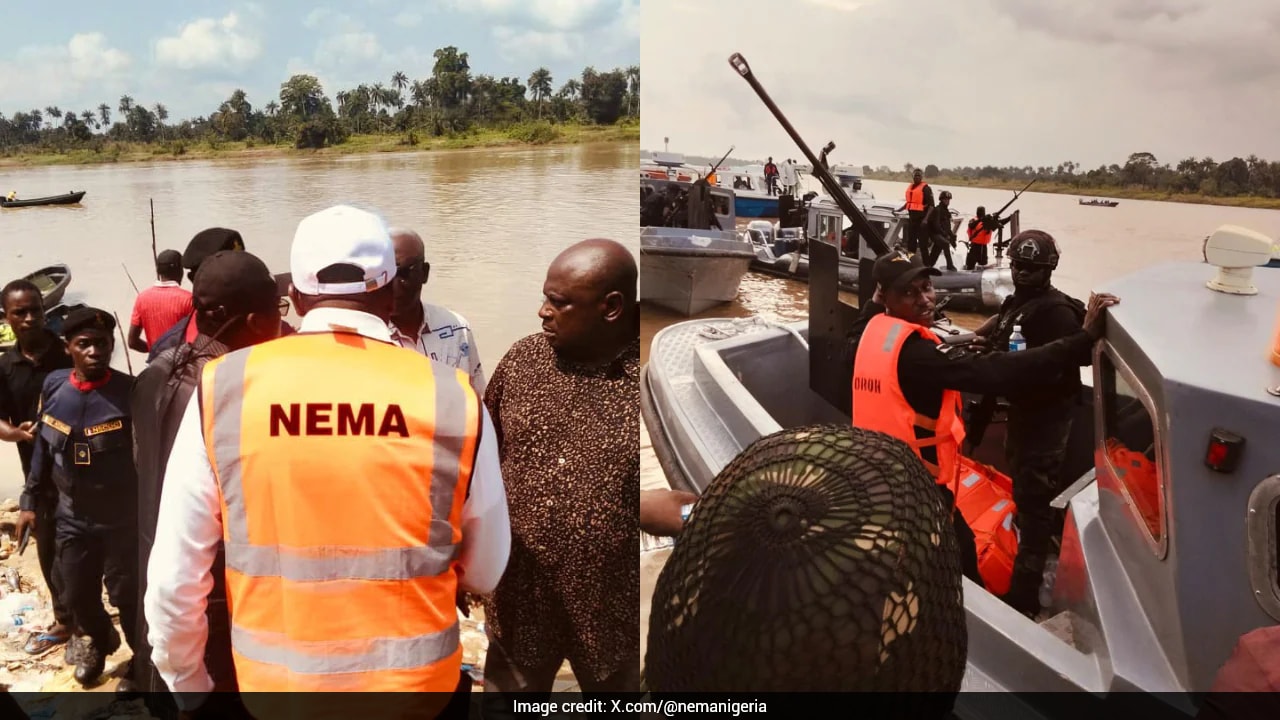
Headline news reports of a fatal river transport accident—such as a boat carrying mourners to a funeral capsizing in Nigeria with twenty-four fatalities—typically treat the event as a sudden tragedy caused by bad luck, rough water, or human error. That framing misses the structural mechanics of inland water transit. When a vessel sinks during a high-attendance community event like a burial, the fatality count is rarely an isolated fluke; it is the predictable output of an overloaded, under-regulated transport system operating under acute demand spikes. This analysis deconstructs how standard incident reporting obscures root causes, maps the causal chains behind mass-casualty boat sinkings on Nigerian waterways, and outlines operational interventions along with their real-world limits.
Because the competitor reference provides only a headline without a source URL or full text, exact operational details of that specific incident—such as the precise river basin, vessel hull type, passenger manifest, weather telemetry, or enforcement presence—are unknown. Treating unverified specifics as fact would corrupt the analysis. Accordingly, this article separates confirmed structural realities of inland waterway transit in Nigeria from educated hypotheses about how load surges, vessel condition, and hydrography interact during funeral movements. Don't miss our recent article on this related article.
Why Standard Incident Coverage Misreads Inland Water Disasters
Conventional news coverage of a capsizing boat follows a compressed arc: death toll in the headline, brief mention of rescue efforts, and a passing reference to overloading or lack of life jackets. While rapid reporting serves immediate public awareness, it flattens a multi-stage system failure into a single moral or mechanical label. Calling a sinking "overloading" explains what weight exceeded capacity, not why passengers boarded in excess, why no gatekeeper stopped them, or how weight distribution altered hydrostatic stability.
Three analytical blind spots recur in surface-level reporting: If you want more about the background of this, USA Today provides an in-depth breakdown.
- Event-centric bias: Treating the moment of capsizing as the start of the failure ignores pre-departure decisions, seasonal water levels, and vessel maintenance deficits that accumulated over months.
- Single-factor attribution: Blaming either passenger desperation, operator negligence, or river currents in isolation hides how modest stresses combine past a vessel's tipping point.
- Denominator blindness: Reporting twenty-four deaths without comparing passenger count against rated capacity or routine daily ridership obscures how close a trip was to its physical safety margin.
In systems engineering and reliability analysis, high-consequence accidents usually follow Swiss cheese dynamics: multiple weak defenses align rather than one catastrophic flaw appearing out of nowhere. A funeral movement stresses every layer at once. Mourners travel on fixed social schedules, often carrying ceremonial goods, luggage, or extra passengers who join at intermediate landings. When schedule pressure meets unverified hull integrity and sparse safety gear, small disruptions compound rapidly.
The Three Pillars of Inland Waterway Risk
To move past reactive commentary, inland boat safety can be analyzed across three interdependent pillars: vessel physics and maintenance, demand spikes and social coordination, and corridor governance with rescue capacity. Weakness in any single pillar increases risk; failure across all three turns a routine crossing into a mass-casualty event.
Vessel Physics and Maintenance Deficits
Every floating craft obeys basic hydrostatics: displacement weight must balance buoyant force, and the center of gravity must stay low enough relative to the center of buoyancy to generate a righting arm when heeled by waves, wind, or shifting weight. In many informal or semi-formal riverine corridors, wooden canoes and motorized ferries operate without formal stability testing, load-line markings, or standardized maintenance schedules.
Several physical mechanisms degrade safety margins before a single passenger steps aboard:
- Freeboard erosion: Adding passengers and cargo pushes the hull deeper into the water, shrinking the vertical distance between the waterline and the gunwale. Lower freeboard means smaller waves or wakes can wash directly over the side.
- Center-of-gravity elevation: Passengers standing to wave, shifting to one side to spot a landing, or stacking gear high raises the combined center of gravity, reducing the angle of heel a boat can tolerate before rolling.
- Structural waterlogging and rot: Unsealed timber, prior collision damage, or worn planking absorbs water or leaks slowly, adding deadweight and letting bilge water slosh freely—a free-surface effect that destabilizes roll motion.
Consider a conceptual example on a busy tributary. Suppose a wooden boat has a practical safe load of thirty people and gear, yet forty-five mourners board because the next departure is hours away and the funeral starts at noon. Even on calm water, freeboard drops sharply. If a passing larger vessel throws a wake or passengers lean toward one bank, water enters over the low gunwale, flooding slows forward motion, and progressive downflooding can capsize the craft within minutes.
Demand Spikes and Social Coordination
Funeral transport introduces a demand profile that differs sharply from ordinary commuter or market traffic. Commuters adjust departure times around work hours, and traders balance cargo volume against transport cost. Funeral travel is event-locked: arriving late carries social stigma, while traveling together reinforces kinship and community solidarity.
This social coordination creates predictable operational pressures:
- Synchronized arrival pressure: Dozens of people want to reach the same destination within a narrow window, concentrating boarding demand at specific piers or riverbanks.
- Group cohesion effects: Families and neighbors prefer riding on the same boat rather than splitting across multiple trips, encouraging operators to squeeze in "just a few more" riders.
- Informal boarding norms: Where formal ticketing, queue control, and passenger caps are absent, boarding decisions happen through negotiation at the water's edge rather than enforceable weight limits.
As an educated hypothesis rather than a confirmed fact of the referenced incident, funeral trips also frequently combine human passengers with bulky items—such as food supplies, chairs, drums, or personal bags—that occupy deck space and complicate seating. When people sit on gunwales or stand in aisles to make room for cargo, lateral balance becomes fragile.
Corridor Governance and Rescue Capacity
Riverine corridors often span remote stretches where state regulatory presence is thin, landing sites are informal mud or sand banks, and emergency response infrastructure is distant. Governance failures rarely stem from a lack of written rules on paper; they stem from enforcement gaps at the point of embarkation and slow search-and-rescue response once an accident occurs.
Key structural constraints shape corridor outcomes:
- Unenforced capacity and safety rules: Even where maritime or inland waterway agencies issue regulations on passenger limits, night travel, or personal flotation devices, compliance is difficult to monitor across numerous informal landing points.
- Life jacket scarcity and non-use: Flotation gear may be unavailable, poorly maintained, unsuited to non-swimmers and children, or left unused because passengers view boarding as brief and familiar.
- Delayed rescue and low swim proficiency: Many riverine residents travel by water regularly without knowing how to swim, and swift currents, cold or turbid water, and lack of nearby patrol craft mean capsized passengers face immediate drowning risk before help arrives.
Causal Chains Behind High-Fatality Capsizes
Understanding why a single capsizing can claim two dozen lives requires tracing how initial triggers escalate into fatalities. The timeline is rarely linear; feedback loops accelerate loss of control once stability is breached.
First comes exposure amplification. A high-occupancy trip already carries a larger pool of at-risk individuals than a half-empty boat. When a vessel sinks with twenty-four fatalities, total occupancy is typically well above that number unless no one survives or almost everyone lacks flotation and swimming ability. Each extra passenger beyond safe capacity increases both the physical load on the hull and the absolute number of people exposed to immersion.
Second comes rapid loss of buoyancy and escape time. Wooden hulls that take on water over the gunwale can lose reserve buoyancy quickly, especially if open-decked without sealed buoyancy chambers. Unlike a road collision where occupants are thrown onto solid ground or can exit a stationary cabin, a capsizing in moving river water traps or scatters people simultaneously. Panic, tangled clothing, heavy wet garments, and separation from the upturned hull reduce survival time to minutes.
Third comes response friction. Remote riverbanks often lack dedicated search boats, night lighting, or rapid medical evacuation. Local fishermen in nearby canoes frequently mount the first rescue effort—often at personal risk—while formal emergency teams mobilize from farther away. By the time organized recovery begins, currents may have carried victims downstream, turning rescue operations into body recovery.
Tactical Logic for Operators, Communities, and Regulators
Reducing inland boat fatalities requires interventions matched to how river transport actually runs. Blanket bans or paper directives fail when travelers have no viable alternative to reach an urgent event on time. Practical risk reduction works best when it targets load control, community staging, and corridor readiness in sequence.
Step-by-Step Operational Controls at Embarkation
For local transport associations, pier managers, and community organizers coordinating group travel, pre-departure discipline is the highest-leverage control:
- Establish a hard headcount and cargo cap before loading starts. Count both passengers and bulky items against a conservative hull limit rather than packing until space runs out.
- Distribute weight evenly and keep seating low. Place heavier loads low and centered along the keel line, seat passengers on benches or hull bottoms rather than gunwales, and prohibit standing while underway.
- Inspect freeboard and hull integrity prior to push-off. Check for active leaks, bail accumulated bilge water, and verify that enough freeboard remains clear of the waterline before leaving the bank.
- Enforce flotation and weather go/no-go thresholds. Require personal flotation devices for vulnerable riders and hold departures during strong winds, heavy rain, or hazardous river surges.
Community Event Logistics for High-Attendance Gatherings
Organizers of funerals, weddings, and festivals in riverine areas can reduce peak-hour crowding without canceling travel:
- Stagger departures and charter multiple smaller trips. Moving a group in two or three balanced departures instead of one packed crossing lowers freeboard loss and spreads risk.
- Build buffer time into arrival schedules. Starting ceremonies slightly later or setting earlier departure windows reduces the rush to board overloaded boats at the last minute.
- Audit landing points in advance. Confirm safe embarkation banks and reliable operators ahead of the event rather than relying on ad-hoc shoreline pickups.
Corridor-Level Governance and Infrastructure Priorities
Public authorities and waterway agencies face a classic resource-allocation problem across long river networks. Concentrating effort yields better returns than spreading thin inspections everywhere:
- Prioritize high-volume and high-risk corridors. Focus enforcement, safety briefings, and life jacket availability at busy ferry crossings, market hubs, and seasonal high-water bottlenecks.
- Pair regulation with affordable compliance pathways. Pairing safety rules with subsidized or locally maintained flotation gear and clear vessel capacity standards improves adoption compared with fines alone.
- Pre-position rapid response and basic water safety training. Station river rescue assets near major transit nodes and support practical swimming and self-rescue education in riverine communities.
Honest Limits of Any Safety Intervention
No single measure eliminates river transport risk, and every recommendation carries trade-offs that planners must state openly. Enforcement at informal landings is costly and easily bypassed when passengers and operators share an immediate incentive to cross. Requiring life jackets fails if vests are damaged, uncomfortable, or unavailable in child sizes. Staggering funeral departures requires social coordination that can break down when news arrives suddenly or relatives travel from afar.
Infrastructure upgrades face budget constraints, competing public priorities, and seasonal river dynamics that shift sandbars, channels, and currents year after year. Even well-maintained vessels operating under strict load rules remain exposed to extreme weather, submerged obstacles, or mechanical failure in strong currents. Recognizing these limits prevents overpromising: safety is a continuous engineering and operational margin to widen, not a permanent state of zero risk.
Strategic Play for Waterway Risk Reduction
Treat every mass-casualty boat sinking on Nigerian inland waterways as a corridor load-management and readiness failure, not merely an isolated tragedy. The highest-impact strategic play is to combine mandatory pre-departure load and freeboard checks at priority river hubs with community-led staggered group charters for high-demand events like funerals, backed by targeted rapid-response staging along high-traffic river stretches. Execute that triad consistently on the busiest corridors first, measure compliance and near-misses at actual embarkation points rather than relying on desk estimates, and adjust capacity rules as seasonal water conditions shift.