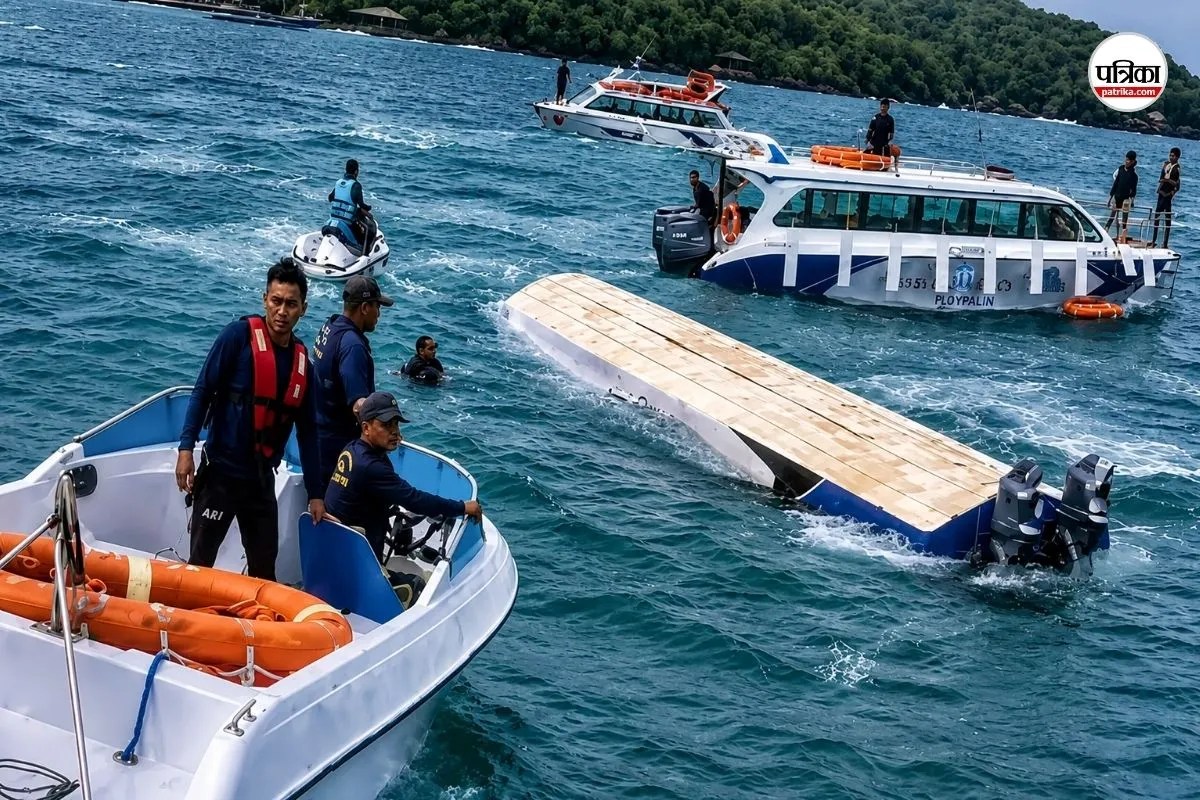
The capsizing of a tourist speedboat near Hoi An, Vietnam, resulting in the drowning of 15 Indian tourists within a three-minute window, exposes critical systemic vulnerabilities in coastal transit management. Media reporting consistently frames these events through the lens of individual tragedy and emotional trauma. However, operational risk analysis reveals that such incidents are rarely the result of isolated human error. They are the predictable output of compounding failures across three distinct vectors: vessel stability physics, regulatory enforcement gaps, and emergency egress bottlenecks.
To prevent the replication of these casualties, travel risk managers, maritime authorities, and consumers must evaluate the specific failure mechanics that transform a routine coastal transit into a fatal entrapment scenario.
The Triad of Maritime Transit Vulnerability
The rapid inversion of a commercial speedboat requires a convergence of physical and operational failures. In open-water transit, safety is maintained by the equilibrium between vessel design limits, environmental stressors, and human intervention. When these factors misalign, the margin for recovery shrinks to zero within seconds.
1. The Hydrodynamic Inversion Mechanism
The reported timeline—a complete capsizing within 180 seconds—points to an instantaneous loss of righting energy, a concept known in naval architecture as the metacentric height ($GM$). For a vessel to remain upright, its center of gravity must remain below its metacenter.
When a speedboat encounters high wave energy or attempts a sharp maneuver at speed, external forces exert a heeling moment. Under normal operating conditions, the hull’s buoyancy creates a counteracting righting moment. However, two specific variables rapidly degrade this stability:
- Dynamic Load Shifting: As the vessel pitches violently due to rough seas, passengers instinctively shift to one side or stand up. This movement raises the collective center of gravity, drastically reducing the $GM$ and forcing the vessel into an unrecoverable roll.
- Free Surface Effect: If the hull takes on even a minor amount of water through deck washing or a compromised seal, that liquid shifts freely toward the direction of the heel. This accelerates the capsizing momentum exponentially faster than a fixed load of equal weight.
2. The Structural Egress Choke Point
The primary driver of the high mortality rate in the Hoi An disaster was not the capsizing itself, but the immediate entrapment of passengers. Standard open-deck speedboats allow passengers to be thrown clear of the vessel upon inversion, allowing them to utilize personal flotation devices (PFDs).
The inclusion of rigid, enclosed canopy roofs or transparent weather screens on modern tourist vessels creates a lethal containment zone. When the boat flips 180 degrees, the canopy acts as a cage.
[Inverted Hull]
====================
  (Air Pocket)
  O  O  O  [Entrapped Passengers]
--------------
[Submerged Egress Openings / Choke Point]
~~~~~ Water Line ~~~~~
Passengers are instantly disoriented by inversion, plunged into darkness, and forced to swim downward against rising water to find the perimeter openings. If passengers are wearing high-buoyancy life jackets inside an enclosed cabin that capsizes, the jacket forces them upward against the ceiling of the inverted hull, actively preventing them from diving down to escape the structure.
3. Oversight Flaws in Local Maritime Ecosystems
Operational protocols in high-density tourist hubs frequently suffer from normalization of deviance—a process where breaking safety rules becomes standard practice because no immediate negative consequences occur. This manifests in two distinct operational failures:
- Micro-Climate Weather Forecasting Deficits: Coastal authorities often clear vessels for departure based on regional forecasts rather than localized, real-time bar conditions at river mouths or reef transitions.
- Asymmetric Emergency Response: The velocity of a capsizing requires immediate, self-contained rescue capacity. Relying on shore-based emergency dispatches ensures that the response window opens long after the survival window has closed.
Quantifying Passenger Risk Mitigation Strategies
Evaluating the safety of coastal transit requires looking beyond surface-level aesthetic compliance. Travelers and operators must deploy an objective risk matrix prior to boarding any high-speed maritime transit vessel.
Vessel Architecture Evaluation
Avoid enclosed or rigidly canopy-covered speedboats in open-water environments. Prioritize open-deck configurations where the superstructure does not present a physical barrier to vertical or lateral ejection during a roll event.
Physical Orientation Dynamics
Seat selection directly dictates survival probability during a sudden deceleration or inversion. The stern (rear) of the vessel experiences lower vertical acceleration forces than the bow (front), reducing the risk of impact injuries that cause incapacitation. Furthermore, proximity to the open sides of the vessel guarantees an immediate extraction path clear of the hull.
Flotation Protocol Adaptation
Inside an enclosed or semi-enclosed cabin, do not fully secure or inflate a life jacket until you are clear of the overhead structure. In an inversion, premature buoyancy causes fatal entrapment against the cabin ceiling.
Structural Reforms for Regional Tourism Operators
The mitigation of maritime transit casualties demands a shift from reactive mourning to predictive engineering and strict regulatory enforcement. Tourism boards and maritime departments must enforce a three-part operational mandate:
- Mandatory Quick-Release Canopy Systems: Any vessel retrofitted with a sun or weather canopy must utilize pressure-sensitive or manual quick-release pins, allowing the entire structure to separate from the hull upon inversion.
- Real-Time Data-Logged Manifests: Digital check-ins synced directly to shore-based coast guard stations must replace manual paper manifests. This ensures immediate identification and targeted diving operations within the critical first ten minutes of an incident.
- Dynamic Go/No-Go Wave Height Thresholds: Discretionary launching by boat captains must be replaced by automated sensors at harbor mouths. If wave amplitudes or wind velocities exceed engineered limits for hull displacement, the port lock must mechanically prevent departure.
Relying on post-incident investigations and bureaucratic condolences does nothing to alter the physical laws of hydrodynamic failure. Safety in coastal tourism is achieved only through rigid adherence to structural engineering realities and unyielding operational enforcement.