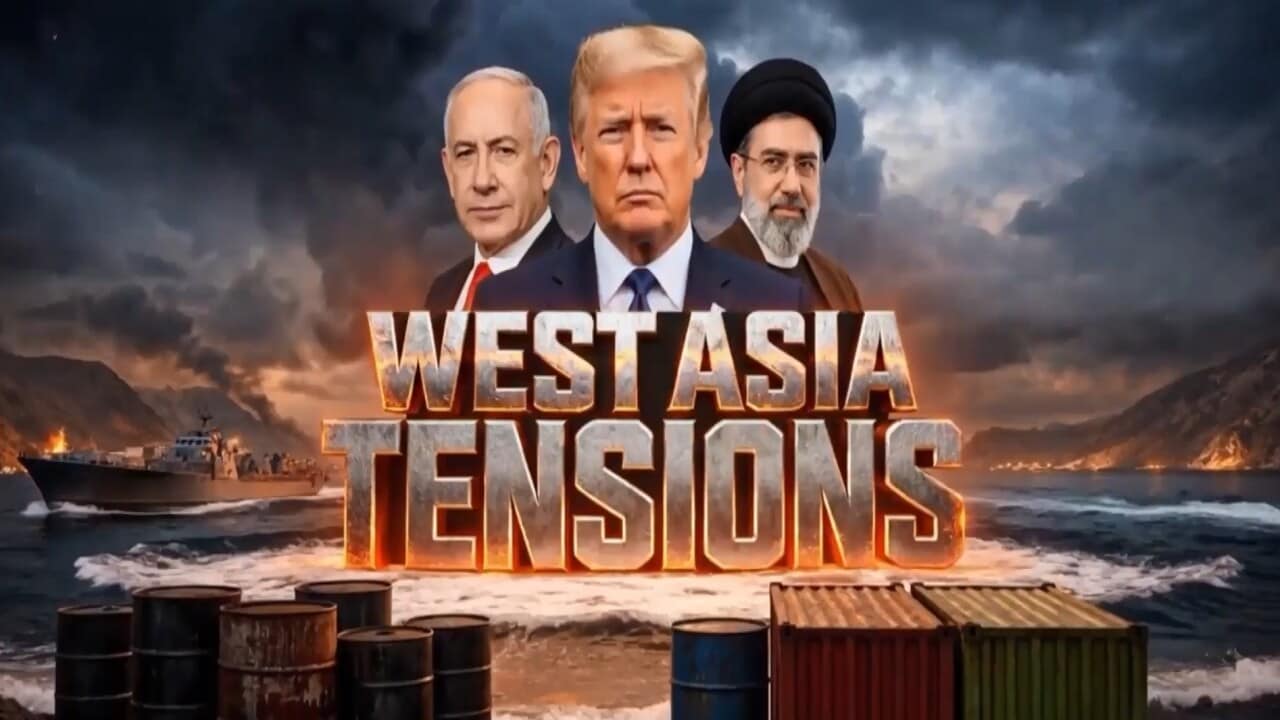
The conventional narrative that the stabilization of active military exchanges in West Asia signals a return to baseline energy pricing misinterprets the mechanics of maritime risk. While the kinetic phase of the conflict may have peaked, the structural closure of the Strait of Hormuz has fundamentally reindexed the global energy cost floor. The market is no longer pricing the immediate probability of tactical strikes; instead, it is pricing a systemic transformation in logistics, insurance capital allocation, and infrastructural destruction.
Understanding the endurance of elevated Brent crude and regional liquefied natural gas (LNG) prices requires moving past superficial geopolitical commentary. The crisis has created a prolonged supply deficit that cannot be resolved by diplomatic declarations or partial truces. By evaluating the specific cost functions, structural bottlenecks, and systemic asymmetries currently shifting global trade, we can map the precise trajectory of the post-conflict energy market.
The Triad of Maritime Friction: The Reality of Chokepoint Economics
The Strait of Hormuz functions as the primary circulatory artery for global energy, historically facilitating the transit of approximately 25% of seaborne oil and 20% of global LNG. When this node undergoes a structural blockade, the resulting market premium is driven by three distinct economic frictions.
1. The Capital Flight of Marine Underwriting
Physical freedom of navigation is dictated by the availability of commercial insurance. In the wake of active hostilities, war-risk hull premiums for vessels attempting Persian Gulf transits escalated from a baseline of 0.125% to upwards of 0.4% of total vessel value per transit. For a Very Large Crude Carrier (VLCC), this variable cost adds an immediate $250,000 burden per voyage.
As the conflict lingers, major international underwriters have withdrawn war-risk coverage entirely for the strait. Without underwriting capital, commercial fleets face absolute operational paralysis. The market premium is therefore a reflection of asset-risk pricing rather than simple volume scarcity.
2. The Cost Function of Alternative Routing
When the primary maritime chokepoint is compromised, logistics operators are forced to deploy secondary routing strategies. Rerouting vessels around the Cape of Good Hope alters the global supply equation across three dimensions:
- Temporal Extension: Transit duration to major Asian demand centers increases by 15 to 20 days.
- Tonnage Compression: The extension of voyage times effectively reduces global fleet capacity by locking up hulls in longer transit cycles, triggering a corresponding surge in spot freight rates.
- Fuel Burn Acceleration: The added nautical mileage increases variable bunker fuel consumption, creating a permanent upward shift in the baseline delivered cost of each cargo.
3. Asymmetric Infrastructure Vulnerability
The structural divergence between liquid hydrocarbons and natural gas alters how long-term supply shocks materialize. Liquid crude possesses alternative, albeit constrained, bypass mechanisms. Saudi Arabia and the United Arab Emirates maintain cross-peninsula pipelines capable of diverting a fraction of daily output to Red Sea or Gulf of Oman terminals.
Gas infrastructure possesses no such flexibility. Natural gas extraction in the Persian Gulf relies on localized liquefaction facilities tied exclusively to seaborne LNG carriers. Because the infrastructure cannot be rerouted via pipeline overnight, the offline status of major regional liquefaction plants removes structural volumes from the global market with no immediate substitute.
Quantifying the Deficit: Volumetric Reality vs. Sentiment Shocks
The escalation of spot LNG benchmarks highlights the extreme price elasticity of the market under structural constraints. Immediately following the implementation of the blockade, the Platts Japan Korea Marker (JKM) surged to $15.07 per metric million British thermal units (MMBtu), before spiking 70% in a single session to approximately $25 per MMBtu.
This pricing volatility is not merely speculative; it is a rational response to a profound physical deficit.
Global Energy Supply Disruption Profile
┌───────────────────────────────────────┬───────────────────────────────────────┐
│ Metric                                │ Measured Impact                       │
├───────────────────────────────────────┼───────────────────────────────────────┤
│ Curtailed Persian Gulf Oil Production │ ~11 million barrels per day           │
│ Disrupted Seaborne LNG Volume         │ >80 million metric tons per year      │
│ Aggregate Global LNG Supply Reduction │ ~20% systemic volume deficit          │
│ Near-Term Price Vector (Extended)     │ Brent tracking toward $126/bbl peak   │
└───────────────────────────────────────┴───────────────────────────────────────┘
The scale of this disruption establishes the current crisis as the most significant volumetric energy shock since the 1970s. The long-term recovery function is further complicated by physical asset destruction. Targeted kinetic damage sustained by regional LNG liquefaction trains during the active phase of the conflict cannot be repaired via diplomatic accords. The specialized, long-lead components required to rebuild these industrial refrigeration units mean that a minimum of 2.5% of global LNG capacity will remain permanently offline for up to five years, regardless of how quickly political stability is achieved.
Cascading Microeconomic Bottlenecks
The focus on primary energy benchmarks frequently obscures the severe downstream supply chain disruptions currently propagating through global heavy industry. The Strait of Hormuz is not merely a conduit for fuel; it is the primary logistical corridor for industrial feedstocks and elemental byproducts.
The Petrochemical Feedstock Squeeze
Crude extraction and refining yield critical chemical precursors, notably Liquefied Petroleum Gas (LPG), naphtha, and industrial sulfur. The ongoing blockade has simultaneously choked off these flows, trapping petrochemical manufacturers in a dual-ended economic vice:
- Feedstock Scarcity: Cracking facilities face immediate physical shortages of ethane, propane, and naphtha, forcing utilization rates down.
- Input Cost Inflation: The simultaneous price appreciation of natural gas and alternative feedstocks compresses industrial margins, directly driving up the cost of downstream derivatives such as ethylene, propylene, and plastics precursors.
The Industrial Sulfur and Helium Bottleneck
The Persian Gulf region accounts for approximately 40% of the global export trade in elemental sulfur, a byproduct of natural gas processing and petroleum refining. Sulfur is the baseline input for sulfuric acid, which is critical for processing copper, leaching rare earth elements, and producing phosphate fertilizers.
Simultaneously, the region is a critical node for global helium extraction. The closure of the strait has starved the international market of these non-substituted inputs. The industrial consequence is immediate: chemical processing costs rise, agricultural fertilizer yields decline, and semiconductor fabrication facilities experience severe component bottlenecks due to the lack of high-purity processing agents.
Strategic Asymmetries and Regional Vulnerabilities
The macroeconomic impact of the Hormuz disruption is highly asymmetric, altering the relative competitiveness of major global economies based on their structural energy dependencies.
The Acute Exposure of Import-Dependent Asia
East and South Asian economies face the most direct economic headwind. Nations like India, China, Japan, and South Korea have built industrial strategies heavily reliant on Middle Eastern crude and spot LNG imports. India's structural exposure is particularly acute; the state has aggressively promoted natural gas as a transitional fuel for industrial decarbonization, urban cooking infrastructure, and power generation.
Because domestic strategic gas storage infrastructure remains underdeveloped, Asian buyers are forced to absorb extreme spot prices on the open market, causing a direct transfer of wealth to alternative producers and triggering domestic inflationary pressures.
The European Secondary Shock
Having systematically decoupled from Russian pipeline gas over the preceding four years, Europe increased its structural reliance on global seaborne LNG, drawing heavily on Middle Eastern supply lines. The effective closure of the strait leaves European utilities competing directly with Asian buyers for non-gulf spot cargoes, replicating the severe energy price shocks of 2022 and forcing a costly reliance on coal-fired power generation assets to maintain grid stability.
The Insulated Position of the United States
The United States operates with a completely distinct strategic profile. As a net exporter of both crude oil and LNG, the domestic American economy is largely insulated from physical volume shortages. While domestic fuel prices track global benchmarks to an extent, American upstream producers reap significant windfall profits from elevated global energy pricing. This structural asymmetry allows Washington to observe the economic erosion of both adversaries and allies without facing a corresponding domestic supply crisis.
Capital Allocation Shift and Structural Substitution
The permanence of the Hormuz risk premium is fundamentally altering corporate capital allocation and state-level infrastructure planning. Industrial actors are concluding that reliance on the Persian Gulf as an unhedged logistical corridor introduces unacceptable systemic risk. This realization is accelerating three distinct structural pivots.
First, alternative pipeline infrastructure projects are shifting from theoretical concepts to capitalized initiatives. The proposed subsea Oman-India gas pipeline, designed to transport natural gas directly from the Arabian Sea floor while completely bypassing the Strait of Hormuz chokepoint, has seen renewed state prioritization and financing commitments.
Second, the geographic premium for non-Gulf energy assets has risen permanently. Upstream capital is being aggressively reallocated toward LNG export infrastructure projects in the Western Hemisphere, African near-shore developments, and sanctioned-insulated Arctic projects. Even though these projects carry higher greenfield development costs, the absence of chokepoint risk justifies the investment premium for institutional capital.
Third, industrial demand destruction is accelerating. Facing a multi-year horizon of elevated, volatile gas and oil prices, major energy consumers in Europe and Asia are forcing a structural transition. This manifests not as an orderly environmental policy, but as a defensive economic maneuver: switching industrial processes back to resilient coal assets, accelerating industrial electrification, and fast-tracking localized renewable generation to permanently decouple from international seaborne energy supply chains.
Capital Preservation and Sourcing Reconfiguration
The mitigation of a permanent chokepoint risk premium requires immediate operational adjustment rather than waiting for a diplomatic status quo that no longer exists. Industrial energy consumers must reconfigure supply chain architectures based on three operational mandates:
- Transition Away from Spot Market Indexing: Procurement teams must aggressively reduce exposure to spot benchmarks like JKM. Sourcing strategies must favor long-term, oil-indexed contracts or fixed-price arrangements secured with North American or West African exporters, even if those contracts carry an upfront premium.
- Infrastructure Capitalization for Feedstock Flexibility: Chemical and industrial processing facilities must allocate immediate capital to upgrade cracking units and manufacturing processes to accept alternative feedstocks. Designing systems that can fluidly swap between natural gas derivatives, naphtha, and LPG eliminates single-source operational vulnerabilities.
- Mandatory Strategic Inventory Expansion: Corporate treasury and supply chain functions must treat energy and industrial inputs like sulfur and helium as high-risk assets. Storage capacity must be expanded to maintain a minimum of 90 to 120 days of production consumption internally, moving away from just-in-time logistics to build a physical buffer against permanent maritime volatility.