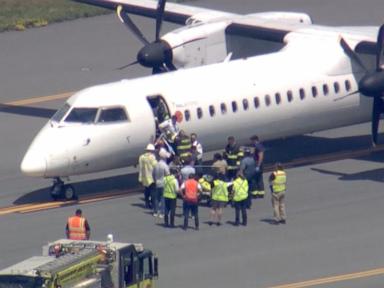
Commercial aviation operates on a dual-redundancy model designed to mitigate the sudden incapacitation of a flight crew member. When an acute medical emergency compromises the pilot in command, the systemic safety margin relies entirely on standard operating procedures, cockpit resource management, and cabin crew intervention protocols. An analysis of recent non-fatal inflight incidents reveals structural vulnerabilities in how airlines manage acute crew impairment and subsequent passenger intervention.
The operational breakdown of an inflight pilot incapacitation event follows three distinct phases: detection latency, command transition friction, and cabin-to-cockpit boundary destabilization.
The Detection Latency Bottleneck
The immediate hazard during a pilot medical emergency is not the illness itself, but the time elapsed before the second pilot or cabin crew recognizes the impairment. This duration is defined as detection latency.
In a standard multi-crew cockpit, subtle incapacitation poses a higher systemic risk than sudden, obvious collapse. Subtle incapacitation occurs when a pilot remains conscious but suffers cognitive degradation, slow motor responses, or partial seizure activity.
[Cognitive/Medical Shock] -> [Subtle Incapacitation] -> [Delayed Cross-Check Failure] -> [Flight Path Deviation]
The primary defense against this failure mode is the continuous loop of cross-checking and verbal callouts during critical phases of flight. When a pilot fails to respond to two consecutive operational prompts, the monitoring pilot must assume control. However, cognitive biases—specifically normalisation of deviance and confirmation bias—frequently cause the remaining crew member to attribute the lack of response to fatigue or distraction rather than a medical crisis. This delays the declaration of an emergency and extends the window of uncommanded flight path deviation.
Command Transition Friction and Flight Deck Isolation
Once incapacitation is identified, the flight transitions to single-pilot operations under emergency conditions. The workload increases exponentially. The surviving pilot must simultaneously fly the aircraft, manage automated systems, communicate with Air Traffic Control (ATC), and coordinate with the cabin crew.
The critical failure point during this transition involves securing the incapacitated pilot. A collapsed crew member can inadvertently lean forward against the control column or step on the rudder pedals, overriding autopilot inputs and forcing the aircraft into unsafe attitudes.
The operational protocol requires moving the incapacitated pilot’s seat fully rearward, reclining the backrest, and securing the body using the five-point harness reel locks. Executing this physical task requires assistance, breaking the integrity of the flight deck security boundary.
Opening the reinforced cockpit door during an active flight deck emergency introduces a secondary vector of risk. Cabin crew must enter the flight deck while maintaining a secure perimeter against passenger panic or opportunistic threats. If the cabin crew lacks clear visual verification tools or if communication lines between the cabin and cockpit are degraded by high ambient noise, the transition process stalls, compounding the operational stress on the single pilot.
Cabin Environment De-escalation and Passenger Intervention Dynamics
When a medical emergency leaks into the passenger cabin, psychological contagion occurs. Passenger intervention usually stems from a perceived absence of authority or a lack of transparent communication from the crew.
The mechanics of passenger-led restraint during an inflight emergency indicate a breakdown in cabin command structure. While passenger assistance can provide necessary physical leverage to remove a compromised crew member from control surfaces, unmanaged civilian intervention introduces chaotic variables into a highly regulated environment.
Passenger Perception of Danger -> Collective Panic -> Unregulated Intervention -> Physical Flight Deck Disruption
The breakdown of cabin control can be mapped through specific variables:
- Information Asymmetry: Passengers interpret physical movement, changes in engine pitch, or sudden altitude shifts without context, leading to heightened adrenaline responses.
- The Bystander Effect vs. Group Hegemony: In confined spaces, the transition from passive observation to active intervention is rapid. Once one passenger acts, others follow, creating a high probability of excessive force or collateral injury.
- Communication Silos: If the cabin crew focuses entirely on the flight deck without managing the aft and forward cabins, a leadership vacuum forms. Passengers will attempt to solve the perceived threat using civilian metrics rather than aviation safety parameters.
To prevent civilian interference from compromising aircraft stability, cabin crew must deploy immediate, assertive crowd-control frameworks. Passengers possessing medical or military backgrounds must be identified and deputized systematically rather than allowing spontaneous volunteers to control the space.
Operational Redundancy and Preventive Mitigation Strategies
Aviation safety metrics cannot rely on the ad-hoc heroism of passengers or the physical endurance of a single pilot under extreme cognitive load. Mitigating the risks of pilot incapacitation requires structural adjustments to automated flight systems and crew training cycles.
The deployment of advanced autonomous landing systems offers a technological solution to single-pilot vulnerability. Modern emergency descent and autoland technologies can safely navigate, descend, and land an aircraft at a suitable airport without human intervention if the remaining crew member becomes overwhelmed. Integrating these systems reduces the cognitive load during single-pilot operations from survival management to system monitoring.
Furthermore, flight crew medical screening protocols must evolve beyond static periodic examinations. Continuous biometrics, implemented via non-intrusive wearable sensors, could provide real-time telemetry on heart rate variability, blood oxygenation, and neurological patterns. This data would allow early detection of cardiovascular or neurological anomalies before physical symptoms manifest as sudden functional impairment during flight.
Airlines must recalibrate their Cockpit Resource Management (CRM) training to explicitly simulate the physical extraction of an incapacitated crew member under severe turbulence and high-workload scenarios. Cabin crew training must similarly prioritize the psychological management of the passenger cabin during visible operational crises, ensuring that authority remains centralized within the professional crew.