The Thermodynamic Threshold
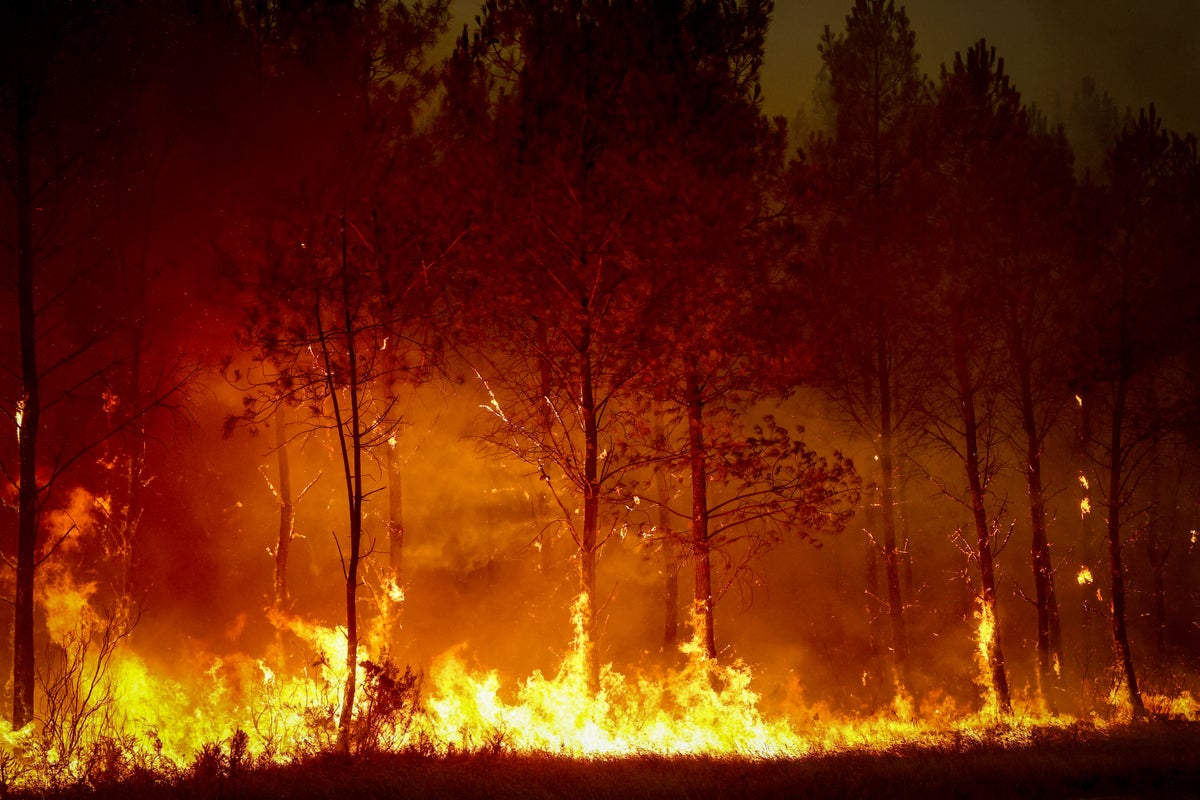
When atmospheric temperature projections cross the forty degree Celsius mark across southern Europe, public discourse typically focuses on human discomfort and short-term energy grid stress. This focus misdiagnoses the structural threat. A heatwave of this magnitude is not merely a weather event; it is a systemic catalyst that alters the baseline physics of terrestrial ecosystems. France and Spain entering a critical window before an incoming thermal surge are not just facing high temperatures. They are facing a compounding escalation where soil moisture depletion, relative humidity collapse, and fuel aridity interact non-linearly.
Standard meteorological reporting treats temperature spikes as independent variables. Strategic analysis requires viewing temperature as a multiplier. Every degree increase above a specific ecosystem threshold exponentially accelerates vapor pressure deficit. This is the numerical gap between the moisture content air holds at saturation and the moisture it actually holds. As vapor pressure deficit widens, the atmosphere actively pulls moisture out of living vegetation and dead surface fuel. The system shifts from a dormant state to a high-energy ignition environment long before a spark is introduced.
Understanding this transition demands looking past the daily maximum thermometer reading. The critical metric is the duration of sustained thermal stress combined with nocturnal recovery failure. When nighttime temperatures remain abnormally high, vegetation gets no operational window to replenish internal water reserves through root uptake. The system remains under continuous physiological strain, transforming regional forests into desiccated tinderboxes within a matter of days.
The Fuel Aridity Matrix
Wildfire propagation is governed by a strict tripartite framework consisting of ignition sources, meteorological drive, and fuel availability. While ignition sources are stochastic and largely anthropogenic, and meteorological drive is governed by macro-scale pressure systems, fuel availability is a localized state variable that can be categorized into distinct structural tiers.
Fine Dead Fuel Moisture
This tier includes grass, pine needles, and small twigs measuring less than six millimeters in diameter. These materials possess a high surface-area-to-mass ratio. Consequently, their moisture content equilibrates with the surrounding air in hours. When relative humidity drops during a forty degree heatwave, fine dead fuel moisture plummets below critical thresholds, often dipping under three percent. At this level, material catches fire from minimal radiant heat, carrying the flame front forward at high velocity.
Live Fuel Moisture Content
Live vegetation operates on a different temporal scale. Shrubs, chaparral, and mature trees maintain internal plumbing that resists rapid drying. However, prolonged meteorological drought combined with extreme heat forces plants into a defensive shutdown. To prevent catastrophic water loss, they stop transpiring. Once internal moisture drops past a critical stress point, the chemical composition of the plant changes, volatile oils become more concentrated, and the live fuel behaves functionally like dead fuel. This eliminates the natural firebreaks that healthy, hydrated canopies usually provide.
Subsurface Organic Matter
Peat, deep humus layers, and root systems form the third tier. In regions experiencing prolonged dryness, these subsurface carbon stores dry out entirely. Fires in this tier do not move with a visible, fast-moving surface front. Instead, they smolder deep underground, resisting initial suppression efforts and remaining active for weeks or months. This creates a persistent reactivation risk that defeats standard containment strategies.
The Operational Bottleneck of Suppression
Emergency response organizations in France and Spain operate under rigid capital and logistical constraints. During severe thermal events, the demand for suppression resources outstrips supply, creating a classic allocation bottleneck. Analytical evaluation of firefighting deployment reveals three primary failure points that occur when multiple large-scale fires ignite simultaneously.
The first failure point is aerial asset saturation. Water-scooping aircraft and heavy lift helicopters require specific turnaround times for refuel, foam reloading, and maintenance cycles. When simultaneous high-intensity fires emerge across distant provinces, incident commanders engage in triage. Tactical units are pulled from lower-priority perimeter containment to protect human settlements. This allows distant flanks to expand unchecked.
The second failure point involves ground crew physiological limits. Firefighters operating in ambient temperatures exceeding forty degrees face severe heat stress injuries. Personal protective equipment traps metabolic heat, restricting core temperature regulation. Operational rotations must be shortened drastically, reducing the effective labor force available on the fire line at any given moment. What looks on paper like a battalion of personnel translates into a fraction of active man-hours once mandatory rest and rehabilitation cycles are enforced.
The third failure point is water infrastructure vulnerability. Rural municipalities in southern Europe often rely on local reservoirs, agricultural irrigation networks, and limited municipal grids. High-demand heatwaves increase domestic water consumption simultaneously. When agricultural and residential draws peak, local water pressure drops. Fire suppression apparatus struggle to maintain consistent drafting volume, forcing tankers to travel long distances for replenishment and slowing down direct attack strategies.
Microclimate Amplification and Terrain Feedback
Macro-scale forecasts miss the localized physics that dictate actual fire behavior. Topography and local wind patterns interact with extreme heat to generate localized feedback loops that can double rate-of-spread vectors in minutes.
Slopes act as natural pre-heating chambers. As hot air rises along a mountainside, it pre-conditions the vegetation upslope through convective heat transfer. A fire moving uphill faces a steepened angle of incidence, allowing radiant heat from the flames to dry and ignite the fuel above it much faster than flat-ground propagation allows.
Canyons and narrow valleys introduce the Venturi effect. When regional winds align with local topographic funnels, wind velocity accelerates through the constriction. This oxygenates the fire front, increases convective heat transfer, and transforms a surface fire into an aggressive crown fire that jumps natural barriers like rivers and highways.
Furthermore, intense fires generate their own local weather systems. Pyrocumulus clouds form when superheated air rises rapidly, creating an internal low-pressure zone that draws in surrounding air from all directions. This creates erratic, high-velocity surface winds that blow unpredictably relative to the regional forecast. Suppression crews operating under these plumes face sudden shifts in fire direction, turning tactical containment plans obsolete instantly.
The Economic and Structural Cost Function
The financial impact of recurrent heatwave-driven wildfires extends far beyond immediate property damage and suppression expenditures. The cost function is multi-dimensional, affecting insurance pools, agricultural yields, public health systems, and long-term municipal bond ratings for vulnerable regions.
Direct asset destruction represents only the baseline cost. Business interruption losses for tourism, viticulture, and forestry operations compound over subsequent quarters. Soil sterilization—occurring when extreme heat destroys the microbial communities and organic structure of the topsoil—triggers long-term agricultural degradation. Without organic binding agents, the first heavy autumn rains convert scorched hillsides into massive mudslides, silting up reservoirs and destroying downstream infrastructure.
Insurance markets are beginning to price these non-linear risks into property and commercial underwriting. As frequency increases, uninsurable zones emerge where private capital withdraws entirely, shifting financial exposure directly to state-backed disaster funds. This creates a moral hazard loop, where development continues in high-risk wildland-urban interfaces while public entities absorb the catastrophic tail risk.
Strategic Allocation of Defensible Capital
To alter the trajectory of seasonal wildfire crises, regional authorities must shift capital allocation from reactive suppression to proactive landscape manipulation. The current economic model spends ninety percent of resources on fighting active fires and ten percent on mitigation. This ratio guarantees recurring failure.
Mitigation must be treated as structural engineering of ecosystems. This involves targeted mechanical thinning of over-dense understory vegetation to break vertical and horizontal fuel continuity. It requires reinstating controlled burning regimes during low-risk seasonal windows to reduce accumulated fine dead fuel before high-temperature anomalies occur.
Simultaneously, infrastructure hardening must prioritize off-grid water reservoirs strategically placed in remote zones, independent of municipal electrical grids that fail during extreme weather events. Early detection systems utilizing dense arrays of infrared sensors and automated optical cameras must replace human spotters to reduce initial attack latency to minutes rather than hours.
The immediate imperative for France and Spain during the current forty degree threshold is defensive asset prioritization and strict public access limitations in high-risk zones. The long-term mandate is abandoning the illusion that suppression technology alone can overcome escalating thermal baselines. Structural survival requires engineering ecosystems capable of absorbing extreme meteorological shocks without systemic collapse.