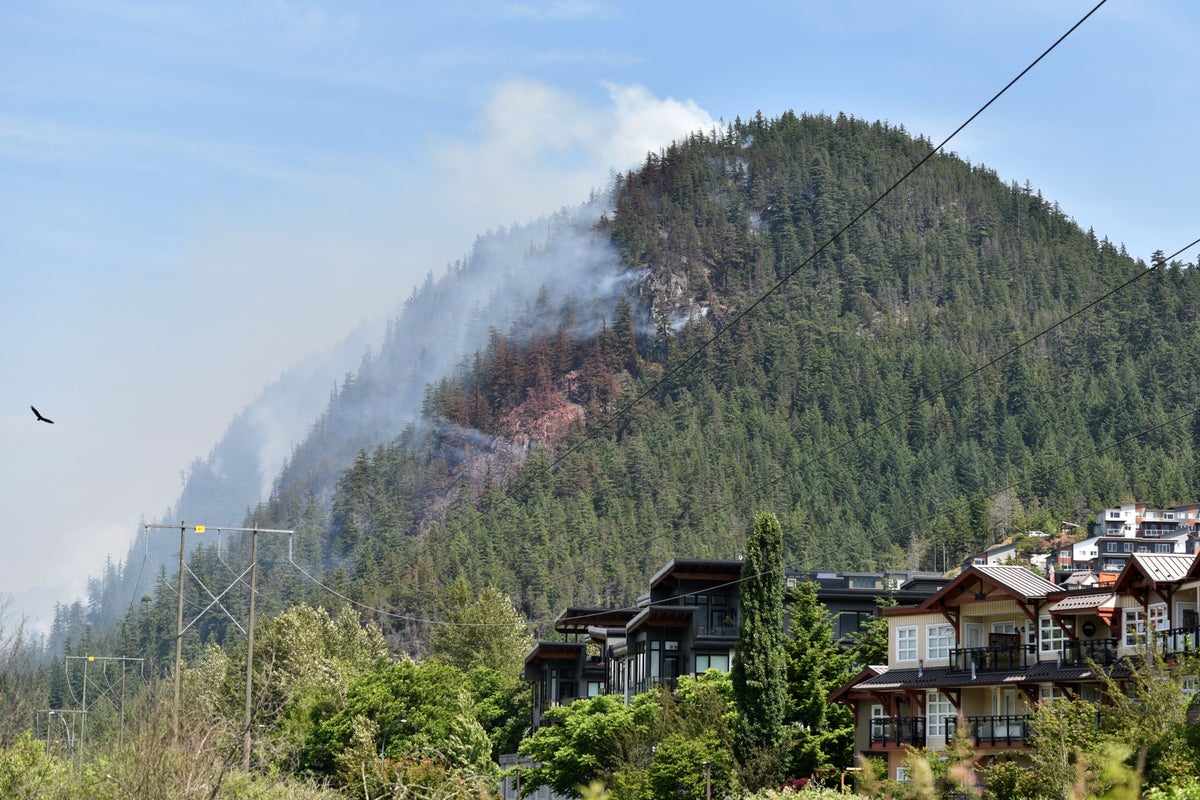
A microscopic fuel-supply constraint in northern Alberta can fundamentally alter the global marginal cost of crude oil. The recurring emergence of out-of-control wildfires in the Athabasca and Lac la Biche regions highlights a systemic vulnerability in global energy security. When structural geography interacts with extreme weather patterns, the resultant physical risk bypasses typical corporate safety buffers.
To evaluate how these environmental shocks disrupt global energy distribution, analysts must move past broad generalities and quantify the exact operational bottlenecks, supply elasticity constraints, and infrastructure dependencies that dictate North American oil sands production.
The Dual Architecture of Extraction Vulnerability
The vulnerability of Canadian oil production to fire risk is directly linked to the extraction technology used. The oil sands region uses two separate methods: open-pit mining and in-situ extraction. Each carries a completely different risk profile.
                  [ extraction infrastructure ]
                               |
        +----------------------+----------------------+
        |                                             |
[ open-pit mining ]                           [ in-situ extraction ]
  - High asset concentration                    - Highly distributed footprint
  - Large cleared areas                         - Deep forest integration
  - Acts as a structural firebreak              - High thermal/electrical reliance
1. Open-Pit Mining Operations
Surface mining operations, concentrated heavily north of Fort McMurray, feature a high concentration of assets. These facilities require clearing vast tracts of land, which removes flammable vegetation and creates large, permanent structural firebreaks.
While a wildfire can disrupt the workforce or heavy machinery logistics at a surface mine, the physical infrastructure itself—massive processing plants, tailing ponds, and zero-vegetation overburden areas—is naturally insulated from direct thermal destruction.
2. In-Situ Operations (Steam-Assisted Gravity Drainage)
The primary vulnerability lies in Steam-Assisted Gravity Drainage (SAGD) and Cyclic Steam Stimulation (CSS) facilities. These operations extract bitumen too deep for surface mining, relying on a highly distributed network of assets that cuts deep into the boreal forest.
A standard SAGD project consists of centralized processing facilities connected to a complex web of remote well pads, above-ground steam lines, and electrical distribution corridors spanning dozens of square kilometers. This distributed footprint increases the edge-exposure of critical infrastructure to the surrounding forest.
If a wildfire breaches an in-situ asset perimeter, the risk is not just the immediate heat; the primary threat is the destruction of overhead power distribution lines and the thermal warping of uninsulated surface pipelines.
The Oil Sands Operational Disruption Function
The total volume of production lost during a wildfire event is not a simple binary consequence of a facility being active or evacuated. Instead, it is governed by a multi-stage operational disruption function:
$$Q_{\text{loss}} = f(I_{\text{atm}}, L_{\text{work}}, E_{\text{grid}}, D_{\text{dil}})$$
Where:
- $I_{\text{atm}}$ represents the atmospheric toxicity and air quality threshold.
- $L_{\text{work}}$ represents the labor availability and evacuation constraints.
- $E_{\text{grid}}$ represents electrical grid integrity.
- $D_{\text{dil}}$ represents diluent supply chain continuity.
Phase 1: Atmospheric Toxicity and Air Quality Thresholds
The first operational constraint occurs well before flames reach a facility's perimeter. The operational limit is defined by the Air Quality Health Index (AQHI).
When heavy smoke drives fine particulate matter ($PM_{2.5}$) above safe occupational exposure limits, operators face regulatory and liability mandates to suspend non-essential outdoor labor. Because both mining and in-situ operations require continuous physical monitoring, high toxicity levels automatically trigger a drop in facility operating capacity.
Phase 2: Labor Evacuation and Logistic Containment
When an evacuation alert transitions to an evacuation order, a complex labor constraint emerges. Oil sands facilities rely on a commuter workforce housed in regional lodges and open camps.
Evacuating non-essential staff strains regional transportation infrastructure. A full plant shutdown is a highly complex process; safety protocols require a controlled cooling of boilers and steam generators over 48 to 72 hours to prevent catastrophic thermal stress and equipment damage.
Phase 3: Electrical Grid and Utilities Vulnerability
In-situ operations require massive amounts of continuous power to operate high-pressure steam generation systems and downhole pumps.
Northern Alberta’s electrical infrastructure relies on localized transmission lines running through dense forest. A single fire timber strike that grounds a 240-kilovolt transmission line can destabilize the local microgrid, forcing facilities to trigger emergency shut-downs even if the asset faces no direct threat from fire.
Phase 4: Diluent Supply Chain Interruption
Raw bitumen is highly viscous and cannot move through a pipeline at standard temperatures and pressures. To transport it, operators must blend it with a light hydrocarbon diluent—typically natural gas condensates—at a ratio of roughly 30% diluent to 70% bitumen to create "dilbit."
[ Diluent Supply (Condensates) ] ---> ( Blending Process ) ---> [ Export Pipeline (Dilbit) ]
                                              ^
                                              |
                                  [ Raw Bitumen Extraction ]
This creates a critical supply chain dependency. Diluent is brought into the production region via dedicated pipelines. If a wildfire threatens a diluent import line or its associated pumping stations, operators cannot move their product out of the region.
Because on-site storage capacity for unblended bitumen is strictly limited, a breakdown in diluent delivery forces an immediate slowdown or complete halt of extraction operations upstream.
The Macroeconomic Transmission Mechanism
When production shocks hit the Canadian oil sands, the economic fallout moves through distinct market channels, affecting global refining dynamics and energy pricing structures.
The Western Canadian Select Discount Dynamics
The primary benchmark for Canadian heavy crude is Western Canadian Select (WCS). Typically, WCS trades at a structural discount relative to West Texas Intermediate (WTI), reflecting both transport costs to the US Gulf Coast and the complex refining required to process heavy, high-sulfur bitumen.
When a wildfire forces widespread production shutdowns, this structural discount narrows sharply. The sudden drop in supply forces spot market buyers to compete for remaining volumes, driving up the relative price of WCS.
Gulf Coast Refinery Complexity and Substitution Elasticity
The US Gulf Coast houses the world’s largest concentration of complex refineries, specifically optimized with coking units to process heavy, sour crude oils. These refineries require a steady baseline of heavy feedstock to maximize their operating margins.
When Canadian heavy crude supplies drop unexpectedly, these facilities cannot easily swap to domestic US light sweet crude without suffering a major drop in efficiency. Instead, they must hunt for alternative heavy sour barrels from international sources like Mexico or Venezuela.
When global supply is already constrained by geopolitical tensions, this substitution drive causes a sharp price spike across all heavy crude benchmarks worldwide.
[ Canadian Production Shock ]
             |
             v
[ WCS Supply Contracts ]
             |
             v
[ WCS-WTI Differential Narrows ]
             |
             v
[ US Gulf Coast Refineries Compete for Alternative Heavy Barrels ]
             |
             v
[ Global Heavy Sour Benchmarks Spike ]
Evaluating Institutional Risk and Capital Adaptation
The recurring nature of these wildfire seasons has forced institutional investors to reassess how they calculate risk for oil sands operations. Physical climate risk is no longer viewed as a rare, unexpected event; it is now modeled as a predictable, recurring capital expense.
The Realities of Capital Allocation for Resilience
To counter this systemic risk, energy companies are forced to divert capital from pure production expansion into defensive mitigation infrastructure. This adaptation framework requires significant capital expenditures across three main areas:
- Asset Hardening: Clearing expansive, permanent gravel buffers around every remote well pad and high-voltage substation to remove all potential fuel sources.
- Redundant Power Sourcing: Installing dedicated, industrial-scale natural gas turbine power plants directly on-site to maintain operations when the main electrical grid fails.
- Automated Suppression Networks: Deploying automated, high-volume water cannon systems along facility boundaries to actively push back advancing fire fronts without risking human labor.
The Insurance Market Reassessment
The insurance industry has responded to these regular climate shocks by fundamentally restructuring their coverage models. Premium costs for northern Alberta energy assets face steady upward pressure, and insurers are increasingly writing stricter terms.
Operators must now take on much higher deductibles and accept lower maximum payout limits for business interruption coverage caused by environmental factors.
This shift alters the financial calculus of project economics. Mid-tier producers with less cash on hand face significant balance sheet exposure if they suffer a prolonged, uninsured production shutdown.
Defensive Operations Strategies
To maintain long-term financial viability in this high-risk environment, operators must shift away from reactive crisis management and implement a structured, preventative operational framework. Relying on provincial emergency response teams is a failing strategy when multiple, simultaneous blazes stretch regional resources to their limits.
[ Tier 1: Perimetric Hardening ] ---> [ Tier 2: Microgrid Autonomy ] ---> [ Tier 3: Logistics Redundancy ]
  - 500m cleared gravel buffer         - Dual-fuel co-gen units             - Multi-modal worker transport
  - Automated clearings                - Islanding capability               - Rolling 14-day diluent buffer
1. Establish Perimetric Hardening and Fuel Isolation
Operators should establish a minimum 500-meter cleared gravel and low-vegetation buffer zone around all high-exposure in-situ well pads and electrical substations.
Any asset located within a dense forest zone must have automated perimeter clearing systems installed, shifting the defense strategy from manual firefighting to permanent fuel isolation.
2. Implement Microgrid Autonomy
Facilities must eliminate their dependence on single-line external power transmission.
Investing in on-site, dual-fuel co-generation units capable of running on locally produced natural gas allows an asset to isolate its microgrid during an external grid failure, keeping critical steam systems running safely.
3. Build Redundancy into Regional Logistics and Diluent Management
Producers must diversify their supply lines to protect against regional transport bottlenecks. This requires building out a rolling, 14-day on-site buffer of natural gas condensates and diluent to insulate operations from sudden pipeline shutdowns.
Additionally, operators should establish multi-modal logistics plans for their workers—including dedicated airstrips and river access points—ensuring they can safely evacuate staff even if the primary regional highways are cut off by fire.