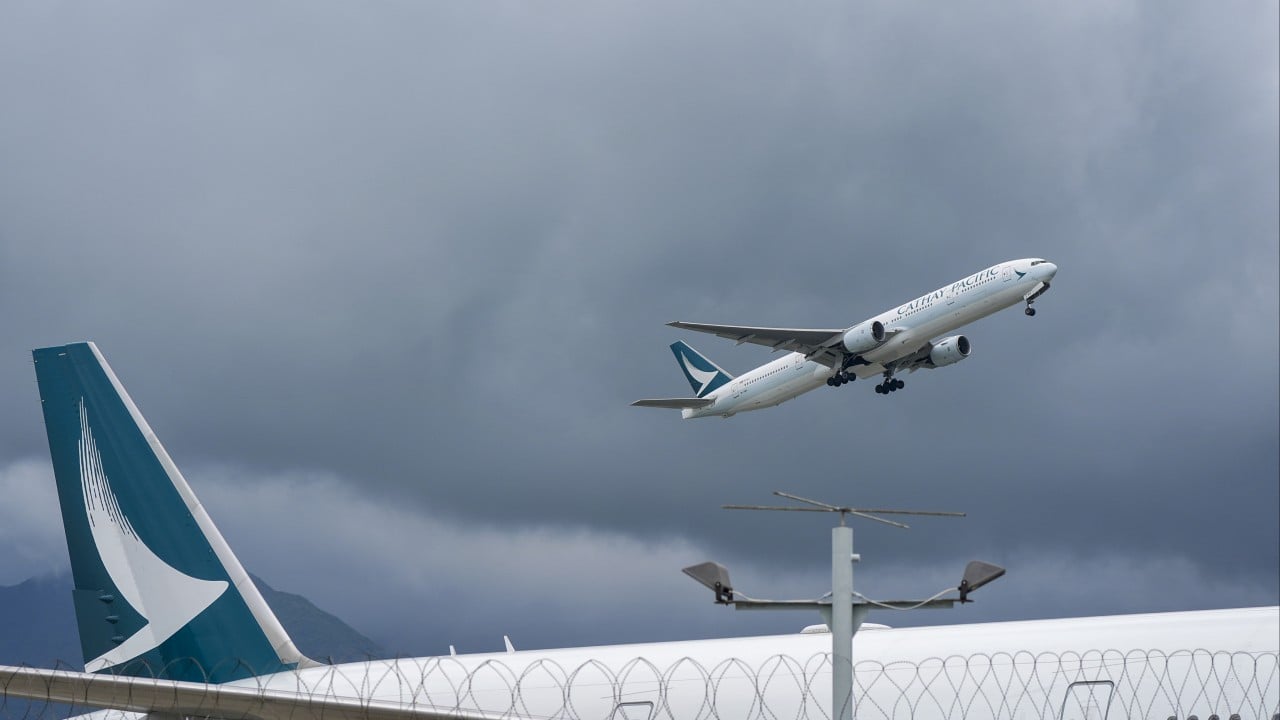
When a long-haul commercial aircraft goes silent across multiple air traffic control sectors, the institutional response moves from routine civil administration to military intervention within minutes. The July incident involving Cathay Pacific Flight CX257, an Airbus A350 traveling from Hong Kong to London, provides a clear study in the systemic vulnerabilities of cockpit communication handoffs.
According to the official investigation reports finalized by Hong Kong's Civil Aviation Department, the aircraft's communication hardware functioned without fault. The breakdown occurred entirely within human-machine interaction loops and cognitive operational procedures: the flight crew mistakenly answered an instruction directed at a different aircraft, tuned their VHF radio to an incorrect frequency, and failed to monitor the resulting loss of contact with Romanian air traffic control.
This error sequence transformed a routine frequency change into a cross-border security event, triggering a NATO Quick Reaction Alert and the deployment of Hungarian fighter jets. Dissecting this event requires examining the structural failure points across cockpit resource management, regional air traffic architectures, and military escalation thresholds.
The Three Components of the Communication Breakdown
A commercial cockpit relies on continuous, closed-loop verification. When this loop fractures, it rarely stems from a single catastrophic failure. Instead, it follows a cascading sequence of minor operational slips.
1. The Readback-Hearback Asymmetry
Air traffic management relies on precise verbal confirmations. When multiple aircraft operate within dense European corridors or narrow transit lanes forced by geopolitical airspace closures, frequency congestion spikes.
The primary vector of error in the CX257 incident was a misattribution of intent. The flight crew processed an instruction intended for a co-channel or adjacent flight, acknowledged it mentally or verbally in a way that fit their flight plan expectations, and executed a frequency change without verifying the callsign match.
In cognitive psychology, confirmation bias heavily influences this behavior. When a crew anticipates a routine handoff instruction at a specific geographic waypoint, their brain filters incoming audio for patterns that match that expectation. If an instruction sounds structurally similar, the probability of a false-positive acknowledgment increases.
2. The Monitoring Void
Modern glass-cockpit automation reduces physical labor but can inadvertently degrade passive tactical awareness. Once a frequency is changed, the VHF communication panel displays a numerical frequency, not the destination sector identity or the controller title, unless explicitly cross-referenced with the flight management system or operational charts.
The crew's second failure was the absence of a cross-monitoring protocol during the transition window. Standard operating procedures dictate that when an aircraft leaves a sector, the controller attempts a final sign-off, and the crew establishes contact with the new sector within a defined temporal threshold—typically two to three minutes.
During the transit over Romania and subsequent entry into Hungarian airspace, this window elapsed without a check-in. The crew failed to notice the silence because the flight deck presented no active warning flags; the radios were powered, tuned, and quiet, masking the fact that they were broadcasting into an empty or incorrect channel relative to their current geographic position.
3. The Geopolitical Proximity Multiplier
The geographic coordinates of the communication blackout added an immediate layer of tactical urgency. Flying across Eastern Europe requires navigating constrained air corridors that bypass active conflict zones further east.
In this regional context, air defense identification zones and military radar networks operate under heightened sensitivity protocols. An unresponsive civilian aircraft traversing national boundaries without radio contact presents an ambiguous radar signature that military command structures cannot treat as benign.
The Military Cost Function and the Nine-Minute Scramble
When civilian air traffic control loses contact with an aircraft and subsequent blind calls on emergency frequencies yield no response, the event escalates from an administrative irregularity to a potential security threat. The transition is governed by a strict time-to-decision matrix.
Civilian ATC Loss of Contact
  --> Blind Broadcasts on 121.5 MHz
  --> Inter-Center Coordination Failure
  --> Military Notification (QRA Trigger)
  --> Scramble Order Execution
In the case of Flight CX257, the Hungarian Defense Ministry's Quick Reaction Alert mechanism functioned precisely as engineered. NATO-integrated interceptors stationed at Kecskemét Air Base received the scramble order and launched within nine minutes.
The military cost function in these scenarios favors over-response. The cost of unnecessarily scrambling fighter jets to perform a visual identification is calculable in fuel and operational wear, whereas the cost of failing to intercept a compromised or unresponsive aircraft in restricted or sensitive airspace is catastrophic.
When the Hungarian fighter jets intercepted the Airbus A350 at 38,000 feet, they executed standard visual signaling protocols. Upon registering the presence of the military aircraft and recognizing the visual prompts, the Cathay crew immediately checked emergency or guard frequencies (121.5 MHz), realized their error, re-established contact with air traffic control, and stood down the interceptors.
Systemic Vulnerabilities in Long-Haul Operations
Long-haul flight operations generate unique physiological and operational stressors that exacerbate communication risks.
- Cognitive Fatigue and Circadian Disruption: Flight CX257 was operating a thirteen-hour intercontinental service. Crew fatigue degrades working memory, slowing the cognitive checks required to verify whether a radio frequency change corresponds to the correct geographic waypoint.
- Handoff Density: Crossing multiple European air navigation service provider zones requires frequent frequency modifications within compressed timeframes. Each handoff represents a discrete point of vulnerability where human error can interrupt the communication chain.
- Emergency Frequency Neglect: While international aviation regulations require long-haul crews to monitor emergency frequencies (121.5 MHz) when practicable, high-density traffic environments often lead crews to rely solely on primary sector frequencies, missing blind broadcasts originating from concerned controllers.
Operational Remediation and Structural Changes
Following the regulatory review by Hong Kong's Civil Aviation Department, Cathay Pacific implemented mandatory corrective actions designed to harden communication protocols:
- Enhanced Verification Mandates: Crew procedures now require explicit verbal cross-checking of callsigns and sector identities prior to executing frequency switches.
- Targeted Training Modules: Simulator scenarios now incorporate unexpected frequency isolation drills to train crews in recognizing prolonged communication vacuums.
- Audit and Assessment Mechanisms: Increased random evaluations of cockpit resource management during long-haul transits to ensure adherence to dual-crew monitoring standards.
The incident underscores a fundamental reality of modern aviation: despite advanced flight management systems, safety ultimately relies on the discipline of basic analog verification loops. When those loops fail, automated safety nets, from civilian radar alarms to military interception protocols, take over to close the gap.
Implement dual-crew verbal confirmation for every frequency handoff occurring in constrained airspace, and establish automated cockpit alerts that trigger whenever an aircraft crosses a sector boundary without an acknowledged radio check-in.