Pick up almost any Western foreign policy journal right now and you'll read the exact same story about Southeast Asia. Washington and Beijing are locked in a superpower struggle, and the ten nations of ASEAN are trapped in the middle, forced to pick a side before time runs out.
That framing misses the entire point.
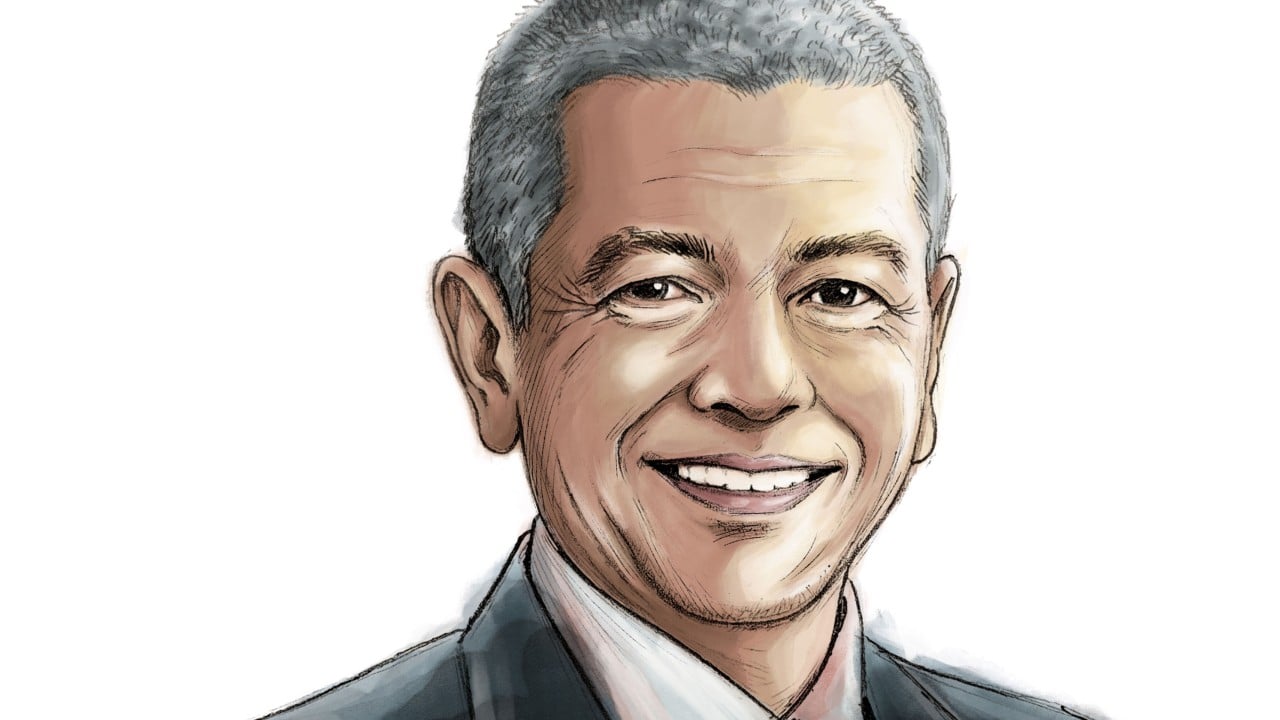
Danny Quah, Dean of the Lee Kuan Yew School of Public Policy at the National University of Singapore, has spent years dismantling this binary worldview. His core argument is simple yet uncomfortable for hawks in both capitals. ASEAN isn't a passive chessboard waiting to be divided up by Washington and Beijing. Southeast Asian states are active, calculating architects of their own survival, and their refusal to choose a side isn't indecisiveness. It's a deliberate, rational strategy built on decades of hard-won experience.
When you actually look at the economic and diplomatic numbers on the ground, the "pick a side" narrative falls apart fast.
Why the Cold War Playbook Fails in Southeast Asia
Analysts in Washington love Cold War analogies because they're tidy. Two blocs, clear ideological lines, zero-sum math. If a country trades more with China, Washington assumes Beijing is winning the region. If another nation signs a defense pact with the United States, Beijing cries containment.
Quah points out why this zero-sum thinking fails in modern Asia. During the original Cold War, the Soviet Union and the United States operated in completely separate economic orbits. Today, the global economy doesn't work like that. China is ASEAN's largest trading partner, with bilateral trade surpassing $900 billion in recent years. At the same time, the United States remains the single largest source of foreign direct investment into Southeast Asia, pouring hundreds of billions of dollars into regional manufacturing, tech, and finance.
Asking Singapore, Vietnam, or Indonesia to choose between their biggest customer and their biggest investor is economic suicide. Nobody in Jakarta or Hanoi is going to tank their own domestic growth just to satisfy an ideological purity test in Washington or Beijing.
I've watched this play out in boardrooms across Singapore and Kuala Lumpur for over a decade. Western executives often arrive expecting local partners to align cleanly with US supply chain decoupling. Instead, they find regional firms quietly building dual-track operations—keeping high-end R&D and compliance tied to Western markets while sourcing components and manufacturing capacity across southern China and Vietnam. That's not fence-sitting. That's risk management.
The Real Meaning Behind ASEAN Centrality
You hear diplomats throw around the phrase "ASEAN Centrality" at every summit in Jakarta or Bangkok, usually followed by eye-rolls from impatient observers who think the bloc moves too slowly. Critics point out that ASEAN operates by consensus, meaning any single member can stall a bold statement on the South China Sea or Myanmar.
They're judging ASEAN by the wrong metric.
As Danny Quah frequently emphasizes, ASEAN was never designed to be a military alliance like NATO or a supranational union like the European Union. Its primary job is preventing major powers from turning Southeast Asia into a proxy battleground while keeping regional diplomatic channels open to everyone.
Think about what ASEAN actually achieves every year. It's one of the few places on earth where the US President, the Chinese Premier, the Japanese Prime Minister, and the Indian Prime Minister all show up to sit at the same table—the East Asia Summit—under rules written by smaller nations. Neither Washington nor Beijing can dominate that room outright without alienating the hosts.
By insisting on open regionalism, ASEAN forces great powers to compete through economic offers, infrastructure investment, and diplomatic respect rather than pure coercion. When China pushes the Belt and Road Initiative, the US and Japan respond with their own infrastructure financing. Southeast Asian governments take the capital from both, build their ports and rail lines, and keep their sovereignty intact.
How Small and Middle Powers Shape Great Power Behavior
One of Quah's sharpest insights involves the shifting distribution of global power. For decades, international relations theory assumed that great powers set the rules and small states simply adjust. Quah flips that script. In a multipolar world where neither the US nor China holds undisputed hegemony over Asia, middle and small powers gain unexpected bargaining power.
Look at how individual ASEAN states execute this in practice.
- Vietnam shares a land border and a turbulent history with China, yet maintains deep party-to-party ties with Beijing alongside booming trade. Simultaneously, Hanoi upgraded its relationship with Washington to a Comprehensive Strategic Partnership, putting the US on the exact same diplomatic tier as China and Russia.
- Indonesia, Southeast Asia's largest economy and de facto leader, refuses formal military alliances altogether. Jakarta welcomes Chinese investment in its nickel processing industry to power global EV battery supply chains, while conducting joint military exercises like Super Garuda Shield with the United States and Australia.
- Singapore hosts US Navy littoral combat ships and F-35 fighter jets, making it a critical security partner for Washington. Yet Singaporean leaders consistently warn against framing China as an existential enemy, arguing that a prosperous, integrated China benefits the entire region.
Each country calibrates its posture based on its own geography, history, and economic needs. They don't need a unified ideology to share a common strategic goal—keeping the region open, peaceful, and free from single-power dominance.
The Economic Reality of Supply Chain Shifts
Walk through an industrial park in Penang, Malaysia, or Bac Ninh, Vietnam, and you see the physical reality of Quah's thesis. Over the past few years, Western commentators celebrated "friend-shoring" as proof that global manufacturing was abandoning China for US-aligned partners.
The actual trade data tells a much messier story.
Yes, multinational corporations have moved final assembly lines out of China and into Southeast Asia to avoid US tariffs. Exports from Vietnam and Malaysia to the United States surged as a result. Yet if you trace the supply chains backward, imports of intermediate goods, machinery, and raw components from China into ASEAN jumped at the exact same time.
Southeast Asia didn't replace China in the global supply chain. It became the bridge connecting Chinese industrial capacity with Western consumer markets.
When US policymakers threaten tariffs on solar panels or electronics assembled in Southeast Asia because they contain Chinese inputs, they're colliding directly with this reality. You cannot cleanly separate Asian supply chains without driving up costs for American consumers and stalling growth across developing Southeast Asia. Quah has repeatedly warned that weaponizing trade and technology controls risks fracturing the global economy into inefficient, hostile blocs—an outcome that hurts small, trade-dependent nations first and hardest.
Where ASEAN Strategy Faces Real Pressure
Pretending ASEAN has everything figured out would be dishonest. The bloc's balancing act works brilliantly when great power competition stays within economic and diplomatic boundaries, yet several flashpoints threaten to break that equilibrium.
First, maritime disputes in the South China Sea continue to escalate. Aggressive coast guard tactics and water cannon incidents near Second Thomas Shoal have pushed the Philippines closer to its mutual defense treaty ally, the United States. When physical coercion replaces diplomacy at sea, neutrality becomes much harder to sustain.
Second, internal divisions within ASEAN weaken its collective voice. The ongoing civil war in Myanmar has paralyzed regional diplomacy, exposing deep disagreements between mainland and maritime ASEAN members over how to engage the military junta. When ASEAN can't solve a crisis in its own backyard, external powers find it easier to divide and rule.
Third, technological bifurcation poses a silent threat. As Washington restricts advanced semiconductors and AI chips while Beijing builds domestic tech ecosystems, Southeast Asian firms face tough compliance choices. Building a data center in Johor, Malaysia, increasingly forces operators to decide whose cloud architecture and hardware standards they'll adopt.
What Observers and Policymakers Should Do Differently
If you're a business leader, investor, or policy analyst trying to read Southeast Asia accurately, stop viewing every diplomatic visit or infrastructure deal through a Washington-versus-Beijing scoreboard. That binary lens will cause you to misread almost every major move in the region.
Start tracking three concrete indicators instead.
- Follow bilateral investment flows, not summit rhetoric. Watch where capital from Japan, South Korea, Europe, the US, and China is actually landing in ASEAN manufacturing and digital infrastructure. Capital allocation reveals true strategic alignment far better than diplomatic communiqués.
- Analyze national hedging strategies individually. Never treat ASEAN as a single monolithic bloc on security issues. Assess Vietnam, Indonesia, the Philippines, Thailand, and Singapore separately based on their specific domestic politics and geographic exposure.
- Prioritize regional trade agreements over bilateral pressure. Pay close attention to frameworks like the Regional Comprehensive Economic Partnership (RCEP) and the Comprehensive and Progressive Agreement for Trans-Pacific Partnership (CPTPP). These multilateral trade rules are the real glue holding Asian economic integration together despite superpower friction.
Southeast Asia isn't waiting for Washington or Beijing to decide its future. As Danny Quah has consistently argued, the nations of ASEAN are writing their own playbook—one built on open trade, pragmatic hedging, and a stubborn refusal to let anyone else dictate their choices.