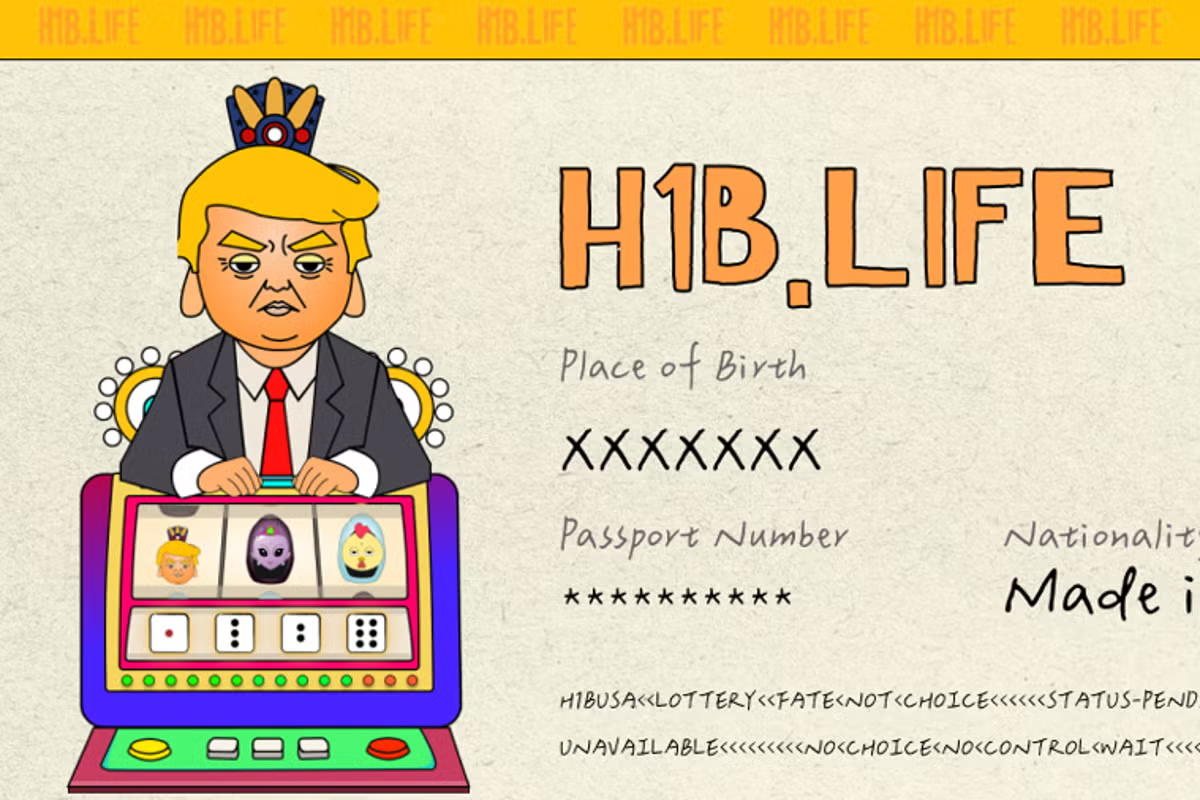
Winning a seat at a poker table is often easier than securing a future in the United States. If you've ever wondered why thousands of high-skilled workers feel like they’re playing a rigged carnival game, look no further than H1B.Life. This upcoming mobile game doesn't just explain the visa process; it transforms the agonizing reality of American immigration into a surreal, high-stakes gambling simulation.
At its core, the game features a literal slot machine. But instead of cherries and bells, the reels spin for your right to live, work, and exist within U.S. borders. Watching over this digital chaos is a figure the developers call the "Orange Buddha"—a satirical, kaleidoscopic deity clearly modeled after Donald Trump. It's a bold, biting take on a system that has become increasingly unpredictable and, for many, financially ruinous. Meanwhile, you can explore similar developments here: The Price Tag on the Living Room Escape.
The Reality of the H1B Lottery
Most people think the H-1B visa is a straightforward meritocracy. You get a degree, you find a job, you get a visa. That's not how it works. It's a lottery. In 2025 and 2026, the stakes climbed even higher. The Biden-era reforms and subsequent Trump administration executive orders turned the "game" into a gauntlet.
Current policies have shifted the odds toward those with the highest salaries, but the sheer volume of applicants means the random element never truly disappears. In H1B.Life, this randomness is the primary mechanic. You manage your "intelligence" and "social support" stats, but at the end of the day, you have to pull the lever. To explore the complete picture, check out the excellent report by Reuters.
The game is being developed by Reality Reload, a team led by Allison Yang, a former journalist who understands that the data points of immigration don't capture the actual dread. They interviewed dozens of immigrants to ensure the mechanics reflect the psychological toll of waiting for an approval that might never come.
Why a Slot Machine is the Perfect Metaphor
The "Orange Buddha" in the game governs a "heavenly realm" where rules change while you sleep. This isn't just creative flair; it’s a reflection of how the H-1B landscape has shifted over the last year.
- Financial Barriers: Recent executive proclamations, like the one targeting nonimmigrant workers, introduced a $100,000 "fee" for many new H-1B petitioners.
- The Gold Card Era: While skilled workers struggle with $100k fees, the "Trump Gold Card" program allows those with $1 million to essentially skip the line.
- Social Media Scrutiny: New screening requirements have added months to processing times, leaving families stuck in limbo or afraid to travel for weddings and funerals.
In the game, your character might start as a hopeful student—perhaps inspired by something as simple as a love for American TV shows like Gilmore Girls. But as you progress, the "Burnout Meter" starts to fill. Every time a new policy is tweeted or a fee is hiked, your stress levels spike. It’s a simulation of the "powerlessness" Yang described in recent interviews.
Dealing with the Burnout Mode
One of the most innovative features of H1B.Life is "Burnout Mode." It’s designed to honor the feelings of those who did everything right—the degrees, the taxes, the clean records—only to be told their fate depends on a random draw or a sudden change in political winds.
The game doesn't just ask you to win; it asks you to survive the process. You have to decide if you can afford the soaring legal costs or if you should give up and try your luck in another country. It’s a choice real workers make every day. With the H-1B season traditionally starting in March, the timing of this game’s development couldn't be more relevant.
The Cost of the American Dream
The developers are launching a Kickstarter this May to finish the project. They aren't just making a "Trump game" for cheap laughs. They’re building a tool to communicate a specific kind of trauma. When you play, you realize that the superpower isn't your talent or your PhD—it's the piece of paper you hold.
If you're an employer looking to hire or a student looking to stay, you're currently operating in a landscape where the "house" always has the edge. H1B.Life forces you to see the faces behind the filing numbers.
To stay ahead of the actual 2026 H-1B cycle, you need more than just luck. You need to keep a close eye on the Department of Homeland Security's shifting wage-level priorities and ensure your legal counsel is ready for the $100,000 "entry fee" if you aren't exempt. The game might be satirical, but the bank accounts being drained are very real. Check the official USCIS portal frequently, as policy "Buddhas" are known to change the rules overnight.