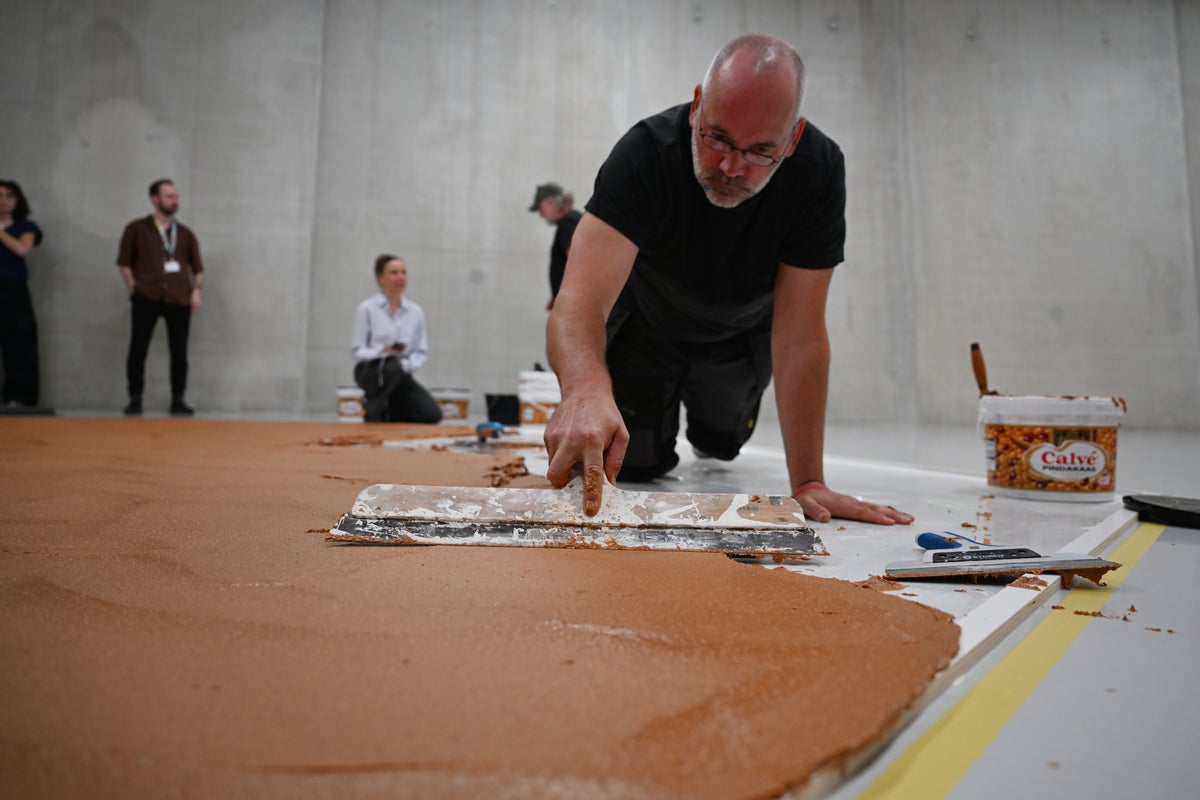
The modern art world frequently tests the limits of public patience, but coating a museum floor in 800 pounds of peanut butter takes the concept of a sticky situation to a literal extreme. When a gallery transforms hundreds of pounds of a staple food product into a walk-in installation, the immediate reaction spans from amusement to outrage. Beyond the initial shock value lies a complex web of logistical nightmares, ethical dilemmas, and historical repetition. This is not just a quirky tribute to a past artist. It is a stark look at how institutions weaponize shock value to maintain relevance in a crowded cultural market.
The installation recreates a famous piece of conceptual art, aiming to challenge how viewers interact with everyday objects. By spreading a massive quantity of peanut butter across a public floor, the gallery forces visitors to confront scent, texture, and the degradation of organic matter over time.
The Logistics of a Perishable Nightmare
Pouring nearly half a ton of peanut butter onto a floor is not as simple as opening a few jars and grabbing a spatula. The behind-the-scenes reality involves a grueling process of climate control and pest prevention that museums rarely discuss in their press releases.
When dealing with organic materials on this scale, the environment becomes the enemy. Peanut butter contains oils that separate under heat. Without industrial-grade HVAC systems running constantly, the installation risks turning into a rancid, liquid mess within days. Museum conservators must balance the temperature perfectly to keep the spread at a specific consistency, preventing it from weeping oil into the building’s foundations.
Then comes the threat of infestation. Rodents and insects do not view the display as a profound commentary on consumer culture. To them, it is a jackpot. Traditional pest control methods fail when the bait is scattered across an entire room, forcing facilities teams to implement round-the-clock monitoring and specialized sealing techniques around the gallery perimeter. The labor costs alone frequently dwarf the price of the actual material.
The Ethics of Mass Food Waste
We live in an era where food insecurity dominates local headlines, making the deliberate destruction of 800 pounds of peanut butter a flashpoint for public anger. This is the dark side of institutional privilege.
Galleries often defend these decisions by claiming the food used was "unfit for human consumption" or sourced from manufacturing overruns that would have been discarded anyway. Even if true, the optics remain terrible. For the average viewer, watching hundreds of jars of high-protein food get smeared on a floor for wealthy patrons to look at feels like a slap in the face. It highlights a massive disconnect between upper-tier cultural institutions and the communities that surround them.
The defense of such waste usually rests on the argument that art should provoke discomfort. It succeeds on that front, though perhaps not in the way the curators intended. Instead of contemplating the artist's message, visitors are left calculating how many school lunches that volume of food could have provided.
The History of Shock Value as Content
This installation does not exist in a vacuum. It follows a long, messy tradition of artists using perishable goods to get a rise out of the public.
- Joseph Beuys famously utilized fat and felt in his sculptures, forcing museums to deal with melting materials and pungent odors.
- Damien Hirst shocked the public by preserving carcasses in formaldehyde, testing both structural engineering and public stomachs.
- Felix Gonzalez-Torres used piles of wrapped candy to represent the fading body, though notably, visitors were allowed to eat the medium.
The difference today is the speed at which these installations are consumed. In the past, a provocative exhibition grew its reputation through word of mouth and critical reviews. Now, an 800-pound peanut butter floor is designed specifically to capture attention on social feeds. It is built for the era of the quick glance. The sensory experience of smelling the room or feeling the sticky air is secondary to the photograph that proves a visitor stood next to it.
The Financial Cost of Cultural Relevance
Museums are businesses hiding behind tax-exempt status and lofty mission statements. They need foot traffic. When traditional painting and sculpture exhibitions fail to draw younger crowds, institutions turn to spectacle.
The financial calculus behind an installation like this is simple. The cost of 800 pounds of peanut butter is negligible compared to a major marketing campaign. By creating a bizarre, easily shareable event, the museum guarantees a surge in ticket sales and media coverage. The controversy itself becomes the marketing strategy. Every angry tweet or critical op-ed only serves to drive curiosity, pulling more paying customers through the doors.
This reliance on spectacle creates a dangerous escalation cycle. Once a museum uses food waste or shock tactics to draw a crowd, the next exhibition must be even more extreme to achieve the same result. The art itself gets lost in the rush to create the next viral moment.
The Fragile Nature of Conceptual Tributes
When a museum recreates a piece by a deceased artist, authenticity becomes a major question mark. The original installation had a specific context, tied to the year it was created and the specific environment the artist inhabited.
By scaling it up and dropping it into a modern gallery, the nuance is often stripped away. It transforms from a radical act of defiance into a safe, institutionalized stunt. The original artist may have wanted to disrupt the clean, clinical space of the traditional gallery. Today, the gallery welcomes the disruption because they know it looks great on a smartphone screen. The danger has been completely corporate-approved and sanitized.
Visitors walking through the exhibition space are greeted by an overwhelming aroma that sits somewhere between a childhood kitchen and a manufacturing plant. The oil seeps into the air, clinging to clothes and skin long after a guest leaves the building. It is an undeniable sensory experience, but it forces a hard question about where the line between artistic expression and empty exhibitionism currently sits.
The true legacy of the 800-pound peanut butter floor will not be its contribution to art history. It will be the blueprint it provides for the future of museum funding. As public funding dries up and institutions rely more heavily on ticket sales, the boundary between fine art and carnival sideshow will continue to blur, one sticky footstep at a time.