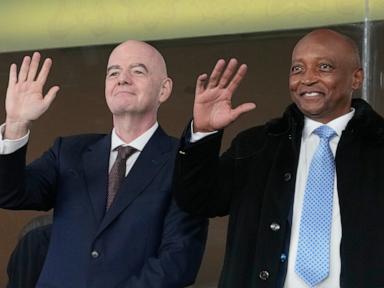
Mega-sporting events function as multi-billion-dollar testing grounds for statecraft, infrastructure amortization, and national prestige. When FIFA awarded the centennial 2030 World Cup to a joint bid spanning Morocco, Spain, and Portugal—with matches also hosted in Uruguay, Argentina, and Paraguay—it did not merely distribute athletic fixtures; it injected immense geopolitical leverage into an already volatile bilateral corridor. At the center of this allocation matrix sits the high-stakes negotiation for the tournament's final match.
The underlying tension between Rabat and Madrid over the host venue for the final is frequently framed in mainstream media as a simple prestige contest or a cultural turf war. This superficial framing obscures the actual economic drivers, security constraints, and diplomatic mechanisms governing the decision. A rigorous examination of the 2030 World Cup final allocation requires deconstructing the competing infrastructural variables, the diplomatic leverage points, and the cost-benefit functions governing both national federations.
The Infrastructure Variable
Capacity, transit efficiency, and commercial hospitality yield stark differentials between the candidate venues in Spain and Morocco. A modern World Cup final demands a minimum seating threshold of eighty thousand spectators, extensive VIP and corporate hospitality tiers, redundant mass-transit networks, and stringent security perimeters capable of managing millions of transient global visitors.
Spain enters the bidding ecosystem with mature, amortized stadium assets. Santiago Bernabeu in Madrid and Camp Nou in Barcelona represent Tier One infrastructural propositions. Both facilities have undergone multi-million-dollar modernizations to maximize yield per seat through retractable pitches, premium hospitality suites, and integrated commercial real estate. These venues operate within established municipal ecosystems boasting high-capacity metro lines, high-speed rail (AVE) interconnectivity, and redundant international airport capacity. The capital expenditure required from Madrid to host the final is near zero; the asset is fully operational and stress-tested by decades of UEFA Champions League and El Clasico fixtures.
Morocco approaches the infrastructure equation through a lens of accelerated state-directed capital expenditure and developmental momentum. The Kingdom is executing a sweeping national stadium strategy, highlighted by the planned construction of the Grand Stade de Casablanca in Benslimane. Designed to accommodate one hundred and fifteen thousand spectators, this greenfield project aims to surpass Iberian capacities and claim the title of Africa's premier sporting arena.
However, greenfield mega-projects inherently carry execution risk. While Morocco successfully delivered complex infrastructure for the Africa Cup of Nations preparations and Club World Cups, aligning a project of this magnitude with FIFA's strict milestone deadlines introduces schedule and budget variance. Transit logistics present an additional variable. While Casablanca possesses strong rail links, connecting a hundred-thousand-seat peri-urban stadium to international aviation hubs requires meticulous traffic engineering and rapid-transit expansion to match the turnkey efficiency of Madrid or Barcelona.
The Diplomatic Vector and Border Friction
Diplomatic friction between Morocco and Spain does not exist in a vacuum; it operates as a cyclical negotiation punctuated by migration control, maritime border disputes, and trade dependencies. The Western Mediterranean represents one of the world's most sensitive geopolitical chokepoints.
Spain views stability in North Africa as a core national security imperative, heavily relying on Moroccan border management cooperation to stem irregular migration into the European Union via the Spanish enclaves of Ceuta and Melilla, as well as the Canary Islands. Conversely, Morocco leverages its geopolitical position as the gateway to Africa to extract diplomatic concessions, notably regarding sovereignty recognition over the Western Sahara and favorable bilateral trade terms.
Hosting the World Cup final acts as a trophy asset within this diplomatic marketplace. A decision by FIFA—heavily influenced by UEFA's lobbying power and commercial gravity—to award the final to Madrid reinforces Spain's historical status as the dominant European partner in the Mediterranean basin. It signals to domestic Spanish constituencies that despite shifting demographic and economic realities, core institutional power remains anchored in Western Europe.
If the final were awarded to Casablanca, it would signal a profound geopolitical realignment. It would mark the first time a North African nation hosted the climax of the world's most-watched sporting event, validating Morocco's multi-decade modernization campaign and cementing its leadership role in the Global South.
Yet, this diplomatic push-and-pull is constrained by Portugal's balancing role within the tripartite bid. Lisbon acts as a stabilizing institutional mediator, holding a neutral posture that emphasizes technical execution over nationalist posturing. This triangular governance structure forces both Madrid and Rabat to temper their public posturing, as overt nationalist friction risks destabilizing the technical integrity of the bid before FIFA's evaluation committees.
Economic Return on Investment and Capital Amortization
The financial calculus of hosting a World Cup final extends far beyond ticket sales and immediate tourism spikes. Governments evaluate mega-events through the framework of long-term asset utilization, brand equity, and foreign direct investment attraction.
For Spain, the economic argument for the final rests on marginal yield enhancement. The Spanish tourism sector is already a mature powerhouse, contributing over twelve percent to national GDP. Madrid and Barcelona do not require global brand awareness campaigns; they require high-yield business tourism and extended-stay luxury travelers. Hosting the final functions as a high-visibility marketing campaign for Iberian commercial real estate and service sectors, but the macroeconomic multiplier effect is bounded by the existing saturation of their tourism markets.
For Morocco, the economic equation is transformative. The capital allocation toward stadiums, transport networks, and hospitality infrastructure serves as a forced-march modernization program. This infrastructure outlasts the ninety-minute match, serving as foundational capital for urban expansion, regional integration, and non-agricultural export growth. By anchoring global media attention on Casablanca, Morocco signals to international institutional investors that its regulatory and logistical environments meet tier-one global standards. The true return on investment for Rabat is not the revenue generated on match day, but the permanent reduction of perceived sovereign risk among foreign capital allocators.
The Governance and Decision-Making Calculus
FIFA operates as a transnational regulatory body balancing commercial maximization against political appeasement. The governing body's primary objective for the 2030 tournament is global inclusivity—celebrating the centenary of the World Cup by touching three continents—while maximizing broadcast revenues across North American, European, and Asian time zones.
The final match represents the single most valuable broadcast window in international sports. FIFA's commercial partners and television rights holders favor European time zones for prime-time broadcast monetization, heavily favoring the Spanish proposals. However, FIFA's executive committee must also weigh the political cost of sidelining Morocco after Rabat demonstrated exceptional compliance, financial backing, and infrastructural commitment to the joint venture.
To resolve this impasse without provoking a diplomatic fracture, strategic compromises are frequently deployed in multi-nation mega-projects. A split-asset model—where opening matches, semi-finals, and the final are distributed strategically across the maritime border—becomes an exercise in political mathematics.
Madrid possesses the structural inertia and broadcast convenience; Casablanca possesses the symbolic weight and developmental imperative. The final allocation will ultimately be determined not by the emotional appeals of national media outlets, but by the behind-the-scenes calibration of security guarantees, corporate hospitality guarantees, and the quiet trade-offs of Mediterranean statecraft.
To secure sustainable long-term value from the tournament, both capitals must decouple the athletic fixtures from their broader diplomatic grievances. The true metric of success for Morocco and Spain is not which anthem plays before the opening whistle of the final, but whether the infrastructure built for 2030 yields a compounding economic dividend over the subsequent thirty years.