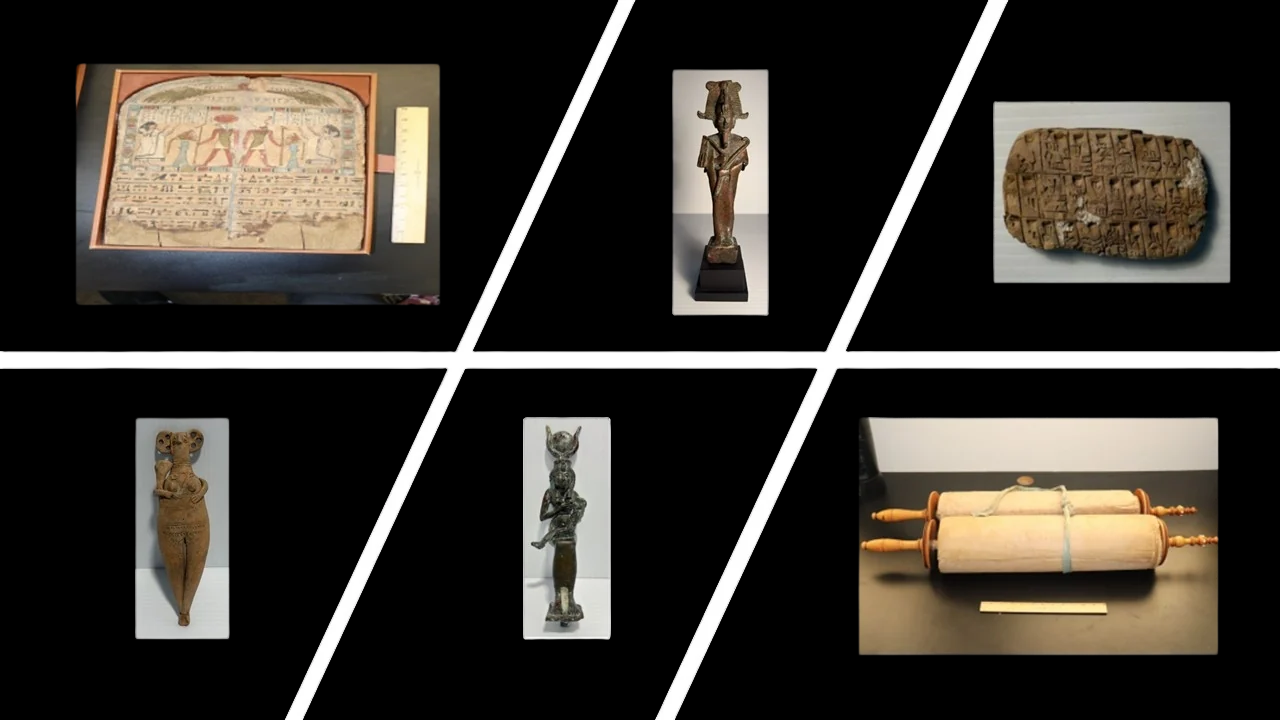
Federal agents in Florida uncovered an illicit antiquities cache worth more than $75,000 after an importer attempted to slip 4,000-year-old Iraqi cuneiform tablets through U.S. Customs by declaring them as cheap terracotta home decor valued at $200. That single false customs declaration triggered a wider Department of Homeland Security investigation, pulling back the curtain on how looted Mesopotamian artifacts quietly enter the American market through everyday shipping channels and deliberate mislabeling.
The seizure highlights a persistent vulnerability in global border enforcement. Every day, millions of parcels cross international lines with minimal physical inspection, relying heavily on an honor system of commercial invoices and harmonized tariff codes. When a trafficker writes "ceramic crafts" or "terracotta pieces" on a manifest, customs algorithms rarely flag the box for archaeological review unless intelligence already points toward the recipient. For another view, see: this related article.
The Anatomy of a Customs Cover Story
Smugglers rarely hide ancient treasures inside hollowed-out statues or secret compartments anymore. Modern antiquities trafficking relies on bureaucratic camouflage. By assigning a low monetary value—such as $200—to a shipment, an importer accomplishes two critical objectives simultaneously. First, the package drops below the threshold that triggers intensive scrutiny from U.S. Customs and Border Protection (CBP) cargo specialists. Second, it avoids the steep import duties and formal entry paperwork required for high-value cultural property.
In this Florida case, the physical reality inside the crate stood in stark contrast to the mundane shipping label. Instead of mass-produced modern clay, inspectors found ancient cuneiform tablets originating from modern-day Iraq. Dating back roughly four millennia to the Bronze Age, these inscribed clay records represent some of humanity's earliest written administrative, legal, and economic history. Related analysis on this matter has been published by The New York Times.
Once CBP officers flagged the discrepancy between the manifest and the cargo, Homeland Security Investigations (HSI) took over the file. A deeper probe into the recipient's import history and premises revealed that the tablets were not an isolated purchase. Investigators uncovered a broader collection of ancient artifacts with an estimated market value exceeding $75,000, demonstrating how a single intercepted parcel frequently serves as the loose thread that unravels a long-running illicit operation.
Why Iraqi Cuneiform Tablets Target the Private Market
To understand why a buyer in Florida would risk federal prosecution for chunks of baked mud, you have to understand the mechanics of the illicit antiquities trade. Mesopotamian tablets are uniquely vulnerable to looting and smuggling for several practical reasons.
- Portability and Concealment: Unlike monumental stone reliefs or fragile glass vessels, cuneiform tablets are small, dense, and durable. Many fit comfortably in the palm of a hand, allowing dozens to be packed into standard courier boxes without raising weight alarms.
- Massive Supply from Conflict Zones: Decades of instability, warfare, and economic collapse in Iraq have left thousands of archaeological sites unguarded. Subsistence looters—often locals digging to survive—can extract hundreds of tablets from a single ancient tell in a matter of days.
- High Collector Demand: For private buyers, owning a 4,000-year-old piece of human writing carries immense prestige. Because the tablets often record mundane transactions like grain rations, livestock deliveries, or temple inventories, buyers frequently rationalize the purchase as harmless preservation rather than cultural theft.
That rationalization ignores the devastating scientific cost. A cuneiform tablet ripped out of the earth without archaeological context loses up to ninety percent of its historical value. Scholars rely on the exact soil layer, surrounding architecture, and neighboring documents to reconstruct ancient cities and trade networks. Once a tablet is tossed into a burlap sack and shipped to a dealer in Europe or the Middle East before landing in Florida, it becomes an orphan object—readable, perhaps, but mute about where it actually came from.
How Looted Artifacts Wash Clean Before Reaching Florida
Artifacts rarely travel directly from a trench in southern Iraq to a doorstep in the United States. Direct shipments from Baghdad or Basra to Miami or Tampa draw immediate attention from border authorities. Instead, traffickers use transit hubs to launder both the physical route and the paper trail.
Consider a hypothetical example of how this laundering pipeline typically operates. A tablet dug up illegally near an ancient Sumerian site is smuggled across a porous border into a neighboring country, such as Jordan, Turkey, or the United Arab Emirates. From there, it moves to a freeport or an intermediary dealer in Europe, where the object sits for months or years. When it is finally sold to an American buyer, the shipping label originates from a Western European address, making the package look like a routine transatlantic e-commerce delivery rather than looted heritage from a conflict zone.
During this transit, smugglers exploit the chronic lack of specialized training at port facilities. A customs officer processing thousands of manifests per shift cannot be expected to distinguish a genuine Ur III period clay tablet from a $15 tourist replica bought at a bazaar. Traffickers count on that ambiguity. If the box passes through unopened, the smuggler wins. If an inspector opens the box and asks questions, the recipient can claim ignorance, arguing they thought they were buying cheap decorative reproductions online.
The Legal Hammer Behind Cultural Property Enforcement
Declaring a $75,000 stash of ancient artifacts as $200 worth of terracotta is not a minor clerical error. Under federal law, lying on a customs declaration constitutes smuggling goods into the United States under 18 U.S.C. § 545, a felony offense carrying severe financial penalties and prison time.
Beyond standard customs fraud, Iraqi artifacts fall under strict international and domestic legal protections. Following the widespread looting of the Iraq Museum in 2003, the United States implemented emergency import restrictions—later codified into long-term bilateral agreements—barring the entry of archaeological and ethnological materials from Iraq unless accompanied by verifiable export permits issued by the Iraqi government.
Because Iraq strictly prohibits the private export of its ancient heritage, virtually no genuine 4,000-year-old tablet appearing on the open market today possesses legitimate export documentation. The burden of proof rests squarely on the importer. When federal agents seize undocumented Mesopotamian antiquities, they do not need to prove the buyer personally dug the items out of the ground. Demonstrating that the items entered the country through false declarations or without lawful export clearance is enough to forfeit the collection permanently.
The Gray Areas of Provenance and Collector Liability
While the Florida seizure involves blatant misdeclaration, the broader antiquities market operates in murky territory where criminal intent and sloppy due diligence often overlap. Experienced investigators and art law attorneys acknowledge that not every buyer who ends up with looted material is a hardened cartel operative.
Many mid-tier collectors purchase items from online auction houses, estate sales, or obscure dealers who provide vague assurances of "old Swiss collection" provenance. In the antiquities trade, an "old collection" claim is frequently a fabricated backstory designed to suggest an artifact left its country of origin before the 1970 UNESCO Convention established modern international standards against illicit trafficking.
However, the legal tolerance for willful blindness has evaporated. Over the past decade, HSI and the Manhattan District Attorney’s Antiquities Trafficking Unit have aggressively dismantled the notion that buyers can hide behind flimsy paperwork. High-profile forfeitures involving major museums and billionaire collectors have sent an unmistakable signal down the market chain. If a buyer accepts an invoice claiming a priceless Bronze Age artifact is a $200 piece of terracotta, courts view that undervaluation not as a clever tax dodge, but as decisive proof that the buyer knew the transaction was illegal.
What Happens to the Seized Tablets Next
Once federal authorities confiscate illicit antiquities and conclude their criminal or civil forfeiture proceedings, the objects enter a formal repatriation pipeline. For the 4,000-year-old tablets recovered in Florida, the ultimate destination is not a government warehouse or a U.S. museum, but back to the Republic of Iraq.
The repatriation process involves meticulous coordination between HSI, the U.S. Department of State, and Iraqi diplomatic officials. Forensic linguists and Assyriologists examine the tablets to translate the cuneiform script, identify royal year-names or city deities, and pinpoint which ancient site the objects were likely stolen from. In recent years, the United States has returned tens of thousands of looted tablets and cultural artifacts to Baghdad, including the massive cache recovered from Hobby Lobby after the company similarly imported thousands of Iraqi tablets under misleading labels describing them as "clay tiles" and "ceramic samples."
Yet every repatriation ceremony carries a bittersweet reality. While returning stolen heritage restores national patrimony, it cannot undo the archaeological destruction caused by the initial looting. The craters left behind in the Iraqi desert remain, permanent scars on the historical record that no customs seizure can ever heal.
The Enforcement Blind Spot That Keeps Smugglers in Business
The Florida case ended in a major seizure, but veteran investigators know that for every mislabeled box caught at the border, dozens slip through undetected. Global e-commerce has fundamentally overwhelmed traditional customs screening models.
The Volume Problem
International mail facilities and express courier hubs process millions of small parcels daily. Physical inspection rates sit in the low single digits. Smugglers exploit this math by breaking large collections into multiple small shipments sent over several months, ensuring that no single package looks substantial enough to warrant an X-ray scan or manual inspection.
The Expertise Gap
Identifying ancient artifacts requires specialized academic knowledge that cannot be automated easily. While artificial intelligence and advanced imaging are improving border screening for weapons and narcotics, distinguishing authentic ancient clay from modern ceramics remains a stubbornly human task. Without stronger intelligence sharing between source countries, academic institutions, and customs agencies, border officers are forced to rely on anomalies in paperwork—like a sudden spike in "terracotta" shipments from high-risk transit corridors.
The Digital Marketplace
Social media platforms and encrypted messaging apps have replaced smoky backrooms as the primary trading floors for looted antiquities. Sellers post photos of freshly excavated tablets directly from conflict zones, negotiating prices and arranging shipping logistics with Western buyers in real time. By the time a package reaches a U.S. port of entry, the financial transaction has already cleared through cryptocurrency or layered wire transfers.
Combating this trade requires shifting enforcement pressure from reactive border seizures to proactive financial and digital tracking. As long as collectors are willing to pay tens of thousands of dollars for undocumented pieces of the ancient world, traffickers will continue to slap $200 labels on 4,000-year-old history and roll the dice at customs.