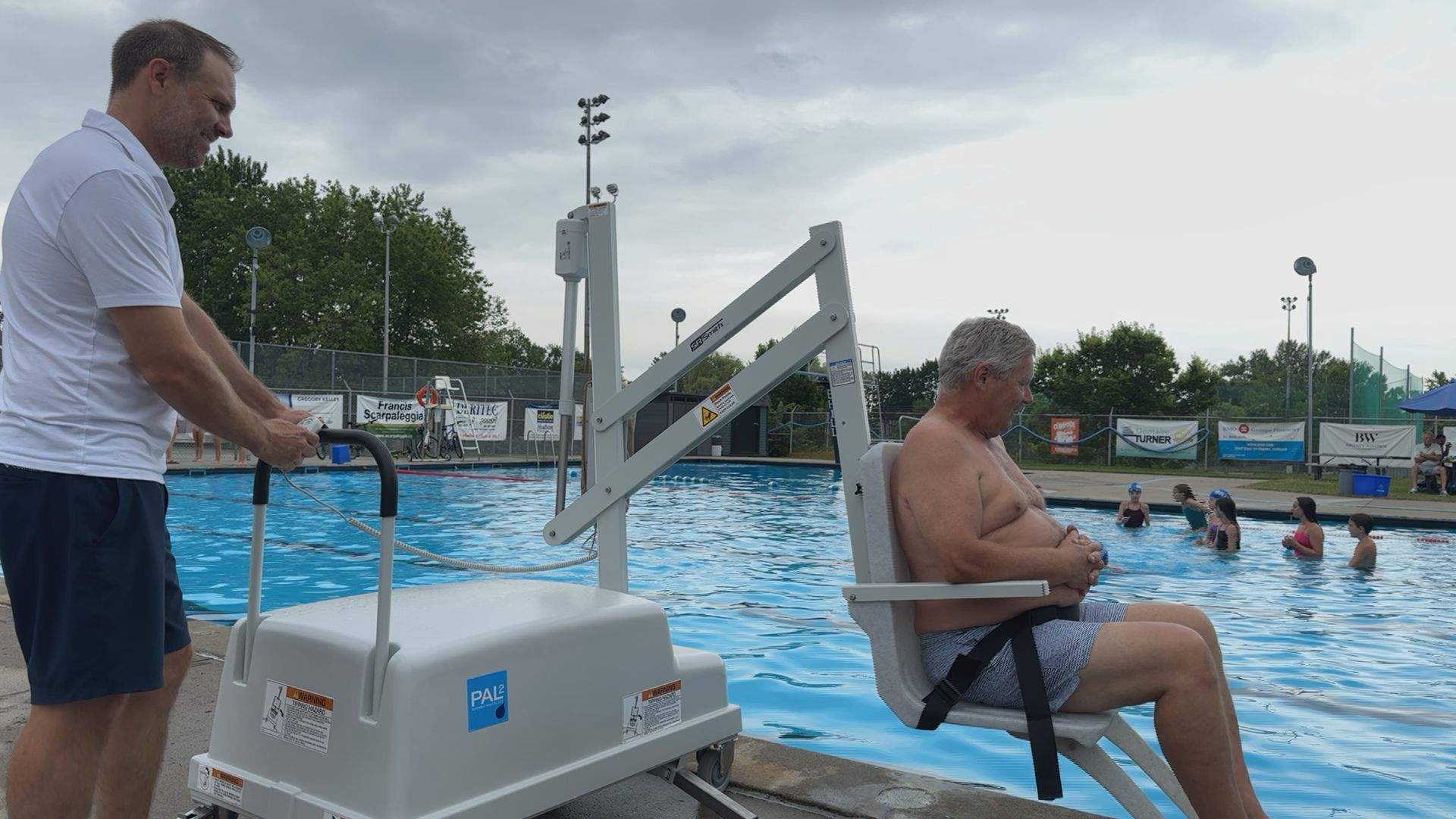
When a community pool installs a mechanical chair lift, the standard media narrative follows a predictable, feel-good script. There are ribbon-cutting ceremonies, local politicians shaking hands, and heartwarming quotes from residents who can finally enjoy the water again.
But behind the celebratory headlines lies a starker, more complex reality about municipal infrastructure, bureaucratic funding models, and the actual mechanics of civic belonging.
The recent $96,000 accessibility overhaul at Beacon Hill Pool in Beaconsfield, Quebec, offers a perfect case study. On paper, the project delivers exactly what was promised. A $72,000 federal grant from the Enabling Accessibility Fund, paired with $24,000 from municipal coffers, funded widened power doors, adapted washrooms, new ramps, and a dedicated aquatic lift.
Look closer, however, and this small-scale triumph reveals a glaring systemic paradox.
Local leadership openly admitted that before these upgrades, the private, community-run facility had virtually no active members with severe mobility limitations. "If you build it, they will come," became the project's official mantra. But this reasoning exposes a deeper systemic failure. Under traditional funding frameworks, communities must often prove a desperate, existing demand to justify infrastructure spending, yet individuals with disabilities cannot join or utilize spaces that are fundamentally closed to them. It is a classic catch-22 that traps aging suburban infrastructure in a state of perpetual exclusion.
The Cost of Delayed Modernization
Waiting for a crisis or a specific grant to retroactively fix public architecture is an expensive way to govern.
Suburban recreation facilities built during the boom of the 1970s were engineered for a specific, narrow demographic of young, able-bodied families. Fifty years later, those original homeowners are still there, but their physical realities have fundamentally shifted. Chronic back issues, joint replacements, and neurological conditions mean that simple actions—like navigating a concrete pool rim or using a narrow changing stall—become insurmountable barriers.
+-------------------------------------------------------------+
|               BEACON HILL POOL FUNDING BREAKDOWN            |
+------------------------------+------------------------------+
| Federal Grant Contribution   | $72,000                      |
+------------------------------+------------------------------+
| Municipal Matching Funds     | $24,000                      |
+------------------------------+------------------------------+
| Total Capital Expenditure    | $96,000                      |
+------------------------------+------------------------------+
When a city relies entirely on piecemeal, project-based grants to address these gaps, progress remains painfully uneven. A single neighborhood pool might achieve full compliance while neighboring public parks, rinks, and community spaces remain functionally off-limits.
The financial reality of retrofitting is brutal. Modifying existing concrete foundations, rerouting plumbing for universal washrooms, and installing commercial-grade motorized doors costs significantly more than integrating these features during initial construction. By treating universal design as an optional upgrade rather than a baseline requirement, municipalities guarantee they will pay a premium down the road.
The Invisible Exclusion of Private Communities
The Beacon Hill model highlights another overlooked factor in suburban recreation. This is a community-driven, membership-supported facility working in tandem with the municipality.
When recreation is decentralized into semi-private neighborhood pools, equity issues naturally emerge. Communities with active, organized boards and the administrative bandwidth to apply for federal grants succeed. Those without the administrative infrastructure get left behind.
"I've had seasons where I missed the whole summer because of back problems," noted local resident Gilles Chalifour, highlighting that temporary or permanent mobility restrictions affect far more people than municipal registries ever show.
💡 You might also like: Why Aristotle Was Wrong About Resilience and What the Stoics Actually Got Right
True inclusion cannot be contingent on a neighborhood's ability to navigate federal grant paperwork.
Beyond the Checklist Culture
The true test of the Beaconsfield upgrades will not be measured by the presence of a mechanical lift, but by how seamlessly the facility integrates into the daily lives of all residents.
Too often, municipal planning falls into a compliance mindset. Engineers tick the boxes required by regional building codes or grant parameters, assuming the job is complete. True universal accessibility, however, requires ongoing operational commitment. A pool lift is useless if staff are not properly trained to operate it safely, or if the surrounding deck remains cluttered with recreational equipment.
Municipalities must shift their perspective from doing a charitable favor for a minority group to future-proofing their entire civic infrastructure. Every swimmer is only one injury, one diagnosis, or one advanced decade away from needing the exact modifications unveiled at Beacon Hill.
Cities must stop waiting for external grants to fix their aging infrastructure. True universal access requires embedding these capital costs directly into core municipal budgets, ensuring that inclusion is treated as a fundamental human right rather than a seasonal project.